
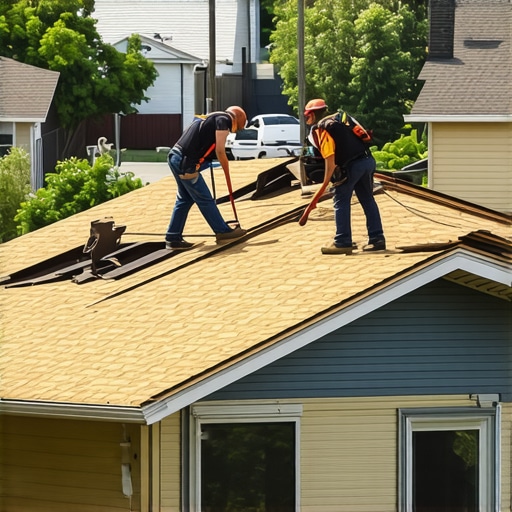
The Knock on the Door: Anatomy of a Roofing Sales Blitz
The sky is still a bruised purple, and the smell of ozone and wet pavement lingers after the 2026 spring storms. You’re checking your gutters for debris when the white pickup truck pulls up. Out jumps a young man in a crisp, branded polo shirt with an iPad in hand. He’s polite, he’s energetic, and he has ‘great news’—he’s already helping three of your neighbors get a free roof through their insurance. If your gut is churning, listen to it. That’s not a local roofer; that’s a storm chaser. After twenty-five years of pulling up water-logged decking and fixing the ‘shiners’ left behind by these transients, I can tell you that a ‘free’ roof is often the most expensive mistake a homeowner can make.
My old foreman used to say, ‘Water is patient. It will wait for you to make a mistake.’ But storm chasers? They aren’t patient at all. They operate on a high-velocity business model designed to extract insurance checks and vanish before the first winter ice dam exposes their shoddy workmanship. They aren’t interested in the structural integrity of your roofing; they are interested in the commission. To protect your home, you have to understand the physics of the fraud and the mechanics of a proper install.
“A roof is not just a covering; it is a system of managed water shedding.” – Old Roofer’s Axiom
The Physics of ‘Bruising’: What Storm Chasers Won’t Tell You
When a hailstone—let’s say 1.75 inches, roughly the size of a golf ball—strikes an asphalt shingle at terminal velocity, it doesn’t always leave a hole. Instead, it creates a localized fracture. Let’s do some mechanism zooming: the kinetic energy of the impact compresses the asphalt matting, forcing the protective ceramic granules into the bitumen layer. This creates a ‘bruise’ on the underside of the shingle, often fracturing the fiberglass scrim. This isn’t just a cosmetic issue. Over the next two years, the UV radiation from the sun will cook that exposed bitumen, causing it to embrittle and crack. Eventually, water will find that crack. Through capillary action, that moisture won’t just sit there; it will be pulled horizontally under the shingle, seeking the nearest nail head. If that nail is a shiner—a nail missed by the installer that didn’t hit the rafter—the water will travel down the shank, directly into your attic insulation, turning it into a soggy, moldy mess before you ever see a drop on your ceiling.
Sign 1: The Out-of-State Paper Trail and the ‘Local’ Ghost Office
The first sign of a 2026 storm chaser is the lack of a physical, local footprint. Sure, they might have a local phone number—anyone can buy a VOIP line with a local area code in five minutes. But ask where their warehouse is. Ask where they store their squares of material. A true local roofer has a yard, a crew that’s lived in the county for a decade, and a reputation they can’t afford to lose. Storm chasers rent ‘virtual offices’ or temporary suites just long enough to process the checks. Once the storm season ends, they’re off to the next disaster zone. If you have a leak in your valley next November because they failed to install the cricket behind your chimney, that local number will be disconnected, and you’ll be left holding the bag.
Sign 2: The Deductible ‘Discount’ Scam
If a roofing company tells you they can ‘cover’ your deductible or ‘absorb’ the cost, they are asking you to commit insurance fraud. It’s that simple. In most states, it is illegal for a contractor to pay a homeowner’s deductible. How do they do it? They pad the estimate or use sub-standard materials to make up the difference. They’ll skip the starter strip, reuse old step flashing that’s already riddled with holes, or use the cheapest felt paper instead of a high-quality synthetic underlayment. They are cutting corners on the very components that prevent your house from rotting. They might save you $1,000 on the deductible, but they’ll cost you $15,000 in premature roof failure when the wind-driven rain gets driven under the unsealed laps during the next heavy storm.
Sign 3: High-Pressure Contingency Agreements
A reputable contractor provides an estimate. A storm chaser provides a ‘contingency agreement.’ They’ll tell you it’s just a document to allow them to talk to your insurance adjuster. In reality, it’s a binding contract that legally obligates you to use them for the replacement if the claim is approved. They want to lock you in before you have a chance to do your due diligence. I’ve walked onto forensic scenes where homeowners were being sued by these companies because they decided to go with a local roofer instead. Never sign anything just to get a ‘free inspection.’ A real pro will inspect your roof, show you the photos of the fractured scrim, and let their expertise sell the job.
“The roof system shall be designed and installed in accordance with this code and the manufacturer’s installation instructions.” – International Building Code (IBC)
Sign 4: Ignorance of Local Climate Physics
This is where the ‘forensic’ side of my brain gets heated. Storm chasers use a ‘one-size-fits-all’ approach to roofing. But a roof in the North needs to be built to fight ice dams, whereas a roof in the South needs to breathe to prevent attic heat from cooking the shingles from the inside out. In colder climates, if an installer doesn’t understand thermal bridging or the importance of an ice and water shield extending at least 24 inches past the interior wall line, that roof is guaranteed to fail. These transients don’t care about your R-value or your attic bypasses. They slap the shingles down, nail them too high (which voids the wind warranty), and move on. Local roofing companies know the local codes and the specific weather patterns of your zip code. They know that if they don’t get the ventilation right, the humidity will turn your plywood into oatmeal in less than five years.
The Solution: How to Vet Local Roofers
Don’t be a victim of the 2026 storm cycle. When the vultures start circling, look for the ‘Trade’ veterans. Ask for a manufacturer-certified installer status (like GAF Master Elite or Owens Corning Platinum). Check their certificate of insurance personally—don’t just take a photocopied sheet. Call their supplier and ask if they pay their bills on time. A company that doesn’t pay for its shingles will leave you with a mechanic’s lien on your house even if you paid the contractor in full. Most importantly, look for someone who talks about the system—the flashing, the ventilation, and the underlayment—not just the shingles. That’s the difference between a roof that lasts thirty years and one that fails after three.