
The Scorched Deck Reality
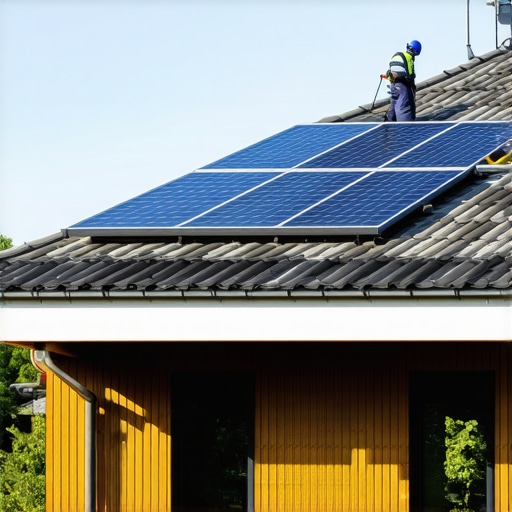
Walking on a roof in the high desert at 2 PM feels like pacing on a cast-iron skillet. I remember one forensic call-out in Las Vegas where the homeowner complained their brand-new solar array wasn’t hitting its numbers. Walking on that roof felt like walking on a sponge. I knew exactly what I would find underneath before I even pulled a single shingle. The heat was so intense—clocking 165°F at the surface—that the cheap #15 felt underlayment had literally liquified and bonded to the plywood. The ‘green’ energy system was effectively cooking the house from the outside in. Most local roofers are still slapping on materials designed for the 1990s, completely ignoring how 2026 solar efficiency mandates change the physics of the roof deck. When you bolt a solar rack to a roof, you aren’t just adding weight; you are creating a micro-climate of stagnant, super-heated air that will rot your decking if you don’t account for thermal expansion and radiant barriers.
“A roof system is only as durable as the substrate it is fastened to, and heat is the silent catalyst of structural fatigue.” – Old Roofer’s Adage
1. High-Temp Synthetic Underlayment: The Invisible Shield
In our climate, the sun is a relentless hammer. If you use standard organic felt, you’re asking for a disaster. By 2026, efficiency standards will require better thermal resistance. You need a high-temp synthetic underlayment that can withstand 250°F without bleeding or curling. When solar panels sit 6 inches off the roof, they create a ‘heat tunnel.’ Cheap materials will crack under this stress, leading to ‘shiners’—those missed nails that rust out and start a slow drip into your insulation. I’ve seen squares of perfectly good shingles ruined because the underlayment underneath turned to dust. Roofing companies that don’t specify high-temp peel-and-stick at the penetrations are setting you up for a massive bill in five years when the thermal shock causes the flashing to pull away from the deck.
2. The Radiant Barrier and Airflow Gap
Efficiency isn’t just about what the panels produce; it’s about what the house doesn’t absorb. Most local roofers ignore the attic bypass. If your roof deck is soaking up UV radiation all day, your AC is fighting a losing battle. Installing a radiant barrier sheathing—a thin layer of foil laminated to the OSB—reflects up to 97% of that radiant heat. But here is the catch: you need a managed air gap. Without a properly sized ridge vent and soffit intake, that heat just sits there. I’ve seen ‘solar-ready’ roofs where the contractor forgot to cut the ridge vent wide enough, turning the attic into a literal kiln. To hit 2026 efficiency targets, your roofing system must act as a heat exchanger, not a heat sink.
3. Structural Fastening and the ‘Cricket’ Logic
Water is patient. It will wait for your roofer to make a mistake. When you add solar mounts, you’re adding dozens of new penetrations. If those aren’t flashed with the same precision as a chimney, you’re in trouble. I always look for ‘crickets’—those small peaked structures—behind large obstructions, but with solar racks, the water often dams up behind the rails. You need to ensure the roofing company is using stainless steel fasteners to avoid galvanic corrosion. I’ve pulled out galvanized nails that looked like Swiss cheese because they reacted with the chemicals in the pressure-treated blocking used for the solar mounts. A ‘square’ of roofing is 100 square feet of protection; don’t let a single poorly flashed bolt ruin the whole thing.
“Roof assemblies shall be designed and installed in accordance with this code and the manufacturer’s installation instructions.” – International Building Code (IBC) Section 1501.1
4. Material Selection: Beyond Asphalt
The ‘Lifetime Warranty’ on most asphalt shingles is marketing garbage designed to make you feel safe while the UV rays eat the granules off your roof. For true 2026 solar efficiency, we need to talk about concrete tiles or standing seam metal. Metal roofs are the gold standard for solar because they don’t require penetrations; the panels clip directly to the seams. This eliminates the leak risk entirely. If you stay with asphalt, you better ensure it’s a Class 4 impact-rated shingle with high solar reflectance (SRI). Otherwise, you’re just paying for a roof that will brittle out and fail before the solar panels even pay for themselves. Picking the right material is the difference between a 30-year asset and a 10-year liability.