
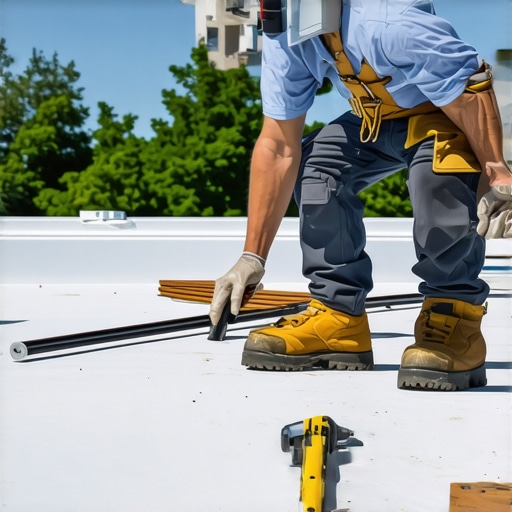
The Morning the Roof Turned into a Marsh
Walking on that roof felt like walking on a sponge. I knew exactly what I’d find underneath before the first shingle was even pried up. It was a cold Tuesday in November, the kind of morning where the frost makes the granules on an old asphalt shingle look like shattered glass. My boots didn’t crunch; they sank. I looked at the homeowner and told him to stay off the ladder. Beneath the surface, the structural integrity had vanished. When we finally peeled back the layers, the roof deck wasn’t wood anymore; it was a dark, damp slurry of cellulose and failed dreams. This wasn’t a product failure. It was a preparation failure. As we look toward 2026, the industry is shifting, but the physics of water remains the same. If you are hiring roofing companies or searching for local roofers, you need to understand that the ‘roof’ is just a cosmetic skin—the deck is the skeleton. If the skeleton is brittle, the skin will sag and eventually split. Here is the forensic breakdown of how to prepare a deck so it survives the next thirty years of abuse.
1. The Physics of the Substrate: Beyond ‘Good Enough’
Most roofing companies glance at a deck, see that it isn’t literally falling into the attic, and start nailing. That is a recipe for a callback in five years. In 2026, we are seeing more extreme temperature swings that put immense ‘Thermal Shock’ on the wood. When plywood or OSB (Oriented Strand Board) cycles from 140°F in the summer sun to -10°F in a winter snap, it moves. If your roofer doesn’t leave a 1/8-inch gap between the sheets, the boards will buckle against each other. This creates ‘H-clip’ failures and ridging that you can see from the street. I’ve investigated dozens of claims where the homeowner thought the shingles were defective, but the reality was ‘telegraphing’—the wood underneath was expanding with nowhere to go, pushing the shingles upward and breaking the seal.
“The roof covering shall be applied to a solid or closely fitted deck, except where the roof covering is specifically designed to be applied over spaced sheathing.” – International Residential Code (IRC), R905.1
Moisture content is the other silent killer. I don’t let my crew install over anything with a moisture reading above 15%. If you trap that water under a synthetic underlayment, it has nowhere to go but into the wood fibers, leading to delamination. You want local roofers who actually carry a moisture meter, not just a hammer.
2. The ‘Shiner’ Epidemic and Fastener Retention
Let’s talk about ‘Shiners.’ In trade talk, a shiner is a nail that misses the rafter or truss entirely, sticking through the underside of the deck into the attic. It looks like a silver needle from below. These aren’t just lazy craftsmanship; they are thermal bridges. In cold climates, warm, moist air from the house hits that cold nail head and condenses. Over a winter, that nail drips, and drips, and drips, creating a localized rot spot that ruins the deck’s ability to hold a nail. When we prep a deck for 2026 standards, we aren’t just looking for rot; we are looking for ‘grip.’ If the existing deck has been reroofed three times, it’s likely turned into Swiss cheese. Every hole reduces the structural ‘diaphragm’ of the house. If more than 20% of the deck is riddled with old nail holes, a forensic roofer will tell you to tear it all off. You can’t nail a 30-year architectural shingle into a deck that has the consistency of corkboard. A square of roofing weighs roughly 230 pounds; multiply that by 30 squares, and you’re asking the deck to hold three tons of material. It needs to be rock solid.
3. The Attic Bypass: Why Your Deck is Sweating
The biggest mistake roofing companies make is treating the deck as an isolated component. The deck is the interface between your home’s internal climate and the external environment. If your attic isn’t vented properly, the deck becomes the victim of an ‘Attic Bypass.’ This is when warm air leaks through light fixtures or pull-down stairs, hits the underside of the cold roof deck, and turns into liquid water.
“A roof is only as good as its flashing and the air moving beneath it.” – Old Roofer’s Adage
In 2026, building codes are getting stricter about R-value and air sealing. If your roofer doesn’t check your intake vents (soffits) and exhaust vents (ridge or gable), they are setting your new deck up for a fungal infection. I’ve seen decks that were only six years old turn into ‘oatmeal’ because the ridge vent was installed without cutting the underlying plywood. The heat stayed trapped, the moisture cooked the wood, and the shingles literally baked from the inside out. Always ensure your contractor calculates the ‘Net Free Venting Area’ before they lay the first sheet of underlayment.
4. The Perimeter Defense: Drip Edges and Crickets
Water is patient. It will wait for you to make a mistake. The most vulnerable part of your roof deck is the edge—the eaves and the rakes. This is where ‘capillary action’ happens. Water doesn’t just fall off a roof; it has surface tension that allows it to ‘wick’ backward under the shingle. If there is no drip edge, or if the drip edge is installed incorrectly (under the underlayment at the eaves, over at the rakes), the water wicks directly into the end-grain of the plywood deck. Within two seasons, the edges of your deck will be soft. We also look for the ‘Cricket.’ A chimney or a large dormer acts like a dam on a roof. A ‘cricket’ is a small peaked structure built behind the chimney to divert water. If your local roofers aren’t building or inspecting these diversions during the deck prep phase, they are just inviting a lake to form on your roof. By the time you see a brown spot on your ceiling, the deck has already lost its structural fight. High-quality 2026 prep involves using a self-adhering membrane (Ice and Water Shield) that extends at least 24 inches past the interior wall line. This creates a gasketed seal around every nail, preventing the hydrostatic pressure of an ice dam from forcing water into your home. Don’t let a contractor talk you out of this; it’s the difference between a roof that lasts and a roof that fails during the first major blizzard.