
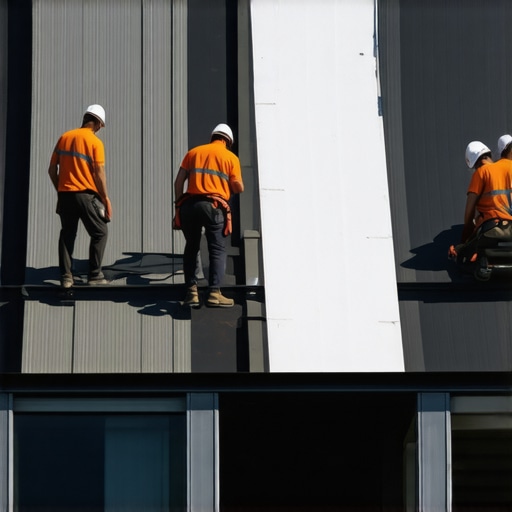
The Ghost in the Deck: Why Flat Roof Seals Fail Before the First Snow
I’ve spent thirty years crawling through attics that smell like a damp basement in a swamp. I’ve seen enough rotting plywood to build a fleet of ghost ships. Most people think a leak is a hole. It isn’t. A leak is a process. It’s a series of physics-based failures that start months before you ever see a drop of water hit your carpet. When homeowners call local roofers because they see a stain, they’re usually six months too late. The damage didn’t start when the rain fell; it started when the chemistry of the seal gave up the ghost.
The Mentor’s Warning and the Reality of Water
My old foreman used to pull me aside on every flat roof job and say, ‘Water is patient. It will wait for you to make a mistake. It doesn’t sleep, it doesn’t get tired, and it has nothing but time to find the one square inch you didn’t heat-weld correctly.’ That stuck with me. In the world of roofing, flat surfaces are the ultimate test of a contractor’s integrity. Unlike a pitched roof where gravity does 90% of the work for you, a flat roof is a battle against the elements. If you’re hiring roofing companies based on the lowest bid, you’re essentially paying someone to hide a disaster under a layer of membrane.
“A roof should be designed to shed water rapidly. Where the roof slope is less than 1/4 unit vertical in 12 units horizontal, the design shall include a calculation of the dead load of the ponding water.” – International Residential Code (IRC) R903.4.1
Tip 1: The Physics of Ponding and Structural Memory
The first thing you need to understand about the 2026 standard for flat roof seals is that ‘flat’ is a lie. No roof should be truly flat. If your local roofers aren’t talking about a ‘tapered system,’ they’re setting you up for failure. When water sits on a roof for more than 48 hours, it’s called ponding. This isn’t just a surface issue. Water is heavy—about 62.4 pounds per cubic foot. When that weight sits in one spot, the roof deck begins to deflect, creating a permanent bowl. This bowl invites more water, which adds more weight, creating a feedback loop of structural degradation. In cold climates like ours, that ponding water turns to ice, expanding and contracting, which grinds the granules off your membrane like sandpaper. If you see a ‘lake’ on your roof, the seal is already under a hydrostatic pressure it wasn’t designed to handle.
Tip 2: The Chemistry of the Cold Weld
Most roofing companies today are pushing TPO (Thermoplastic Polyolefin) or PVC. These are great materials, but they rely entirely on the quality of the seam. We use a robotic welder that heats the membrane to about 1,000°F to fuse the two sheets into one. But if the tech is moving too fast, or if the ambient temperature is too low, you get what we call a ‘cold weld.’ It looks fine to the naked eye. You can even walk on it. But under the stress of thermal expansion—the constant growing and shrinking of the building as it breathes—that seam will pop. I call these ‘phantom leaks.’ You won’t find them with a visual inspection. You have to use a seam probe, a pointed metal tool, and run it with pressure along every single inch of the weld. If that probe sinks in even a fraction of a millimeter, your seal is a ticking time bomb.
Tip 3: The Capillary Action Trap at the Termination Bar
This is where the ‘Mechanism Zooming’ really matters. Everyone focuses on the middle of the roof, but the failure happens at the edges. Imagine the ‘termination bar’—that metal strip that holds the membrane to the wall. If the sealant behind that bar isn’t a high-grade butyl tape or a specific non-skinning seal, water will find its way behind it through capillary action. Water has a natural property that allows it to ‘climb’ up narrow vertical spaces. It will wick up behind the membrane, travel down the wall, and rot out your fascia and soffits before you ever see a leak inside. This is why we use a ‘cricket’—a small diverted structure—to push water away from these critical junctions. If your local roofers aren’t installing crickets behind chimneys or large HVAC units, they’re basically inviting water to move in and stay a while.
“The most critical part of any roof is the transition from the horizontal plane to the vertical plane. Failure to properly flash these areas accounts for 90% of all roof leaks.” – National Roofing Contractors Association (NRCA) Manual
Tip 4: The ‘Shiner’ and the Penetration Crisis
In the trade, a ‘shiner’ is a nail that missed the rafter and is sticking out in the open. On a flat roof, our version of a shiner is a poorly flashed penetration—the pipes, vents, and conduits that poke through your roof. By 2026, we’re seeing more solar mounts and satellite dishes than ever. Every time someone screws something into your roof, they’re creating a potential entry point for moisture. A ‘patch’ isn’t enough. You need a target patch with a reinforced perimeter. If the seal isn’t integrated into the primary membrane using a reinforced flashing, the vibration from the wind on those units will eventually crack the seal. You won’t hear it, but the plywood underneath will. It’ll start to soften, turning into something that resembles wet oatmeal. Walking on a roof like that feels like walking on a sponge; you can literally feel the structural integrity of your home dissolving under your boots.
The Surgery vs. The Band-Aid
When I go out to a job, I’m doing a forensic autopsy. I’m looking for why the last guy failed. Often, a homeowner wants a ‘quick fix’—a bucket of silver coat or some caulk. That’s a band-aid on a gunshot wound. If the insulation underneath is wet, no amount of goop on top will save it. Wet insulation loses its R-value, meaning you’re paying to heat the sky, and it traps moisture against the deck, causing it to rot from the inside out. Real roofing isn’t about the top layer; it’s about the entire assembly. You have to be willing to do the surgery—cut out the wet sections, replace the substrate, and weld a new seal that actually respects the laws of physics. Don’t let a ‘trunk slammer’ tell you otherwise. In 2026, with the increasing intensity of storm cycles, a cheap roof is the most expensive thing you’ll ever buy.