
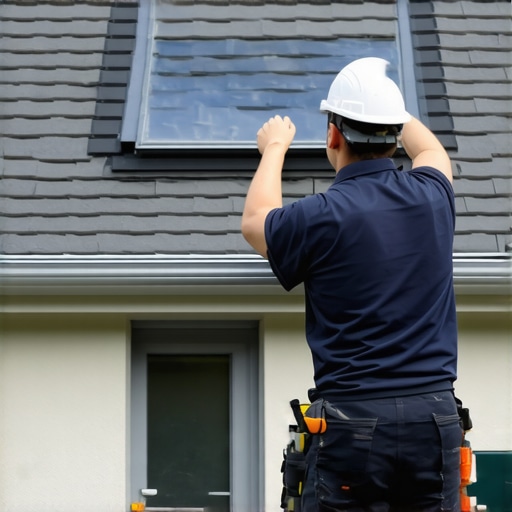
The Autopsy: Why Your Dining Room Table is a Pond
The drip-drip-drip onto your hardwood floor at 2:00 AM isn’t just an inconvenience; it is a forensic failure of your home’s most vulnerable penetration. Most roofing companies treat a skylight like a shingle problem, but a skylight is actually a mechanical engineering problem. When I walk onto a roof and see a five-gallon bucket of black plastic cement smeared around a curb, I don’t see a repair. I see a crime scene. That ‘goop’ is a temporary dam that eventually cracks under UV radiation, creating a pocket where water sits, stagnates, and eventually finds its way into your rafters via capillary action.
My old foreman used to say, ‘Water is patient. It will wait for you to make a mistake.’ He was right. Water doesn’t just fall down; it moves sideways, it hitches a ride on wind gusts, and it travels uphill through surface tension. If your skylight was installed by ‘trunk slammers’ who didn’t understand the physics of a square of shingles, you aren’t just looking at a leak; you’re looking at the slow rot of your structural headers. By 2026, building codes are tightening, and the old ways of ‘slap some caulk on it’ won’t just fail your home—they’ll fail your inspection.
The Physics of the Failure: Mechanism Zooming
Why do skylights leak? It’s rarely the glass. It is almost always the interface between the roofing material and the flashing. In cold climates, we deal with thermal bridging. The warm air from your kitchen rises, hits the cold glass of the skylight, and condenses. That moisture trickles down inside the frame, mimicking a roof leak. But the real enemy is the Ice & Water Shield—or the lack thereof. When snow sits on the uphill side of a skylight, it creates a mini-glacier. As the house heat melts the bottom of that snow, the water backs up under the shingles. If the roofer didn’t wrap that curb in a self-healing membrane, that water finds the ‘shiners’—those missed nails—and follows them straight into your insulation.
“Flashings shall be installed in a manner that prevents moisture from entering the wall and roof through joints in copings, through moisture-permeable materials, and at intersections with dissimilar materials.” – International Residential Code (IRC) R903.2
When we talk about 4 fixes for 2026, we are talking about moving beyond the surface. We are talking about forensic-level waterproofing that accounts for the 140°F attic temperatures and the 20-below winter nights.
Fix 1: The Mechanical Flashing Overhaul (Ditch the Sealant)
If a local roofer tells you they can fix a skylight leak with a tube of silicone, show them the door. Proper skylight integration requires a three-part mechanical flashing system: the sill flashing (the apron at the bottom), the step flashing (the individual L-shaped pieces woven into each course of shingles), and the head flashing (the top piece that acts as a diverter). In 2026, we are seeing a shift toward heavy-gauge copper or kynar-coated steel flashings that resist thermal expansion. When the sun beats down, a skylight frame expands at a different rate than the plywood deck. A rigid seal will snap. A mechanical weave moves with the house.
Fix 2: The Structural Cricket Installation
On any skylight wider than 30 inches, water starts to pile up on the uphill side. It’s like a dam in a river. We install a cricket—a small peaked structure behind the skylight—to split the water flow. Without a cricket, you get a ‘dead valley‘ where debris, pine needles, and ice accumulate. This debris holds moisture against the metal until it corrodes or finds a way under the top flange. Designing a proper divergence is the difference between a 30-year roof and a 3-year headache.
Fix 3: High-Performance Self-Healing Membranes
In the trade, we talk about ‘Secondary Water Resistance.’ Even if the shingles blow off, the roof shouldn’t leak. For 2026 standards, we are moving away from felt paper and toward thick, rubberized asphalt membranes that wrap 6 inches up the curb and 12 inches onto the deck. This creates a monolithic ‘boot.’ If a nail pierces this membrane, the rubber squeezes around the shank, sealing it. This prevents the dreaded ‘shiner’ leak where water travels down the nail and drips onto your ceiling joists, three feet away from the actual skylight.
Fix 4: Internal Gasket and Thermal Break Renewal
Sometimes the leak isn’t from the sky; it’s from the room. Older skylights have single-pane glass or failing gaskets that allow thermal bridging. By 2026, the industry is pushing for triple-pane argon-filled units with integrated thermal breaks. If your skylight ‘weeps’ in the winter, the fix isn’t on the roof—it’s replacing the unit with one that has a higher R-value. Many roofing companies ignore the internal humidity of the home, but a forensic roofer knows that a damp bathroom and a cold skylight glass are a recipe for moldy drywall that looks exactly like a roof leak.
“A roof is only as good as its flashing.” – Old Roofer’s Adage
The Cost of Waiting: Don’t Let the Plywood Turn to Oatmeal
I’ve seen it a hundred times. A homeowner ignores a small tea-colored stain on the ceiling for two years. When we finally tear off the shingles, the plywood is so soft you could put a finger through it. We call it ‘oatmeal plywood.’ At that point, you aren’t just paying for a skylight repair; you’re paying for structural framing, new decking, and likely mold remediation. Roofing is about water management, not water resistance. If you don’t manage the flow, the water will manage your bank account. Hiring local roofers who understand the nuances of step-flashing weave and ice & water shield application is the only way to sleep through a thunderstorm in 2026. Stop buying tubes of caulk and start investing in mechanical integrity.
Your detailed breakdown of skylight leaks really hits home. I’ve encountered similar issues with DIY repairs where sealants were applied as a quick fix, only for the leaks to return after a few months. The emphasis on mechanical flashing over just sealant is a game-changer. I particularly appreciate the focus on the importance of proper diverters like the cricket to prevent water pooling—something I overlooked in past projects. It makes me wonder, how often do homeowners prioritize these forensic-level details? In my experience, many just want a quick fix, but as you pointed out, the long-term costs of neglecting these specifics can be significant. Have you found that most homeowners are receptive to these advanced solutions, or is there still resistance due to higher upfront costs? It seems like education is key to shifting the industry toward these standards. Your insights definitely inspire me to insist on more thorough inspections and better materials when I tackle my next roof upgrade.