
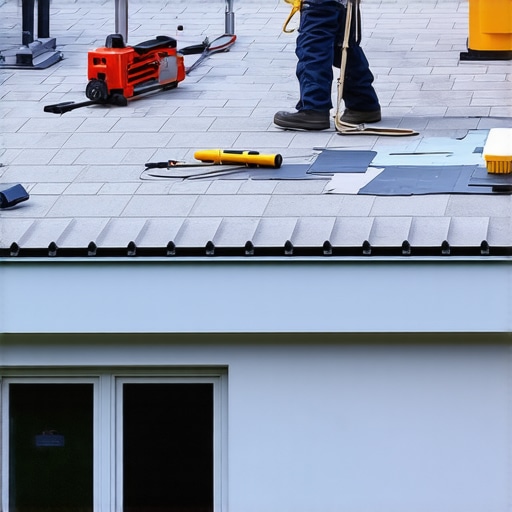
The Anatomy of a Failing Parapet
Walking on that roof felt like walking on a sponge. I knew exactly what I’d find underneath before I even pulled my knife from my belt. It was a cold Tuesday in October, and the building owner was complaining about a mystery leak that three different roofing companies had already ‘fixed’ with buckets of silver coating and a prayer. But that’s the thing about water—it doesn’t care about your quick fixes. When you have a parapet wall—that little wall that sticks up around the edge of a flat roof—you aren’t just managing a roof; you’re managing a dam. If that dam isn’t built to handle the thermal expansion and the brutal freeze-thaw cycles of a Northern winter, it will fail. Every single time. Most local roofers look at a leak and see a hole. A forensic roofer looks at a leak and sees a physics problem. We are seeing a massive uptick in parapet failures heading into 2026 because the materials installed ten years ago are reaching their breaking point, and the way we build walls has changed.
“A roof is only as good as its flashing.” – Old Roofer’s Adage
The Physics of the ‘Up-and-Over’ Failure
To understand why your parapet is leaking, you have to understand capillary action. Imagine two pieces of glass pressed together with a drop of water at the bottom. The water doesn’t stay there; it gets sucked upward. On a roof, when wind-driven rain hits a parapet wall, it searches for every microscopic gap in the coping joints or the counter-flashing. Once it finds a gap, surface tension pulls that moisture deep into the masonry. If you’re in a cold climate, that water freezes. When water freezes, it expands by about 9%. That expansion is a slow-motion explosion inside your brickwork. It pushes the mortar apart, creates ‘spalling’ where the faces of the bricks pop off, and eventually, it finds a path behind your roofing membrane. By the time you see a drip on your ceiling, the wood plate or the steel decking underneath has been soaking for months. I’ve seen 4×4 headers that looked solid on the outside but had the consistency of wet oatmeal because a roofer missed a single shiner in the termination bar.
Fix 1: The High-Performance Liquid-Applied Resin Transition
The old way was to use a ‘cant strip’ and try to wrap a stiff bitumen sheet up a 90-degree angle. It never works long-term. The material wants to pull away from the wall as it ages and loses its plasticizers. For 2026, the gold standard is liquid-applied PMMA (Polymethyl Methacrylate) or high-grade polyurethane resins. This isn’t just ‘paint.’ This is a reinforced, fleece-backed membrane that is applied as a liquid and cures into a single, monolithic sheet that is chemically bonded to both the roof and the wall. It eliminates the need for mechanical fasteners that create thermal bridges. When the wall gets hot in the sun and the roof stays cool, they expand at different rates. A liquid-applied resin is flexible enough to handle that ‘shear’ without cracking. If your contractor is still talking about ‘mops and buckets,’ they are living in the 1990s.
Fix 2: Vented Coping Caps and the Air Gap Secret
Most people think the metal cap on top of a parapet (the coping) is just there to look pretty. It’s actually the primary defense against gravity. But here is the mistake: most local roofers nail that metal down tight. When that metal heats up to 150°F in July, it buckles. Those buckles create ‘fish-mouths’ in the sealant joints. The 2026 fix is an engineered, vented coping system. By raising the metal slightly off the masonry with a cleat system, you allow the wall to breathe. This prevents the ‘chimney effect’ where warm, moist air from the building interior gets trapped inside the wall, condenses against the cold metal, and drips back down into the insulation. It’s called an attic bypass in residential roofing, but in commercial parapets, it’s a silent killer of R-value.
“Flashings shall be installed in such a manner so as to prevent moisture from entering the wall and roof through joints in copings, through moisture permeable materials, and at intersections with dissimilar materials.” – International Building Code (IBC) Section 1503.2
Fix 3: Reglet Deep-Diving and Stainless Termination
I can’t tell you how many ‘pros’ I see just slapping a termination bar on the surface of a brick wall and running a bead of cheap caulk across the top. That caulk will last two years if you’re lucky. A real forensic fix involves cutting a ‘reglet’—a horizontal groove—into the masonry itself. The metal counter-flashing is then tucked into that groove and locked in with lead wedges or specialized clips. Then, and only then, do you apply a high-movement silicone sealant. This creates a mechanical ‘shingle effect’ where the wall shed its water over the flashing, rather than relying on a chemical bond to stop a flood. If you see a roofer with a caulk gun but no masonry saw, send them home. They are selling you a Band-Aid for a gunshot wound.
Fix 4: The ‘Cricket’ and Drainage Path Correction
Water is patient. It will sit in a low spot behind a parapet wall until it finds a way in. We call these ‘dead valleys.’ In the 2026 approach to roof repair, we don’t just fix the leak; we fix the flow. This means installing tapered insulation ‘crickets.’ A cricket is a V-shaped slope that diverts water away from the wall and toward the scuppers or drains. If your roof has standing water (ponding) for more than 48 hours after a rain, your roofing companies haven’t finished the job. Ponding water creates hydrostatic pressure—the weight of the water literally pushes moisture through microscopic pores in the membrane. By installing crickets, we ensure the parapet base stays dry, which extends the life of your flashing by a decade. Don’t let a contractor tell you that ‘a little water is normal.’ On a flat roof, water is an intruder, and your job is to show it the exit as fast as possible.
The Trap of the Lifetime Warranty
When you’re looking for local roofers, they’re going to throw around terms like ‘Lifetime Warranty.’ In the trade, we know those are often worth less than the paper they’re printed on. Most of those warranties cover the material—which rarely fails—but not the labor or the ‘flashing details.’ And as we’ve established, the parapet leak is 100% about the detail. You want a contractor who offers a NDL (No Dollar Limit) warranty backed by the manufacturer. This means the manufacturer’s inspector had to come out, climb the ladder, and verify that the reglet was cut and the resin was fleece-reinforced. If they don’t inspect it, they won’t stand behind it. Stop looking for the cheapest ‘square’ price and start looking for the forensic detail that keeps your plywood from turning into oatmeal. Your building’s structure depends on it. Waiting until 2026 to address these systemic issues will only triple the cost of the structural repairs needed when the joist ends finally give way.