
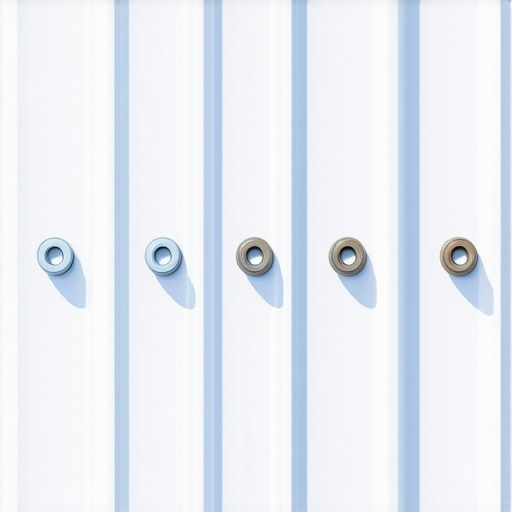
The Forensic Scene: What Lies Beneath the Panel
I recently stepped onto a standing seam project in the Gulf Coast region where the owner complained of a rhythmic ‘thumping’ every time the wind kicked up from the east. Walking on that roof felt like walking on a series of loose piano keys; I knew exactly what I’d find underneath before I even pulled my pry bar. When we finally peeled back a transition flashing, the carnage was textbook. The previous installers had used carbon steel screws on a Galvalume system. In the humid, salt-heavy air of the coast, those fasteners had undergone a violent galvanic reaction. The heads were half-eaten, and the shanks had thinned to the point of snapping. This isn’t just a ‘leak’ issue—it’s a structural failure that most roofing companies ignore until the building loses its lid in a tropical depression.
The Physics of Fastener Failure: Mechanism Zooming
To understand why your choice of fastener determines the twenty-year viability of your roof, you have to look at the micro-level. A metal roof is a living thing. It breathes. During a typical July afternoon, a dark bronze metal panel can reach 160°F. By midnight, it might drop to 75°F. This creates thermal shock. As the metal expands and contracts, it puts immense shear pressure on the fastener. If you used a cheap ‘shiner’—a screw that missed the purlin or was driven at an angle—that constant movement creates an oblong hole in the metal. Once that hole is larger than the neoprene washer, capillary action takes over. Water doesn’t just fall into the hole; it is sucked in by the pressure differential between the hot attic and the cool rain, soaking your decking until it has the consistency of wet cardboard.
“A roof is only as good as its flashing and the metallurgy of its connections.” – Structural Axioms for the Modern Age
1. The 2026 Standard: ZAC (Zinc-Aluminum-Cast) Cap Screws
For 2026, the industry is moving away from simple galvanized coatings. The ZAC cap fastener is the gold standard for local roofers who actually care about their reputation. Unlike standard screws where the head is merely plated, a ZAC fastener features a cast zinc-aluminum alloy head. Even if the installer over-drives the screw and scuffs the surface, the head cannot rust. It is physically impossible for red rust to form on the cap. This is critical in the Southeast where salt spray acts as an electrolyte, accelerating the destruction of inferior metals. When you’re vetting roofing companies, ask them if they use zinc-alloy caps or if they’re still using painted carbon steel. If they don’t know the difference, show them the door.
2. 304 and 316 Stainless Steel: The Coastal Necessity
If your property is within five miles of the ocean, carbon steel is your enemy. The 2026 building codes are becoming increasingly strict about Secondary Water Resistance and fastener longevity. We are seeing a massive shift toward 304 stainless steel for inland projects and 316-grade stainless for true beachfront installs. The reason is simple: Chromium. The chromium content in 316 stainless creates a self-healing passive layer that resists chloride attack. I’ve seen local roofers try to save a few hundred dollars by using ‘410 stainless’ because it’s magnetic and easier to drive. Don’t let them. 410 stainless will rust in a salt-air environment. It’s a ‘trunk slammer’ trick to make the roof look good for the first two years while the corrosion eats the shank from the inside out.
3. Nylon-Headed Fasteners for UV Resistance
In high-UV zones, the weakest link isn’t usually the metal; it’s the washer. Standard EPDM washers eventually dry out, crack, and turn into brittle plastic rings that let water slip right by. The latest 2026 fasteners utilize glass-reinforced nylon heads that encapsulate the EPDM seal. This protects the rubber from direct sun exposure. When we perform a forensic audit on a ten-year-old metal roof, the first thing we check is the ‘squish’ of the washer. If it’s cracked, the fastener is failing. Nylon-headed options eliminate this failure point by shielding the gasket from the harsh radiation that defines our Southern summers.
4. Concealed Clip Systems: The Ultimate Fastener is Hidden
While technically a system rather than a single screw, the 2026 market is pivoting hard toward concealed clip standing seam. In this setup, the fastener doesn’t actually pierce the weather-facing part of the panel. Instead, a heavy-duty clip is screwed into the deck, and the next panel snaps over it. This allows the metal to slide back and forth during thermal expansion without putting any stress on the screw itself. It eliminates the ‘shiner’ problem entirely. If you are looking for roofing companies to install a ‘forever roof,’ this is the mechanism you want. It’s more expensive per square, but it removes the primary cause of metal roof leaks: the thousands of holes poked through the skin.
“The integrity of the building envelope is dictated by the smallest component: the screw.” – International Building Code Commentary
The Warranty Trap: Marketing vs. Reality
Be wary of local roofers promising a ‘Lifetime Warranty.’ If you read the fine print on most metal panel warranties, the coverage specifically excludes the fasteners unless they are provided by the same manufacturer. Even then, the warranty often only covers ‘red rust’ on the panel, not a leak caused by a backed-out screw or a degraded washer. This is why forensic roofing is so important—we see the gaps where marketing meets physics. You want a workmanship warranty that matches the material’s lifespan. If the metal lasts 50 years but the screws last 10, you don’t have a 50-year roof; you have a 10-year roof with a very expensive disposal problem at the end.
How to Spot a Quality Contractor
When the roofing companies arrive to give you an estimate, look in the back of their truck. Are they carrying generic, unbranded bags of screws? Or are they using high-spec boxes from reputable manufacturers like SFS or ITW Buildex? A contractor who invests in ZAC-capped or stainless fasteners is a contractor who understands that their callback rate is tied to the smallest part of the job. Don’t let a ‘trunk slammer’ convince you that ‘a screw is a screw.’ In the world of metal roofing, the fastener is the heartbeat of the system. If it stops working, the whole system dies. Protect your investment by demanding the 2026 standard for every square of your new roof. [INSERT_IMAGE_HERE]