
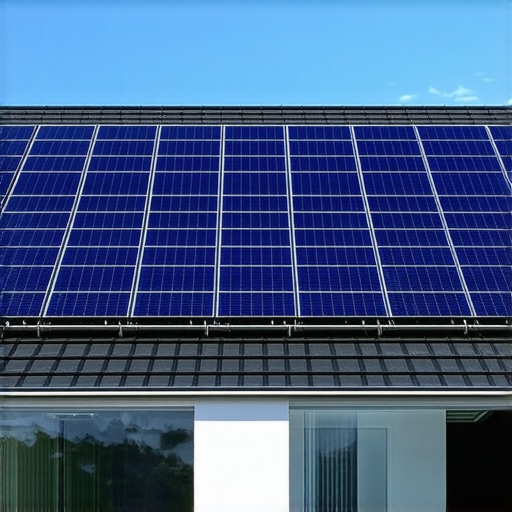
I’ve spent the better part of three decades crawling over scorching hot roof decks, my knees barking and my skin smelling like a mix of old asphalt and sweat. I’m not here to sell you a shiny dream of green energy; I’m here to tell you why the 2026 shift in solar technology is finally solving the disasters I’ve spent years investigating. Most local roofers have spent the last decade bolting heavy, glass-and-aluminum panels through perfectly good shingles, creating thousands of potential leak points that I eventually have to track down. My old foreman, a man who could spot a single ‘shiner’—that’s a missed nail for you civilians—from thirty feet away, used to grab my shoulder and say: ‘Water is patient. It will wait for you to make a mistake.’ He was right. Those old rack-mounted systems were a massive mistake waiting to happen. But 2026 solar roofing, specifically Building-Integrated Photovoltaics (BIPV), changes the physics of the entire system. In the Southwest, where the sun doesn’t just shine—it assaults—the way we think about a ‘square’ of roofing has to evolve. Here are the four forensic benefits of the 2026 solar standard from the perspective of someone who has seen it all fail.
1. The End of Thermal Shock and Deck Carbonization
In places like Phoenix or Vegas, the sun is a physical weight. Under a traditional rack-mounted solar panel, the temperature in that narrow gap between the panel and the shingle can reach 160°F or more. This creates a localized oven that accelerates the ‘outgassing’ of the asphalt shingles underneath, turning them brittle and useless in half their rated lifespan. I’ve torn off roofs where the plywood deck beneath these panels looked like charred toast—a process called pyrolysis or slow-motion carbonization. The 2026 solar shingles are engineered as the primary weather barrier. They don’t sit on top of the roof; they are the roof. By utilizing advanced radiant barriers integrated into the shingle substrate, these systems manage thermal expansion much better. Instead of trapping heat, the thin-film crystalline structures are designed to dissipate it through the attic ventilation system. When local roofing companies install these, they aren’t just adding power; they are stabilizing the attic temperature and protecting the structural integrity of the rafters.
“A roof system must be designed to withstand the cyclic thermal expansion and contraction of its components without compromising the weather-tight seal.” – NRCA (National Roofing Contractors Association) Manual
2. Eliminating the ‘Shiner’ and the Penetration Nightmare
The biggest headache for any forensic investigator is the lag bolt. To install old-school solar, ‘trunk slammers’ would drive big metal bolts through your shingles and into the rafters. Half the time, they’d miss the rafter—creating a ‘shiner’—and the other half, they’d rely on a nickel’s worth of caulk to keep the rain out. In the desert, that caulk dries out in two years, cracks, and lets wind-driven dust and moisture into your insulation. The 2026 solar technology uses a direct-to-deck interlocking system. There are no heavy racks and no massive penetrations. We are talking about a system that laps just like a traditional shingle but with a specialized ‘cricket’ or water diverter built into the high-traffic valleys of the roof. By reducing the number of holes we poke in your house, we eliminate the primary mechanism of failure. I’ve seen enough rotten fascia boards to know that if you give water a path, it will take it. Integrated solar removes that path.
3. High-Velocity Wind Resistance and the Uplift Factor
Most people think about the sun when they hear ‘solar,’ but as a veteran roofer, I think about uplift. A traditional solar panel is essentially a sail. When a monsoon wind kicks up to 70 miles per hour, those panels want to take flight, often taking the roof deck with them. 2026 BIPV systems have a zero-profile footprint. Because they are flush with the surrounding non-solar shingles, the wind moves over them laminarly, rather than getting underneath and creating hydrostatic pressure. This is a game-changer for local roofers who have had to beef up roof loads just to accommodate the weight of old panels. These new shingles weigh roughly the same as a heavy-duty architectural shingle, meaning we aren’t stressing the trusses or the load-bearing walls. We are installing a roof, not a kite.
“Roof coverings shall be shifted or secured to the structure in accordance with the wind-load requirements of this code to prevent detachment during peak gust events.” – International Residential Code (IRC), Section R905
4. Forensic-Grade Longevity and the Myth of the ‘Lifetime’ Warranty
I’ve told homeowners for decades that a ‘Lifetime Warranty’ is only as good as the company’s ability to stay in business. Most roofing companies disappear after five years. However, the 2026 solar materials are moving away from fragile glass and toward polymer-based encapsulated cells. This matters because of thermal expansion. In the Southwest, materials expand during the 110-degree day and contract during the 50-degree night. This ‘breathing’ is what kills most roofs. The new materials are flexible enough to move with the house. When I do an inspection on these newer systems, I’m not looking for cracked glass; I’m looking at the electrical junctions. By 2026, these junctions are being ‘potted’ or sealed in factory-controlled environments, rather than being spliced by a kid on a ladder with a pair of crimpers. This shift from field-work to factory-integration means fewer failures for me to find and a longer-lasting investment for you. When you talk to local roofers about these systems, ask them about the ‘bypass diode’ integration—if they look at you like you have two heads, find another contractor. The 2026 standard requires a level of electrical and structural knowledge that separates the professionals from the pretenders. [image_placeholder_1] Investing in this tech isn’t just about the bill; it’s about not having to call me in ten years to explain why your ceiling is on your dining room floor.