
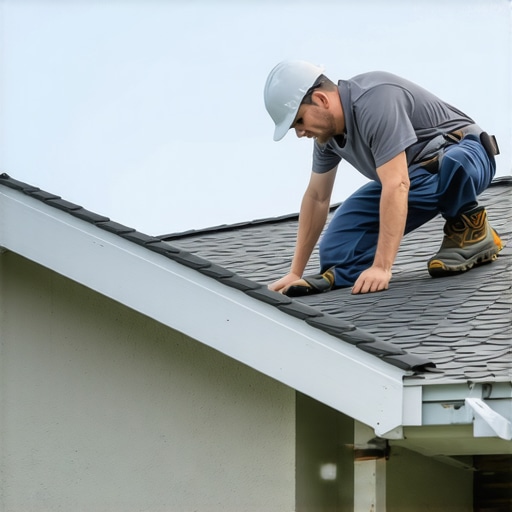
The White Bucket Deception and the Forensic Reality
Walk onto any commercial job site today and you will likely see a sea of white plastic buckets. Most local roofers are still clinging to the old ways, slathering acrylics or basic silicones onto substrates and calling it a ‘system.’ But as a forensic investigator who has spent two decades peeling back failed membranes, I can tell you that those buckets are often just a temporary mask for deeper structural rot. Walking on one particular roof in the blistering heat of the Southwest felt like walking on a wet sponge. I knew exactly what I would find underneath: a cheap acrylic coating that had delaminated, trapping ‘hydrostatic’ moisture against the metal deck. The water had no way to escape, so it simply sat there, turning the insulation into a swamp and the fasteners into rusted-out needles. This is the ‘plastic bag’ effect that plagues the industry. However, by 2026, the landscape is shifting toward polyurea. Unlike the vapor-tight traps of the past, advanced polyurea formulations are proving to be the only real defense against the physics of thermal shock and UV degradation.
“A roof is only as good as its flashing and its ability to breathe under pressure.” – Old Roofer’s Adage
1. The Physics of 500% Elongation: Stopping the ‘Thermal Snap’
In regions like Phoenix or Dallas, a metal roof can reach 160°F by 2:00 PM and then plummet to 65°F during a sudden summer downpour. This rapid temperature swing causes ‘thermal shock.’ The metal panels expand and contract so violently that the fasteners—those ‘shiners’ that missed the purlins—begin to back out. Standard coatings are too brittle; they crack at the seams. Polyurea is different. It is an elastomeric powerhouse, often boasting over 500% elongation. This means as the roof ‘breathes’ and shifts, the polyurea stretches like a rubber band rather than snapping like a dry twig. When roofing companies apply this at the correct mil thickness, they aren’t just painting; they are creating a monolithic, flexible armor. You avoid the dreaded ‘alligatoring’ seen in older asphalt-based products because the molecular cross-linking in polyurea is essentially permanent.
2. Autocatalytic Curing: Why Moisture is No Longer the Enemy
Most roofing companies hate the humidity. If a stray cloud appears, they pack up the spray rigs because a single drop of rain can ruin a wet silicone application, causing it to ‘wash off’ into the gutters. Polyurea changes the math. It is an autocatalytic reaction between an isocyanate and a synthetic resin blend. This reaction is so fast—often tack-free in less than 30 seconds—that it is almost indifferent to moisture during the application phase. For local roofers, this means the ‘window of installation’ expands. You aren’t waiting for the sun to bake the coating dry; the chemical heat (an exothermic reaction) does the work for you. I’ve seen crews apply these coatings in high-humidity environments where any other material would have bubbled and failed within forty-eight hours. The density of the film prevents the ‘pinholing’ that usually leads to slow-motion disasters in the plenum space below.
“Proper roof design must account for the management of both liquid water and water vapor to prevent interstitial condensation.” – International Residential Code (IRC)
3. Abrasion Resistance and the ‘Foot Traffic’ Factor
The roof is the most neglected part of the building until it leaks, yet it’s often a highway for HVAC technicians and solar installers. I’ve performed autopsies on roofs where the ‘lifetime’ coating was worn down to the felt simply because of foot traffic. Acrylics have the structural integrity of a marshmallow when faced with a heavy work boot. Polyurea, specifically the 2026 industrial-grade formulations, provides a Shore A hardness that rivals some truck bed liners. It resists the ‘scuffing’ and tearing that occurs when heavy tools are dropped or equipment is dragged across the ‘square.’ This toughness also extends to environmental hazards. In the desert, wind-blown sand acts like sandpaper, stripping away inferior coatings. Polyurea’s tensile strength ensures that the ‘mil’ you pay for on day one is the ‘mil’ you still have in year ten.
4. Chemical Inertness and the Death of Ponding Water Issues
If you have a flat roof, you have ponding water. It’s a fact of life. Most ‘local roofers’ will tell you their coating handles standing water, but read the fine print in their warranty. Usually, if water sits for more than 48 hours, the warranty is void. That is a ‘trap’ designed to protect the manufacturer, not the owner. Polyurea is chemically inert and hydrophobic. It doesn’t soften when submerged. In my forensic ‘walk-throughs,’ I look for the ‘tide lines’ where water has sat for weeks. Under an inferior coating, the substrate is usually rotted plywood (the ‘oatmeal’ effect). Under polyurea, the bond remains intact. Because it is applied as a plural-component spray, it fills the ‘crickets’ and ‘valleys’ with a seamless layer that prevents the capillary action from sucking water into the lap seams of the original roof.
Choosing the Right Roofing Companies for the Job
Don’t be fooled by a low bid from a ‘trunk slammer’ who only owns a roller and a ladder. Applying 2026-grade polyurea requires specialized plural-component equipment that heats the material to 140°F and mixes it at the spray tip at 2,000 PSI. If your contractor isn’t talking about ‘mix ratios’ and ‘adhesion tests,’ walk away. A poorly applied polyurea is a nightmare to fix because it bonds so well; you can’t just scrape it off. You need a team that understands the forensic importance of surface preparation—cleaning the ‘square’ until it’s pristine before the first drop hits the deck. Anything less is just a expensive way to hide a problem that will eventually find its way into your living room.“,