
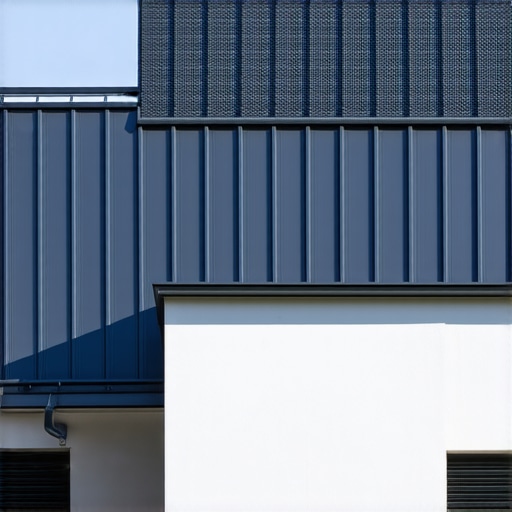
The Anatomy of a Failing Roof
You can tell a lot about a house by the smell of its attic on a humid Tuesday afternoon. If it smells like a wet dog wrapped in a damp basement rug, your roof isn’t just old—it’s failing the physics test. For twenty-five years, I’ve been the guy climbing into your crawlspace to find out why your ‘thirty-year’ shingles are curling like stale potato chips after only a decade. I’ve seen the damage done by roofing companies that prioritize speed over science, leaving homeowners with a ‘square’ of shingles that provides nothing but a false sense of security. My old foreman used to say, ‘Water is patient. It will wait for you to make a mistake.’ He was right. Water doesn’t just fall; it searches. It uses capillary action to climb up the back of a poorly installed shingle and finds the one missed nail—the ‘shiner’—that’s rusting away your decking.
The Shift to 2026 Metal Engineering
As we push toward 2026, the industry is seeing a massive shift in how we approach the building envelope. Local roofers are no longer just banging nails; they are managing thermal dynamics. In high-heat, high-moisture zones like the Gulf Coast or the humid corridors of the Southeast, traditional asphalt is a liability. It absorbs UV radiation until the oils in the bitumen boil off, leaving you with brittle fiberglass. This is where the 2026 metal systems change the math. We aren’t talking about the corrugated tin you’d find on a shed. We’re talking about precision-engineered architectural systems designed to survive a century.
“A roof system must be designed to accommodate the thermal expansion and contraction of the materials used, particularly in metal systems where the movement can be significant over the course of a single diurnal cycle.” – NRCA Manual for Metal Roof Systems
1. Advanced Thermal Decoupling
The primary reason most roofing fails isn’t the material itself; it’s the movement. Metal expands and contracts with the sun. If you pin a metal panel down with exposed fasteners, those screws will eventually back out, creating a ‘shiner’ that invites leaks. The 2026 systems utilize concealed fastener clips with integrated ‘thermal sliding zones.’ This allows the metal to breathe and move without tearing at the waterproofing layer. It prevents the ‘oil canning’ effect—that wavy, cheap look—and ensures the structural integrity of the seal remains intact regardless of the thermometer’s fluctuations.
2. High-Albedo Kynar Finishes
In the trade, we talk about the ‘urban heat island’ effect. Your roof can reach 160°F, radiating that heat directly into your living space and forcing your AC to work itself to death. The latest metal systems utilize PVDF (Kynar 500) resin-based coatings. These aren’t just ‘paint.’ They are molecularly bonded shields that reflect up to 85% of solar radiation. When you choose specialized roofing companies that understand this chemistry, you aren’t just buying a roof; you’re buying an insulation upgrade. You’re stopping the heat before it ever touches your plywood.
3. The Death of the ‘Trunk-Slammer’ Installation
Modern metal systems are unforgiving. You can’t just ‘eyeball’ a valley or slap some caulk on a chimney and call it a day. 2026 systems require precision flashing and the use of a ‘cricket’—a small false roof structure behind the chimney—to divert water properly. If your local roofers aren’t talking about hydrostatic pressure and wind-driven rain infiltration, they aren’t the right crew for a metal install. These systems utilize interlocking seams that mechanically lock together, making it physically impossible for wind to get underneath and peel the roof back during a tropical storm.
4. Secondary Water Resistance (SWR) Integration
If the metal is the armor, the underlayment is the skin. We no longer use simple 15-lb felt paper. The 2026 standards involve high-temperature, self-adhering modified bitumen underlayment. Even if a tree branch punctures the metal, the SWR layer seals around the intrusion. This is a forensic-level approach to roofing: we assume the primary barrier might fail and we build a second, invisible roof underneath it.
“The roof covering shall be installed in accordance with the manufacturer’s installation instructions… Metal roof panels shall be secured to the supports with approved fasteners.” – International Residential Code (IRC) R905.10.3
The Warranty Trap
Most roofing companies will try to sell you on a ‘Lifetime Warranty.’ In the trade, we know that’s usually a marketing gimmick. A warranty is only as good as the paper it’s printed on if the installation is flawed. If the local roofers don’t follow the specific fastening pattern for your wind zone, the manufacturer will deny your claim before the adjuster even parks his truck. Forensic roofing teaches us that failures happen at the penetrations—the vents, the pipes, and the valleys. If you want a roof that actually lasts until 2076, you ignore the shiny brochure and look at the flashing details. Metal is the gold standard, but only when installed by someone who understands that water is the most patient enemy on earth.