
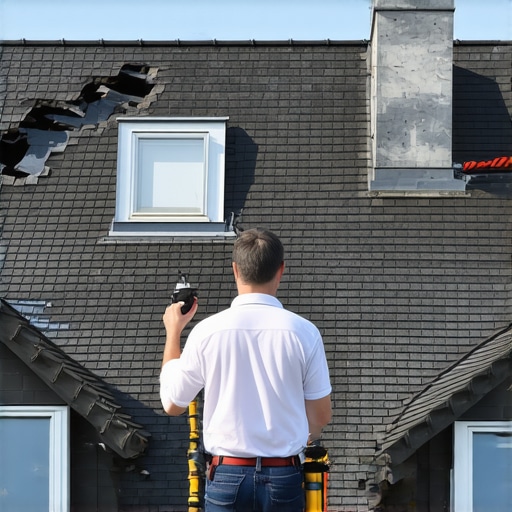
The Forensic Scene: A Sponge Beneath the Shingles
Walking on that roof felt like walking on a sponge. I knew exactly what I’d find underneath before I even pulled my bar from my belt. It was a 115-degree afternoon in the height of July, and the shingles under my boots were radiating heat that could sear steak. But underneath? That was a different story. The homeowner was complaining about a mystery leak that three different roofing companies had failed to find. They’d thrown tubes of caulk at the flashing and charged him for ‘maintenance’ calls, but the water kept coming. As a forensic roofer with 25 years in the dirt, I don’t look at the surface; I look at the physics. When I peeled back a section of the valley, the plywood didn’t just look wet—it was delaminated, swollen to twice its thickness, and covered in a white, fuzzy mold that smelled like a cellar. The water wasn’t coming from a hole. It was being pulled uphill. By the time 2026 rolls around, these types of ‘invisible’ failures are going to be the number one reason local roofers are swamped with warranty claims they can’t fulfill.
1. Thermal Fatigue and the Granule Migration Crisis
If you want to understand why your roof is going to fail by 2026, you have to look at the chemistry of the asphalt shingle. We are seeing a massive uptick in ‘thermal shock’ across the country. This occurs when a roof deck hits 160°F in the afternoon sun and is suddenly hit by a 70°F thunderstorm. The immediate contraction of the bitumen mat causes microscopic fractures. Most roofing professionals see a few granules in the gutter and tell you it’s ‘normal wear.’ They’re lying, or they’re ignorant. Those granules are the only thing protecting the volatile oils in the asphalt from UV radiation. Once the ‘bald spots’ start appearing—even if they’re the size of a dime—the sun begins to bake the oils out of the shingle. By 2026, those shingles will be as brittle as a saltine cracker. When you walk on them, they won’t flex; they’ll snap. This isn’t just an aesthetic issue; it’s a structural countdown. Without those protective granules, the shingle loses its ability to shed water, leading to what we call ‘hydrostatic pressure’ where the water sits in the micro-cracks and eventually finds a shiner—a nail that missed the rafter—to follow straight into your attic.
“A roof is only as good as its flashing, and the material’s ability to withstand thermal expansion is the difference between a 30-year system and a 10-year disaster.” – Old Roofer’s Adage
2. The Capillary Action Trap in Valleys and Chimneys
The second way to identify a looming 2026 roof issue is by looking at how water moves sideways. Water is patient. It doesn’t just fall off a roof; it clings. Through a process called capillary action, water can actually travel upward between two overlapping surfaces. I see this most often in poorly constructed valleys where local roofers failed to cut the shingles back properly or didn’t use a metal cricket behind a wide chimney. If the roofing companies you’re interviewing don’t mention a cricket for any chimney wider than 30 inches, show them the door. Without that small, peaked structure to divert water, the area behind your chimney becomes a pond. Debris—pine needles, leaves, grit—collects there and creates a dam. This dam forces water under the shingles and into the roof deck. By the time you see a brown spot on your living room ceiling, the plywood has been rotting for three seasons. You aren’t just looking for a leak; you’re looking for the ‘mechanism of failure.’ If you see standing water or silt buildup in your valleys, your roof is already on life support.
3. The Attic Oven: Ventilation Stagnation
Most people think a roof fails from the top down. In reality, many fail from the bottom up. Improper ventilation is the silent killer of modern roofing systems. If your attic is 140°F, your shingles are being cooked from both sides. This excess heat causes the plywood to ‘outgas,’ which can actually break down the adhesives in the shingles above them. Furthermore, in colder climates, this heat leads to the dreaded attic bypass. Warm air leaks into the attic, hits the cold underside of the roof deck, and turns into frost. When that frost melts, it looks like a roof leak, but it’s actually a ventilation failure. According to the NRCA (National Roofing Contractors Association) standards, you need a balanced system of intake and exhaust. If your roofing companies are adding ridge vents without ensuring the soffit vents are clear and functional, they are effectively suffocating your home. This leads to warped shingles and ‘fish-mouthing,’ where the edges of the shingles curl up like the lips of a dead fish. By 2026, these ‘cooked’ roofs will require full tear-offs because the deck itself will be too soft to hold a nail.
“Adequate ventilation shall be provided… the total net free ventilating area shall be not less than 1 to 150 of the area of the space ventilated.” – International Residential Code (IRC) R806.1
The Bottom Line: Don’t Hire a Salesman, Hire an Investigator
Identifying these issues before they become catastrophic requires more than a ladder and a quote sheet. It requires an understanding of how air, heat, and water interact with your specific home’s geometry. If a roofer spends less than twenty minutes on your roof and doesn’t even go into your attic, they aren’t a roofer—they’re a paper-shuffler. The cost of a square of shingles is going up every year, and the cost of labor is following suit. Waiting until 2026 to address a ‘minor’ granule issue or a small ‘shiner’ in the attic is a recipe for a $30,000 headache. You need to look for the signs now: the ‘crunchy’ sound when you walk on the shingles, the streaks of algae that indicate moisture retention, and the lack of airflow in your eaves. Don’t let a ‘trunk slammer’ tell you a bit of caulk will fix a valley that was flashed poorly ten years ago. Surgery is expensive, but an autopsy is final. Get your roof inspected by someone who knows how to read the forensic evidence left behind by the weather.