
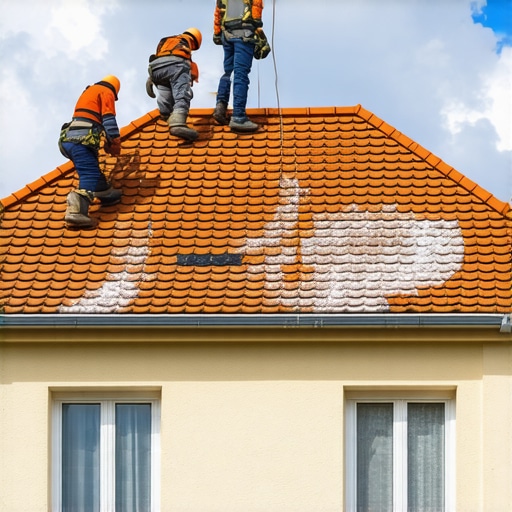
The Sound of the Sky Falling: Why Your 2026 Hail Claim is a Minefield
I remember the sound of the 2026 storm season in the High Plains like it was yesterday. It wasn’t just the thunder; it was that rhythmic, metallic thwack-thwack-thwack of two-inch ice stones pulverizing the ridge vents. Most homeowners sit in their kitchens hoping the windows don’t break, but as a forensic roofer, I’m thinking about the bitumen. I’m thinking about the microscopic fractures in the fiberglass mat that won’t leak today, but will turn your attic into a swamp by 2028. Walking on a roof after a storm like that feels like walking on a sponge. I knew exactly what I’d find underneath: delaminated plywood and a thousand ‘shiners’ where the impact jarred the nails loose from the rafters. Local roofers are already swarming the neighborhoods, but before you sign a contract on your tailgate, you need to understand the physics of what just happened to your shelter.
The Physics of the Bruise: Mechanism Zooming
When a hailstone hits an asphalt shingle at terminal velocity, it’s not just a ‘dent.’ It’s a mechanical failure of the layering system. First, the protective granules—those little ceramic-coated stones—are blasted away. This exposes the raw, black asphalt (the bitumen) to the sun. In the desert heat of the Southwest or the high-altitude UV of the Rockies, that asphalt will bake and go brittle in months. Underneath that, the fiberglass matting gets a ‘micro-fracture.’ This is the ‘bruise.’ During the next thermal cycle, when the roof heats to 150°F and then cools rapidly at night, that fracture expands. This is thermal shock. Eventually, water finds its way into that fracture via capillary action, pulling moisture sideways under the shingle. If your roofing companies aren’t talking about mat integrity, they are just selling you a cosmetic Band-Aid.
“Hail damage to asphalt shingles can cause immediate loss of water-shedding capabilities or accelerated aging, which leads to premature failure of the roofing system.” – National Roofing Contractors Association (NRCA)
The Storm Chaser Defense: Avoiding the ‘Free Roof’ Trap
The first thing you’ll see after a 2026 storm isn’t an adjuster; it’s a guy in a polo shirt with an out-of-state plate. These ‘trunk slammers’ promise a free roof by ‘absorbing’ your deductible. Let’s be clear: that is insurance fraud in most states, and more importantly, it means they are cutting corners elsewhere. They’ll skip the starter strip, reuse your old rusted valleys, and leave the cricket behind the chimney rotting. A real forensic repair requires looking at the system, not just the shingles. You want a local pro who knows that a square of shingles is only as good as the ice and water shield underneath it.
Way 1: The Surgical Repair (Targeted Shingle Replacement)
If the storm was directional and only hit your north-facing slope, you might not need a full tear-off. But this isn’t just swapping out a few pieces. A forensic roofer has to perform a ‘brittleness test’ on the surrounding shingles. If we lift a shingle to replace the damaged one below it and the top shingle cracks along the ‘seal strip,’ the roof is unrepairable. We call this the ‘un-sealable’ threshold. If the shingles are too old to withstand the repair, the entire slope has to go. This is where you fight the insurance company for ‘matching’—because a mismatched roof isn’t just ugly; it devalues your property by thousands.
Way 2: The Insurance Replacement (Navigating the Adjuster Maze)
Most adjusters look for ‘functional damage’—meaning a hole. But as pros, we look for ‘diminished life.’ To get a full replacement from roofing companies, you need a documented ‘hit count’—usually 8 to 10 hits per 10-foot by 10-foot area (a square). You need to ensure they are paying for the drip edge and the flashing. Don’t let them ‘cope’ the old flashing. If they don’t tear it out and replace it, you’re putting a new engine in a car with rusted-out brakes. Use a chalk test to highlight the impact points for the adjuster’s camera; it makes the bruising undeniable.
“Roof coverings shall be fastened to the supporting roof construction and shall provide weather protection for the building.” – International Residential Code (IRC) R903.1
Way 3: The Resilience Upgrade (Polymer-Modified Bitumen)
If you’re fixing 2026 damage, why put the same junk back on? Standard shingles are ‘oxidized’ asphalt—they’re stiff. To truly fix the problem for the next decade, you upgrade to Class 4 Impact Resistant (IR) shingles. These are made with SBS (Styrene-Butadiene-Styrene), which is basically rubberized asphalt. When hail hits these, the shingle bounces back like a trampoline instead of shattering like a cracker. This isn’t just a ‘game-changer’ (to use a term I hate), it’s common sense. It often gets you a 20-30% discount on your premiums, paying for itself in five years.
Protecting the Deductible and the Deck
When the tear-off starts, that’s when the truth comes out. If I see ‘oatmeal’ plywood—wood so soft you can put a screwdriver through it—I know the ventilation was shot. A new roof on a bad deck is a death sentence. Ensure your roofing companies are checking the soffit vents and the ridge vent. If the attic can’t breathe, the new shingles will ‘cook’ from the inside out, and you’ll be right back here in five years, hail or no hail. Don’t let a ‘shiner’—a missed nail—be the reason you have a mystery leak in your bedroom ceiling next spring. Demand a magnetic sweep of the yard to catch the thousands of nails that will inevitably fall. Your tires and your dog will thank you.