
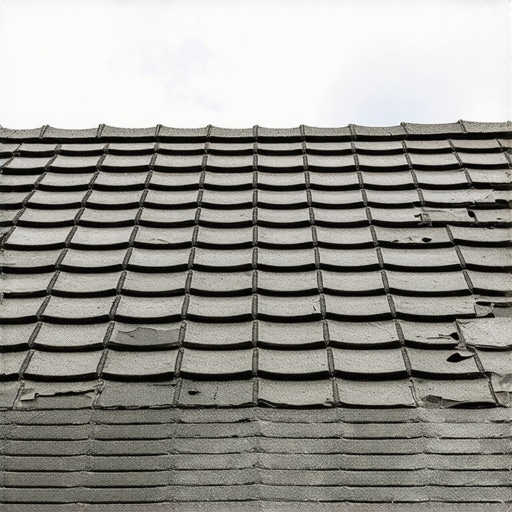
The Glass Roof: Why Your 15-Year Shingles Are Snapping Like Crackers
I stood on a roof in the high desert last Tuesday where the ambient temperature was pushing 110 degrees, but the surface temperature on those dark charcoal shingles was north of 165. When I took a step, I didn’t hear the usual soft thud of asphalt; I heard a sickening crunch, like stepping on a bag of potato chips. I knelt down, reached for a tab, and instead of it flexing, it simply snapped off in my hand. It was as dry as an old bone in a canyon. I knew exactly what I’d find underneath: a baked deck and a failed moisture barrier. That’s the reality for many homeowners dealing with local roofers who sold them ‘lifetime’ products a decade ago that are now failing the 2026 brittleness test. Most roofing companies won’t tell you that asphalt is essentially a petroleum product, and just like an old tire left in the sun, it eventually loses its essential oils and turns into a useless, rigid sheet of fiberglass and rock dust.
The Physics of the Snap: Understanding Oil Migration
To understand why your roof is failing, you have to look at the molecular level. Asphalt shingles are a composite of a fiberglass mat, saturated with bitumen (asphalt), and coated with ceramic granules. In the Southwest, the primary enemy is UV-induced photo-oxidation. When those high-energy photons hit the roof, they break the polymer chains in the asphalt. This leads to a process we in the trade call ‘oil migration.’ The plasticizers that keep the shingle flexible migrate to the surface and evaporate or wash away. Without those oils, the shingle cannot expand and contract during the 60-degree temperature swings we see between noon and midnight. This leads to ‘thermal shock.’ When the shingle is forced to move but lacks the flexibility to do so, it develops micro-fractures. We are seeing a massive wave of this in 2026 because the manufacturing standards from ten years ago prioritized cost over asphalt thickness, leaving modern homeowners with a ticking time bomb on their rafters.
“Asphalt shingles shall be designed to withstand the maximum expected wind speeds and shall be installed in accordance with the manufacturer’s instructions and the requirements of this section.” – International Residential Code (IRC) R905.2
Sign 1: The ‘Bald Spot’ Syndrome (Granule Depletion)
The first sign of terminal brittleness is excessive granule loss. Those little colored rocks aren’t there for aesthetics; they are the sunscreen for your roof. Their job is to block UV rays from hitting the asphalt. Once the shingle becomes brittle, the bond between the granules and the asphalt mat weakens. You’ll see this in your gutters—if they look like they’re filled with heavy sand, your roof is shedding its armor. Once the mat is exposed, the UV damage accelerates exponentially. I’ve seen roofing companies try to ‘wash’ these roofs, which is professional malpractice. Any high-pressure water on a brittle shingle will strip the remaining granules and leave the fiberglass mat bare, leading to a leak within months. If you see ‘shiny’ spots on your roof during the golden hour, that’s the sun reflecting off the exposed fiberglass mat. Your roof is no longer a waterproof barrier; it’s a sieve.
Sign 2: Edge Curling and ‘Fish-Mouthing’
As the oils leave the asphalt, the shingles begin to shrink. Because the top surface is exposed to more heat than the underside, they shrink unevenly, causing the edges to curl upward (cupping) or the center to hump up (fish-mouthing). This is a death sentence for a roof. Once a shingle curls, it creates a ‘pocket’ that catches wind-driven rain. Instead of water shedding down the roof, it gets funneled under the shingle. If your local roofers didn’t install a high-quality ice and water shield or a synthetic underlayment, that water is going straight into your plywood deck. I once investigated a leak where the shingles looked okay from the ground, but up close, every single tab was fish-mouthed. The wind had caught those tabs, broken the sealant strip (another victim of brittleness), and forced water three feet up the slope, rotting out the cricket behind the chimney. It wasn’t a ‘storm’ that caused it; it was ten years of the sun cooking the life out of the material.
Sign 3: The Spider-Web Micro-Cracking
This is the most subtle and dangerous sign. You have to get on a ladder to see it. When a shingle loses its structural integrity, it develops a network of tiny cracks that look like a spider web. These cracks go all the way through the asphalt layer to the fiberglass mat. During a rainstorm, capillary action sucks water into these cracks. Because the water is trapped against the mat, it doesn’t dry out quickly. This leads to the slow rot of the roof deck. Many homeowners don’t realize they have a problem until they see a brown spot on their ceiling, but by then, the square footage of damage is often five times larger than the visible leak. If you walk on a brittle roof and hear a ‘crunch’ or see new cracks forming under your feet, the roof is ‘glassing’ and needs immediate replacement before the next monsoon season hits.
“Thermal expansion and contraction are the most underestimated forces in roofing. A roof that cannot move is a roof that will fail.” – NRCA Manual of Low-Slope Roofing
The Material Truth: What to Choose in 2026
When you’re looking at roofing companies for a replacement, don’t just buy the cheapest asphalt shingle again. If you’re in a high-heat zone, consider a Class 4 impact-rated shingle or, better yet, a stone-coated steel or concrete tile system. These materials handle thermal expansion much better than traditional asphalt. If you stick with asphalt, insist on a ‘high-polymer’ modified bitumen shingle. These have added rubbers (SBS) that keep the shingle flexible even after years of UV exposure. And for heaven’s sake, watch out for the ‘trunk slammers’ who use a nail gun with the pressure turned up too high. They’ll drive a ‘shiner’ (a missed or over-driven nail) straight through the brittle mat, creating a leak on day one. A real pro will adjust their tools to the temperature of the day and ensure the starter strip and drip edge are locked down tight. Don’t be fooled by ‘lifetime warranties’ that only cover manufacturing defects; those warranties almost never cover ‘weathering,’ which is exactly what brittleness is. You need a contractor who understands the physics of the desert, not just a salesman with a glossy brochure.