
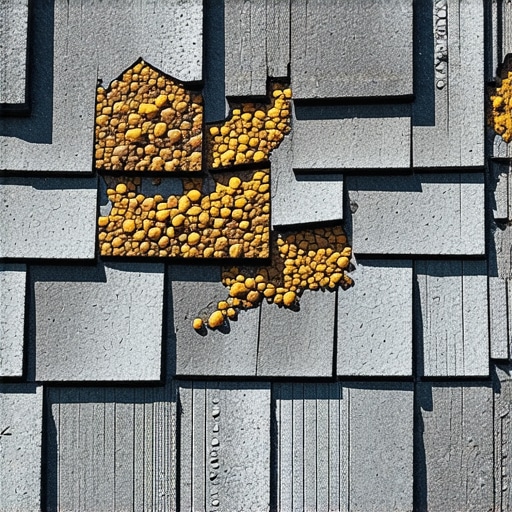
The Forensic Reality of the Balding Roof
Walking on that roof felt like walking on a beach of black glass. My boots weren’t gripping the asphalt; they were sliding on a layer of loose ceramic grit that had surrendered its bond with the shingle. I looked down and saw the shiners—nails that had backed out because the deck was so dry it couldn’t hold a bite anymore. This wasn’t just old age; this was a systemic failure of the protective layer. When I see local roofers slapping a new layer over a mess like this, it makes my blood boil. You aren’t just looking at ‘wear and tear’ here; you are looking at a forensic crime scene where the primary suspect is UV-induced thermal shock. By 2026, the intense heat cycles in the Southwest are going to turn standard asphalt shingles into brittle wafers faster than most roofing companies are willing to admit. If you aren’t paying attention to the grit in your gutters, you’re missing the early warning signs of a total structural compromise.
The Physics of the Ceramic Shield
To understand why your roof is losing its ‘hair,’ you have to understand what those granules actually do. They aren’t there for aesthetics. Those tiny pieces of crushed basalt, coated in a ceramic glaze, are the sunscreen of your home. Asphalt is a petroleum-based product. It is inherently unstable when exposed to short-wave ultraviolet radiation. The granules are engineered to reflect that radiation and protect the underlying bitumen from photo-oxidation. When those granules shed, the sun begins to cook the asphalt, boiling off the volatile oils that keep it flexible. Once those oils are gone, the shingle turns into a piece of charcoal. It loses its ability to expand and contract with the 140°F attic temperatures and the sudden 40-degree drops during monsoon season. This is where thermal expansion becomes a killer. The shingle tries to move, it can’t, and it cracks. Now, let’s look at the three specific indicators that your local roofers should be hunting for during an inspection.
“A roof system’s ability to shed water is directly dependent on the integrity of its surfacing materials; once the mineral surfacing is lost, the underlying bitumen is exposed to rapid degradation.” – NRCA Manual of Low-Slope Roofing Systems
Sign 1: The Gutter Gold Mine (Sediment Accumulation)
The first sign is what I call the ‘Gold Mine.’ You clean your gutters, and instead of just finding leaves and maple seeds, you find a heavy, dark silt. This isn’t just dirt. If you grab a handful and it feels like coarse sand, your roof is hemorrhaging its lifeblood. In the trade, we look at the volume of this sediment per square (100 square feet). If you’re pulling out more than a cup of granules from a single downspout run, the bond between the asphalt and the granule has failed. This often happens because of ‘scabbing’—where the asphalt becomes so hot it softens, and the granule is pushed out by the weight of water or even wind. Most roofing companies will tell you this is normal for a new roof. And it is, for the first six months. But if your roof is five years old and you’re seeing this in 2026, the chemical stabilizers in your shingles are failing.
Sign 2: The Fibrous Scalp (Fiberglass Exposure)
When the granules are gone, the ‘bald spots’ appear. But don’t just look for color change. You need to look for the sparkle. No, it’s not pretty; it’s the glass. Most modern shingles use a fiberglass mat as the skeleton. When the asphalt cooks away after granule loss, the raw glass fibers become exposed. Under the desert sun, these fibers will actually glint in the light. This is the ‘Forensic Scene’ at its worst. Once you see the mat, the shingle is no longer waterproof. It’s now a sponge. Capillary action will pull moisture through those fibers and into the plywood deck. I’ve seen roofing systems where the owner waited just one season after seeing the ‘sparkle,’ and by the time we did the tear-off, the deck felt like a wet cardboard box. You can’t patch a bald spot. The surrounding shingles are likely just as brittle, and trying to nail into them will only cause more cracking.
Sign 3: Pitted Pockmarks and the ‘Alligatoring’ Effect
The third sign is subtle until you’re standing right over it. It’s called alligatoring. As the asphalt loses its granules and dries out, it begins to shrink in a localized, hexagonal pattern that looks exactly like the skin of a reptile. This is the final stage of material failure. Between these cracks, the last of the granules fall into the ‘valleys’ of the cracks and then wash away. If your local roofers aren’t getting on a ladder and checking the starter strip and the areas around the cricket or chimney, they’ll miss this. These pockmarks are the entry points for water. A roof that has reached the alligatoring stage is a liability. The 2026 climate isn’t getting any cooler, and these cracks will only widen as the thermal shock intensifies each night.
“Thermal shock is the primary driver of premature membrane failure in arid climates, leading to accelerated granule displacement and bituminous cracking.” – Architectural Axioms for Extreme Environments
The Material Truth: Why Your Warranty Won’t Save You
Everyone loves to brag about their ‘Lifetime Warranty.’ Let me give you the cynical truth from 25 years in the dirt: most warranties are marketing nonsense designed to get the sale. They are pro-rated, meaning by the time your roof actually fails at year 12 or 15, the manufacturer might offer you a check for three shingles and a tube of caulk. More importantly, these warranties often have ‘Acts of God’ or ‘improper ventilation’ clauses that allow them to wiggle out of a claim. If your attic is a pressure cooker because your roofing companies didn’t install enough ridge vents or soffit intakes, your granule loss is considered ‘user error.’ This is why material choice is secondary to the quality of the install. Whether you go with a high-end metal roof or a modified bitumen shingle, if the ventilation isn’t pulling the heat off the back of the deck, the granules will shed. In the Southwest, I’m starting to move my clients toward concrete tiles or high-reflectivity coatings. Asphalt is becoming a risky bet as the UV index continues to climb. Don’t let a ‘trunk slammer’ sell you on a cheap 3-tab shingle in 2026. You’ll be calling me back in five years to investigate why your house smells like wet wood and the ‘sand’ is back in your gutters.