
The Hidden Alchemy of the Roof Deck: Why Your Shingles Are Shedding
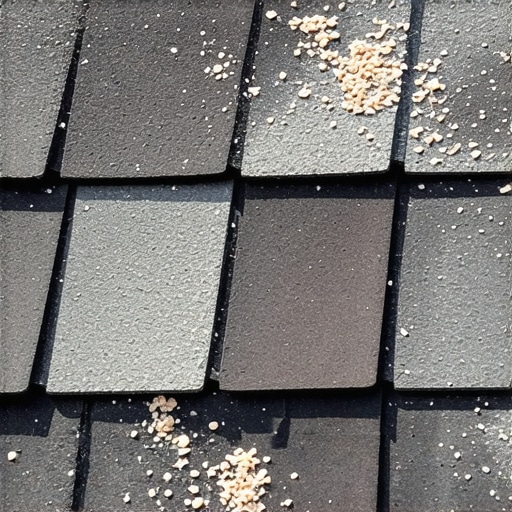
Most homeowners look at their roof and see a static shield. I look at it and see a chemical battleground. My old foreman used to say, ‘Water is patient. It will wait for you to make a mistake.’ But in the high-heat corridors of the South, it is the sun that strikes first. By 2026, we are seeing a massive wave of premature aging in asphalt shingles installed over the last decade. Those tiny ceramic granules aren’t just ‘sand’ for aesthetics; they are the literal SPF-50 for the bitumen layer underneath. When those granules start migrating into your gutters, you aren’t just losing color—you are losing the structural integrity of your home’s first line of defense.
The physics of this failure is a process called UV degradation. Every shingle is essentially a fiberglass mat soaked in asphalt and topped with crushed stone. The asphalt provides the waterproofing, but asphalt is a petroleum-based product that hates the sun. UV radiation breaks the molecular bonds in the bitumen, causing it to become brittle. The granules are there to block that radiation. When the bond between the stone and the tar fails, the asphalt ‘cooks.’ It loses its oils, shrinks, and cracks. Once the sun sees that black tar, it’s a sprint to the finish line of failure.
“The primary function of the mineral granules is to protect the asphalt coating from the ultra-violet rays of the sun.” – National Roofing Contractors Association (NRCA)
Sign #1: The Gutter Silt Phenomenon (Mechanical Migration)
If you want to know the health of your roof, don’t look up—look down. Go to your downspout after a heavy rain and stick your hand in the splash block. If it feels like you’re digging through a bucket of coarse sand, your roofing system is in a state of advanced shedding. In the trade, we call this ‘de-lamination of the surfacing.’ This isn’t just standard wear; by 2026 standards, many local roofers are finding that shingles are losing 30% of their mass in just the first seven years due to poor manufacturing ‘filler’ oils. When you see a pile of granules, what you’re actually looking at is the armor of your house being washed away. This leads to a loss of weight in the square, making the shingles lighter and more prone to wind uplift. If those shingles don’t have the weight to stay down, the sealant strip fails, and the next thunderstorm turns your roof into a series of flapping wings.
Sign #2: The ‘Bald Spot’ and the Fiberglass Ghost
When you look up from the curb and see dark, shiny patches or reflective glints on your slopes, you are witnessing the ‘Fiberglass Ghost.’ This is the point of no return. As granules shed, the underlying asphalt is exposed to the elements. The sun bakes it until it cracks, eventually revealing the white or translucent fiberglass matting underneath. This is a catastrophic failure because fiberglass is porous. It doesn’t stop water; it just holds the asphalt in place. At this stage, capillary action takes over. Water doesn’t just fall off the roof; it gets sucked upward under the shingle course through the exposed fibers. This moisture then sits against the plywood deck, starting the slow rot that eventually turns your sheathing into something resembling soggy cardboard. Professional roofing companies know that once the mat is visible, a repair is no longer an option. You are looking at a full surgical replacement.
Sign #3: Pitting and Thermal Shock Fractures
The third sign is more subtle and requires a ladder. We call it ‘pitting.’ It looks like small bird pecks across the surface of the shingle. In high-heat regions like Texas or Arizona, this is often caused by thermal shock. During a 105°F day, your roof surface can hit 160°F. When a sudden afternoon thunderstorm dumps 65°F rain on that surface, the shingles undergo violent contraction. The asphalt shrinks faster than the granules can adjust, popping them out of the bitumen bed like a zit. This leaves behind a microscopic crater. These pits collect water, which then freezes (if you’re in a climate that sees frost) or simply acts as a magnifying glass for the next day’s sun, accelerating the ‘cooking’ of the asphalt. Many homeowners mistake this for hail damage, but a forensic roofer can tell the difference between a mechanical strike and a thermal fracture every time.
“Roofing systems shall be designed and installed in accordance with this code and the manufacturer’s installation instructions.” – International Residential Code (IRC) R903.1
The Warranty Trap: Why ‘Lifetime’ is a Marketing Word
Don’t get sucked into the ‘Lifetime Warranty’ trap that many roofing companies use as a closing tool. Read the fine print. Most of those warranties are prorated and specifically exclude ‘granule loss due to natural weathering.’ They consider your roof shedding its armor to be the same as tires losing tread—it’s expected. If you hire a ‘trunk slammer’—those guys who operate out of the back of a pickup with no permanent address—they’ll promise you the moon. But when the bald spots appear in three years, they’ll be long gone. You need a contractor who understands attic ventilation. If your attic isn’t breathing, you are literally slow-cooking your shingles from the inside out, making granule loss inevitable. A roof without a ridge vent and proper soffit intake is a kiln, and no shingle on earth can survive that for 30 years.
Choosing Your Surgeon: What to Ask Local Roofers
When you start calling local roofers, stop asking about price per square and start asking about their ‘flashing’ and ‘ventilation’ strategy. Any ‘shingle flinger’ can nail down a piece of asphalt. You want the guy who looks at your ‘cricket’—that small peak behind the chimney—to make sure water is being diverted properly. You want the crew that checks for ‘shiners’—those missed nails that act as tiny conduits for leaks. If they don’t talk about the ‘Starter strip’ or the ‘Drip edge,’ they are cutting corners. A quality roofing job is a system of layers, not just a cosmetic layer of stones. If your granules are gone, the system is broken. Don’t wait for the water to hit the dining room table; by then, you’re not just buying a roof, you’re buying a ceiling, insulation, and mold remediation too.