
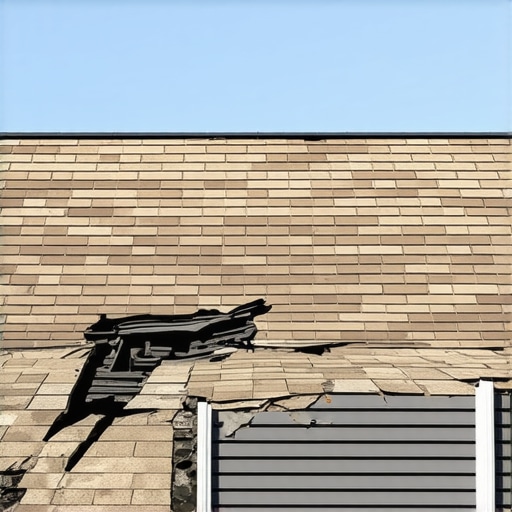
The Forensic Scene: Walking on Crushed Crackers
Walking on that roof felt like walking on a sponge in some spots and dried-out saltines in others. I knew exactly what I’d find underneath before I even pulled my pry bar from my belt. It was a 2021 install, barely five years old, yet the shingles were already showing longitudinal tears—what we in the trade call ‘splitting’ or ‘thermal cracking.’ The homeowner was frantic. She’d called three roofing companies, and they all told her the same thing: ‘It’s a manufacturer defect, you need a new roof.’ They weren’t necessarily lying, but they weren’t telling the whole truth either. They just wanted to sell a square or fifty of new material and move on to the next lead. But I’m not here to sell you a product; I’m here to tell you why the roofing industry is bracing for a massive wave of shingle failure in 2026. This isn’t just about bad luck; it’s about physics, chemistry, and the absolute neglect of attic thermodynamics.
1. The ‘Supply Chain Batch’ Crisis of 2021-2022
The first reason we are seeing an epidemic of splitting in 2026 traces back four to five years. During the chaotic supply chain years of the early 2020s, manufacturing plants were under immense pressure. When you rush the cooking process of asphalt shingles, things get messy. A shingle isn’t just a slab of tar; it’s a complex sandwich of a fiberglass mat, filled asphalt, and ceramic granules. To hit production targets, some batches were produced with a higher ratio of ‘filler’ (typically limestone) and less SBS-modified bitumen. This ‘lean’ mixture makes the shingle brittle. Mechanism Zooming: Think about the molecular level. Asphalt is supposed to be visco-elastic. It should stretch when the sun hits it and shrink when the night air cools it down. When you over-fill that mixture with stone dust, the shingle loses its ability to elongate. By 2026, these ‘lean’ shingles have endured enough UV radiation to lose their remaining oils. When they try to expand on a 140°F Tuesday, they don’t stretch—they snap. They split right down the middle, often following the joints of the plywood deck underneath. This is what happens when local roofers install material that was born to fail.
“A roof is only as good as its flashing and the integrity of its waterproof membrane.” – Old Roofer’s Adage
2. Thermal Shock and the ‘Bake Oven’ Effect
If you live in a climate where the temperature swings 40 degrees in twelve hours, your roof is essentially a giant breathing lung. The second reason for the 2026 splitting crisis is ‘Thermal Shock.’ When a cold rain hits a hot roof in the Southwest or even the Midwest, the shingles undergo a violent contraction. Mechanism Zooming: As the water evaporates off the surface, it pulls latent heat out of the asphalt at an incredible rate. The top layer of the shingle tries to shrink instantly, while the bottom layer, still pinned to the hot roof deck, stays expanded. This differential stress creates a shear force that tears the fiberglass mat apart. Most roofing companies ignore the attic ventilation, which acts as the ‘bake oven’ for this process. If your attic isn’t breathing—if your intake vents are clogged with insulation or some ‘trunk slammer’ forgot to cut the ridge vent—your shingles are being cooked from both sides. The asphalt essentially ‘pyrolyzes,’ turning into a dry, charred husk that has the structural integrity of a burnt piece of toast.
3. The ‘Shiner’ and Improper Fastening Physics
You’d think after 100 years of nailing shingles, we’d have it down. We don’t. The third reason for 2026 splitting is the ‘shiner’—a missed nail or a nail driven too high. When local roofers use pneumatic nail guns set to the wrong pressure, they either ‘blow through’ the shingle or leave the nail head sitting proud. A high nail prevents the shingle from laying flat. Mechanism Zooming: This creates a small air pocket or a ‘bridge’ over the shingle below. As the roof cycles through heat and cold, that bridge becomes a stress concentrator. Instead of the expansion force being distributed across the entire square, it focuses on that one point where the nail is creates friction. Eventually, the shingle splits at that stress point. It’s not a leak today, but by the time 2026 rolls around, those micro-tears have turned into full-blown apertures for water to migrate through via capillary action, pulling moisture under the shingle and rotting your deck from the top down.
“Roof systems shall be designed and installed in accordance with this code and the manufacturer’s installation instructions.” – International Residential Code (IRC) R903.1
The Material Truth: Why ‘Lifetime’ is Marketing Fiction
I’ve seen a thousand ‘Lifetime Warranties’ and I’ve seen about three of them actually pay out for splitting. Most manufacturers will claim the splitting is due to ‘improper ventilation’ or ‘structural movement’—anything to avoid the ‘Manufacturing Defect’ tag. If you’re looking at a replacement in 2026, you have to choose your poison. Asphalt is affordable, but it’s a petroleum product in a world of rising heat. Metal is durable but noisy and expensive. Synthetic slate looks great but hasn’t been in the field long enough for a forensic vet like me to trust it. The key isn’t just the material; it’s the installer. You need someone who understands that a roof is a system. If they aren’t checking your cricket behind the chimney or ensuring your ice and water shield is lapped correctly, they are just laying down future garbage. Don’t fall for the ‘Free Roof’ insurance scams either; those guys use the cheapest ‘supply chain batch’ shingles they can find, and you’ll be right back in this position by 2030. Fix it once, fix it right, and for heaven’s sake, make sure your attic can breathe.