
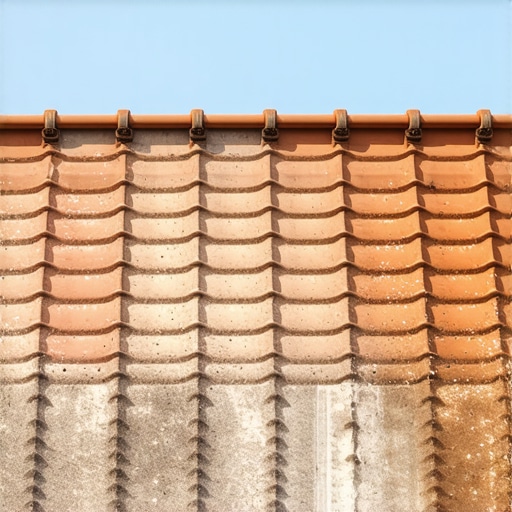
The Black Streak Autopsy: Why Your Roof Is Growing a Biofilm
Walking onto a job site in Sarasota last July, the heat was already 98 degrees by 9:00 AM. Walking on that roof felt like walking on a sponge soaked in motor oil. I knew exactly what I’d find underneath because I’d seen it a thousand times before. The homeowner thought they had a leak. What they actually had was a massive biological colony that was eating their investment from the granules down. As we look toward 2026, the roofing industry is hitting a wall where the cheap manufacturing of the last decade is finally catching up with the humid reality of the Southeast. If you think those black streaks on your shingles are just ‘dirt,’ you’re about to be taken for a ride by a ‘trunk slammer’ with a pressure washer.
1. The Limestone Buffet and the 2026 Tipping Point
The first reason roofing companies are going to be flooded with calls in 2026 is the fundamental chemistry of the modern asphalt shingle. In the trade, we know that asphalt isn’t just asphalt anymore. It’s a mix of fiberglass, bitumen, and a massive amount of crushed limestone filler. Why limestone? Because it’s heavy and it’s cheap. But here is the physics of the failure: Gloeocapsa magma. This is a hardy, ancient cyanobacteria that doesn’t just sit on your roof; it feeds on the calcium carbonate in the limestone. By 2026, the ‘COVID-era’ roofs—those slapped on during the 2021-2022 building boom—will hit their four-year mark. That is exactly when the initial copper coating on ‘algae-resistant’ shingles begins to deplete. Once that copper ion barrier drops, the bacteria take hold, anchoring their root-like structures into the protective granules. When it rains, the water doesn’t just run off; it creates a capillary action, pulling the bacteria deeper into the starter strip and the valleys. You aren’t just looking at an ugly roof; you are looking at a roof that is being digested.
“The accumulation of organic debris and the subsequent growth of algae or moss can lead to the premature degradation of the roofing membrane by retaining moisture against the surface.” – National Roofing Contractors Association (NRCA)
2. The Attic Sauna: Why Poor Ventilation Bakes the Biofilm
Local roofers love to talk about shingles, but they rarely talk about the air underneath them. In a tropical climate, your attic is a pressure cooker. If your roofing system wasn’t designed with a balanced intake and exhaust—think soffit vents and ridge vents working in tandem—you are creating a thermal trap. When the attic hits 140°F, it bakes the plywood deck. This heat transfers through the underlayment to the back of the shingle. This ‘bottom-up’ baking causes the asphalt to off-gas and harden, making it brittle. This is where the staining gets aggressive. The heat accelerates the metabolic rate of the algae. It’s a feedback loop: the black streaks absorb more UV radiation, which increases the heat, which further degrades the asphalt, which allows more limestone to be exposed for the algae to eat. If your roofer didn’t calculate the Net Free Venting Area (NFVA), they didn’t install a roof; they installed a slow-motion disaster. I’ve seen squares of shingles curled up like potato chips just because someone forgot to cut the ridge vent wide enough. It’s not a mystery; it’s thermodynamics.
3. The ‘Soft Wash’ Scam and the Death of Granule Adhesion
By 2026, the market will be saturated with ‘roof cleaning’ companies promising to make your stains vanish. This is the third reason for the staining crisis. Most homeowners will hire a guy with a ladder and a tank of diluted bleach. Sure, the black streaks disappear instantly. But here is what happens at the microscopic level: the sodium hydroxide or high-pressure water used by inexperienced contractors destroys the granule bond. Those granules are the only thing protecting your roof from the sun. Once they are gone, your roof is just a sheet of oily paper. You’ll start seeing ‘shiners’—those missed nails that start to rust—because the protective layer has been stripped away.
“A roof system’s longevity is dependent upon the integration of quality materials, proper design, and rigorous maintenance, not just the aesthetic removal of surface contaminants.” – International Residential Code (IRC) Commentary
When you see that green or black staining return in six months, it will be twice as thick because the surface is now more porous than before. A real forensic roofer looks for the ‘cricket’ behind the chimney or the way the flashing is integrated. If you ignore the physics of water shed and biological growth, you are just paying for a temporary illusion. In 2026, the homeowners who went for the lowest bid are going to find out that ‘cheap’ is the most expensive word in the English language.