
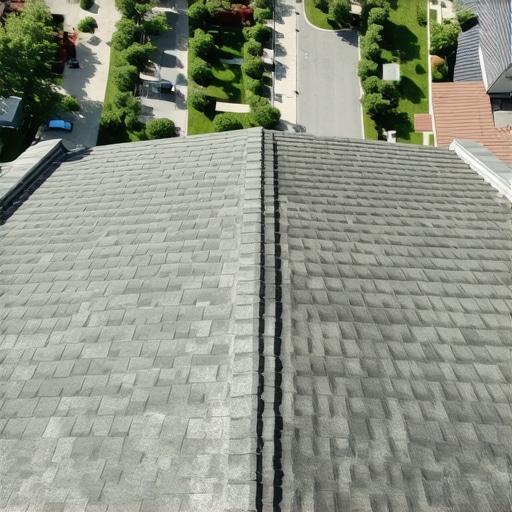
The Autopsy of a ‘Dirty’ Roof
I stood on a roof last Tuesday in the thick humidity of the Gulf Coast, and it felt like I was walking on a wet wool blanket. The homeowner was furious. She’d paid one of the local roofing companies a premium five years ago for ‘top-tier’ architectural shingles, and now, her house looked like it had been through a grease fire. Those long, black, weeping streaks weren’t just dirt. They were a symptom of a systemic failure in the way we’re building and maintaining roof decks in this climate. I grabbed my pry bar and lifted a course of shingles near the valley. The scent of damp earth and mold hit me immediately. This wasn’t a product defect in the traditional sense; it was a biological takeover fueled by poor material choices and even worse physics.
“Water is the most common cause of damage to building materials, and its control is the most important factor in the design and construction of any building.” – International Residential Code (IRC) Commentary
Reason 1: The Bio-Film Arms Race and Gloeocapsa Magma
The primary culprit for those unsightly streaks is a cyanobacteria called Gloeocapsa Magma. For decades, roofing companies have relied on copper-infused granules to kill this growth. When it rains, the copper ions leach out and create a toxic environment for the algae. But by 2026, we’ve hit a wall. Evolution is a patient beast. In high-humidity zones, we are seeing strains of algae that are becoming increasingly resistant to standard copper concentrations. It’s a mechanism of saturation. If your roofer used a ‘cheap’ shingle where the copper granules are only surface-level rather than embedded throughout the ceramic coating, you’re essentially putting a band-aid on a gunshot wound. The algae doesn’t just sit on top; it anchors into the microscopic pores of the asphalt. This is called capillary anchoring. The bacteria develops a dark, UV-protective outer sheath that acts as a shield against the sun, which is exactly what creates those black streaks. Once that sheath is established, it retains moisture, keeping the shingles damp long after the sun comes out, creating a self-sustaining petri dish on your roof.
Reason 2: The Limestone Filler Trap
Why is the algae eating your roof? Because modern shingles are a buffet. In the old days, shingles had a higher asphalt-to-filler ratio. Asphalt is expensive. To keep costs down and satisfy the ‘lowest bid’ hunters, manufacturers have increased the amount of crushed limestone used as a stabilizer in the asphalt mat. Limestone is calcium carbonate. To Gloeocapsa Magma, limestone is a five-course meal. When you hire local roofers who prioritize the ‘per square’ price over material density, you are often buying a product with a high limestone-to-asphalt ratio. As the shingles undergo thermal expansion and contraction—the daily ‘breathing’ of the roof—the asphalt oils eventually dry out, exposing those limestone particles. This creates a jagged, porous landscape at the microscopic level. The algae spores land in these limestone-rich craters and begin to feed. This isn’t just an aesthetic issue. As the bacteria consumes the filler, the structural integrity of the shingle degrades. The granules lose their bond and start washing into the gutters, leaving your roof ‘bald’ and vulnerable to UV radiation and thermal shock.
“Roofing systems must be designed to provide a continuous weather-tight skin.” – National Roofing Contractors Association (NRCA) Manual
Reason 3: Vapor Pressure and the Attic Heat Sink
The third reason for staining in 2026 is often ignored by roofing companies that just want to ‘rip and flip’ a job: The failure of the attic bypass. If your attic isn’t breathing, your shingles are cooking from the inside out. In the Southeast, we deal with massive vapor pressure. When you have a cool, air-conditioned house and a 140°F attic, moisture is constantly trying to move toward the heat. If your local roofers didn’t install a proper ridge vent or failed to clear the soffit intake, that moisture gets trapped against the underside of the roof deck. This creates a ‘thermal bridge’ where the plywood stays damp. This moisture migrates through the deck and into the shingle mat. This is the ‘sweaty roof’ syndrome. The constant presence of moisture at the base of the shingle allows fungal spores to germinate from the bottom up. By the time you see the stain on the top, the asphalt mat is already delaminating. I’ve seen ‘shiners’—missed nails—that have rusted through in less than three years because the attic was so humid. That rust then bleeds through the shingles, adding metallic orange streaks to the black algae mess. It’s a forensic nightmare that requires more than just a wash; it requires a complete overhaul of the ventilation geometry.
The Solution: Beyond the Surface Clean
Most homeowners make the mistake of calling a pressure washing company. That is the quickest way to turn a 20-year roof into a 10-year roof. High-pressure water blasts away the protective granules and forces water under the laps, causing ‘shingle lift.’ The only way to address 2026-grade staining is through a ‘soft wash’ using sodium hypochlorite and an algaecide, followed by a permanent fix to the attic’s airflow. But the real solution starts at the contract stage. You need to demand a shingle with a high-density copper granule count and a lower limestone content. Ask your roofing companies for the ‘square’ weight of the material. A heavier shingle often means more asphalt and less filler. Don’t let a ‘trunk slammer’ tell you that all shingles are the same. They aren’t. Your roof is a complex thermal management system, not just a pile of rocks and oil. If you ignore the physics of moisture and the biology of the algae, you’ll be staring at those black streaks again before your next insurance renewal. Look for the cricket behind the chimney, ensure your valleys are flashed with metal rather than just woven shingles, and for heaven’s sake, make sure the attic can breathe.