
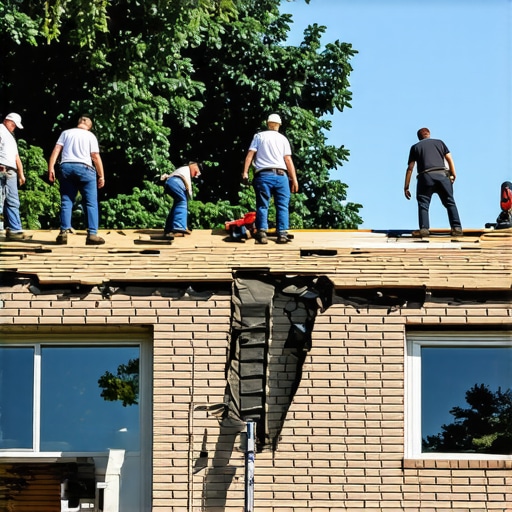
The Autopsy of a Failing Ridge Line
Walking on that roof felt like walking on a sponge. I knew exactly what I would find underneath before I even pulled my pry bar. Most roofing companies won’t tell you the truth when they see a dip in your roofline; they’ll just quote you for a new layer of shingles and hope the deck holds long enough for their check to clear. But by 2026, we are seeing the catastrophic results of the ‘speed-build’ era of a few years ago. When you see a sag, you aren’t looking at a cosmetic blemish. You are looking at a structural surrender. I’ve spent 25 years watching water play the long game, and water always wins if you don’t respect the physics of a square.
Reason 1: The Hydrothermal Breakdown of the Substrate
The most common culprit for that sickening dip between the rafters is the slow-motion disintegration of the OSB (Oriented Strand Board) or plywood. Local roofers often ignore the attic environment, but that’s where the murder happens. In a poorly ventilated attic, temperatures can hit 150°F, turning the space into a literal pressure cooker. When moisture from your shower or kitchen migrates into the attic—what we call an attic bypass—it hits the underside of the cold roof deck. This isn’t just ‘dampness.’ It’s a chemical assault. The glues holding the wood flakes together in your OSB begin to hydrolyze. I’ve seen 7/16-inch boards that had the structural integrity of wet cardboard. Once those fibers lose their bond, the wood begins to ‘creep’ or deflect under the weight of the shingles. By the time 2026 rolls around, those 2021-era installs that skipped proper ridge vents are hitting their breaking point.
“A roof system’s longevity is inversely proportional to the amount of trapped water vapor in the plenum space.” – Principles of Forensic Roofing
Reason 2: The Weight of Laziness (The Shingle Overlay Trap)
I see it every week: a homeowner tries to save three grand by letting a ‘trunk slammer’ install a second layer of shingles over the old ones. It’s a death sentence for the rafters. A single square (100 square feet) of standard architectural shingles weighs about 230 to 250 pounds. When you double that, you are adding literal tons of dead load to a frame that was engineered for a single layer. Over time, gravity performs a slow-motion heist on your home’s structural integrity. The rafters begin to bow, and the valley starts to pinch. If your roofer didn’t check for ‘shiners’—nails that missed the rafter and are now just cold-conducting spikes dripping condensation—you’ve got a recipe for a structural collapse. This isn’t just about weight; it’s about heat. That second layer acts as an insulator, trapping even more heat in the first layer and the wood deck below, accelerating the ‘oatmeal effect’ I mentioned earlier. You think you’re saving money, but you’re actually paying to have your house crushed from the top down.
Reason 3: The 2021-2022 Material Hangover
We need to talk about the quality of materials and labor from the recent building boom. During the supply chain crunch, many roofing companies were forced to use whatever they could get their hands on. We saw a lot of ‘green’ lumber and sub-standard sheathing hitting job sites. Green lumber has a high moisture content; as it dries out over several years, it twists and shrinks. If your local roofers used wet rafters or didn’t allow for proper gapping between the sheathing sheets, the expansion and contraction will eventually buckle the deck.
“Structural deflection shall not exceed L/240 for roof members subject to live loads.” – International Residential Code (IRC)
By 2026, that drying process is complete, and the results are visible from the curb. If they didn’t install a cricket behind a wide chimney or if they botched the flashing at the wall intersections, water has been sipping at your rafter tails for five years. That ‘sag’ is often the sound of a rafter tail finally snapping because it’s been turned into mulch by a slow leak you never even noticed.
The Forensic Fix
You can’t fix a sag with a shingle. If you hire a company that promises to ‘level it out’ with some shims and a fresh layer of felt, fire them on the spot. Real surgery requires stripping the roof to the bones. We have to examine the rafters for ‘sistering’ needs and replace every square inch of compromised substrate. If the physics of the house have changed, we might even need to look at the purlins. Don’t let a salesman with a shiny truck tell you it’s ‘just settling.’ Settling happens in the foundation; sagging happens in the structure. If you see a dip, get a forensic inspection before the 2026 storm season turns that sag into a hole in your ceiling.