
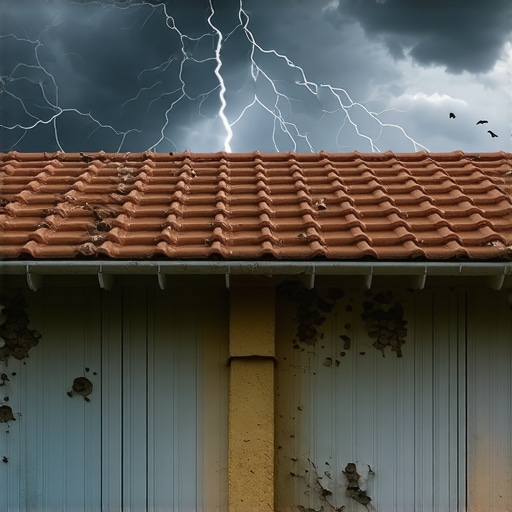
The Forensic Autopsy: Why 2026 Will Be the Year of the Punctured Roof
Walking on that roof in the humid Gulf Coast air felt like walking on a wet sponge. I didn’t need to see the attic to know the plywood had reached its limit. My boots sank slightly into the soft spots, a sickening give that tells a veteran roofer everything he needs to know about the integrity of the deck below. For most homeowners, a leak starts as a small, tea-colored stain on the ceiling. For me, it starts with the physics of impact and the slow, agonizing death of a structural layer that was never meant to breathe water.
The Kinetic Reality of Modern Storms
As we look toward 2026, roofing companies are bracing for a shift in how roof punctures occur. We aren’t just talking about a branch falling during a thunderstorm. We are talking about atmospheric instability that generates higher terminal velocity for debris. When a piece of hail or a wind-borne object strikes a shingle, it isn’t just a surface scratch. It is a kinetic event. The asphalt matting—which has been baked by relentless UV radiation—becomes brittle. Instead of flexing under the blow, it fractures. This creates a micro-fissure that you can’t see from the ground with a pair of binoculars. You need to be up there, feeling the grit under your boots, to see how the granule loss has exposed the fiberglass heart of the shingle.
“The weather-exposed skin of the roof must be capable of resisting the impact of hail and wind-borne debris as specified in the local building codes for high-wind zones.” — International Residential Code (IRC)
1. The Breakdown of Solar Mounting Integrity
One of the primary reasons we are seeing a spike in punctures involves the rush to go green. Don’t get me wrong, solar is fine, but the way local roofers or specialized solar crews are anchoring these arrays is a forensic nightmare. In my twenty-five years, I’ve seen more “shiners”—nails that missed the rafter and are just hanging out in the open air—than I care to count. By 2026, the thermal expansion and contraction of these heavy solar frames will have vibrated the mounting bolts just enough to break the seal of the flashing. Once that seal is compromised, hydrostatic pressure takes over. Water doesn’t just drip; it is sucked into the hole through capillary action. It travels sideways, finding a path along the rafters until it finds a way down into your insulation. By the time you see it, the puncture has been there for two seasons.
2. Thermal Shock and the “Brittle-Snap” Effect
In the Southwest and Tropical zones alike, the swing in temperature is a silent killer. We call it thermal shock. A roof can hit 160°F during a July afternoon and then be slammed by a cold 70°F rain shower. The rapid contraction causes the asphalt to pull away from the fasteners. In the coming year, many of the roofs installed during the 2020-2022 building boom will hit their breaking point. These roofs were often put up fast, sometimes using sub-par materials due to supply chain issues. Now, the “crickets”—those small peaked structures behind chimneys designed to divert water—are failing because the sealant has dried out. When the sealant snaps, it creates a puncture point right in the valley of the roof where water volume is highest. It’s not a hole from a nail; it’s a hole created by the house trying to breathe while the roof stays rigid.
3. The Failure of the Secondary Water Barrier
If you don’t have a high-quality ice and water shield or a synthetic underlayment that can self-seal around a puncture, you’re playing Russian roulette with your home. I’ve seen roofing companies skip the high-end underlayment to shave five hundred bucks off a bid. When a storm eventually drives a piece of debris through the shingle, that underlayment is your last line of defense. A cheap felt paper will tear like a wet napkin. A proper secondary water resistance layer will grip the nail or the invading object, preventing the moisture from reaching the OSB. Without it, that moisture turns your plywood into oatmeal. I once tore off a roof where I could literally poke my finger through the decking because a single misplaced fastener had allowed a slow leak to fester for years.
“A roof is only as good as its flashing and its ability to manage the flow of water at its most vulnerable transitions.” — Old Roofer’s Adage
The Surgery vs. The Band-Aid
When you find a puncture, you have two choices. You can let a “trunk slammer” come out and smear a gallon of plastic cement over the hole. That’s the Band-Aid. It will last six months until the sun bakes the oils out of the caulk and it shrinks, reopening the wound. The “Surgery” is what we do. It involves removing the affected square of shingles, inspecting the decking for rot, and replacing the underlayment with a piece that is properly lapped and sealed. You have to understand the flow of water. If you don’t tuck the new material under the old material in a shingle-fashion, you’re just inviting the water to run behind your patch. It’s about respecting the gravity of the situation—literally.
The High Cost of Hesitation
The biggest mistake homeowners make is waiting for a leak to show up on the drywall. In the roofing world, if you see the water, the damage is already five steps ahead of you. It has already bypassed the shingles, soaked the underlayment, rotted the decking, and saturated the R-value of your attic insulation. Mold loves a dark, damp attic with zero airflow. By 2026, the cost of materials and labor isn’t going down. Addressing a puncture now is a five-hundred-dollar fix. Addressing the resulting rot and mold in two years is a twenty-thousand-dollar replacement. Don’t let a small puncture turn your biggest investment into a forensic crime scene.