
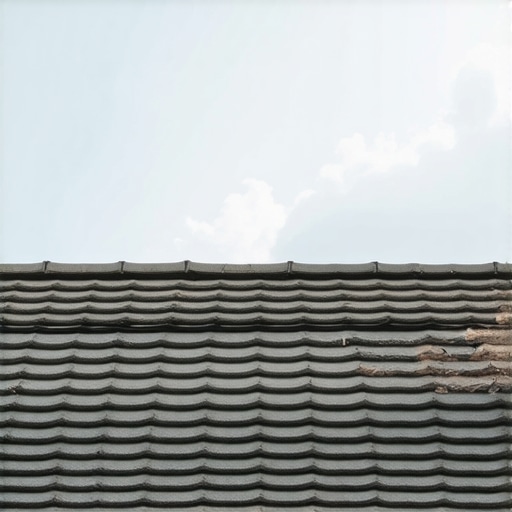
The Forensic Autopsy of a Failing Roof
Walking on that roof felt like walking on a sponge. I knew exactly what I’d find underneath. The sun was beating down on a commercial plaza in Houston, and even through my thick-soled work boots, I could feel the trapped heat radiating from the saturated insulation. When a homeowner or a facility manager calls me, it’s rarely because they want a proactive inspection; it’s because the dining room ceiling is sagging or the warehouse inventory is currently under a tarp. By the time I arrive, the physics of failure have been at work for months, if not years. We are looking toward 2026, and the industry is bracing for a specific epidemic of punctures that most local roofers aren’t talking about yet.
“A roof is only as good as its flashing.” – Old Roofer’s Adage
The Physics of the Tiny Hole: Why Size Doesn’t Matter
Most people think a roof failure requires a tree limb or a catastrophic hurricane. It doesn’t. In the world of forensic roofing, we look for the ‘micro-entry.’ Consider a single puncture from a dropped utility knife or a jagged piece of HVAC flashing. Through a process called capillary action, water doesn’t just drip through that hole; it is sucked in. When the sun hits the roof, the air inside the attic or the assembly heats up and expands. As it cools at night, it creates a vacuum effect, literally pulling moisture through that puncture like a straw. Over a 24-month cycle, that tiny 1/8-inch hole can saturate an entire square of insulation, turning your R-value to zero and your plywood into a petri dish of wood-rot fungi.
Reason 1: The 2026 Solar Hangover
By 2026, we will see the full fallout of the ‘Green Rush’ of the early 2020s. Thousands of solar arrays were bolted onto roofs by crews who understood electricity but didn’t know a valley from a cricket. I’ve seen it a hundred times: a solar technician drops a rail, creating a hairline puncture in the membrane, or they use a fastener that misses the rafter entirely—a ‘shiner’ in trade talk. That shiner stays hidden under the panel, vibrating with every wind gust, slowly reaming out the hole until it’s a direct conduit to your drywall. Roofing companies are already seeing an uptick in these ‘hidden’ punctures that only manifest after the warranty on the solar install has conveniently expired.
Reason 2: The Material Degradation of ‘Shortage-Era’ Shingles
During the supply chain crunches of previous years, the manufacturing of asphalt shingles and TPO membranes was pushed to the absolute limit. By 2026, these materials will have faced five years of intense UV radiation and thermal shock. In regions like Texas or Arizona, the daily temperature swing can be 60 degrees. This causes thermal expansion and contraction that stresses the material. If the granules weren’t embedded perfectly because the factory line was running at 110% capacity, the asphalt becomes exposed. UV rays then ‘cook’ the oils out of the asphalt, making it brittle. A brittle roof doesn’t shed impact; it punctures. Even a moderate hailstone that would have bounced off a healthy roof in 2021 will punch right through the ‘Shortage-Era’ shingles we’ll be inspecting in 2026.
“The roof shall be covered with approved roof coverings secured to the building or structure in accordance with the provisions of this code.” – International Residential Code (IRC), Section R901.1
Reason 3: The HVAC Maintenance Gauntlet
The third culprit is the most common and the most frustrating: the ‘Trunk Slammer’ maintenance crew. Your rooftop HVAC unit needs service twice a year. That means technicians are dragging heavy metal panels across your roof, dropping sharp screws, and setting heavy toolboxes on soft membranes. In the humid Southeast, these small punctures are often exacerbated by galvanic corrosion. If a technician drops a galvanized screw and it sits in a puddle on a copper flashing, you get an electrochemical reaction that eats a hole right through the metal. By the time a roofing company is called to find the leak, the technician is long gone, and the insulation is a sodden mess of black mold and compressed fiberglass.
The Band-Aid vs. The Surgery
When I find these punctures, the owner always asks, ‘Can’t you just caulk it?’ That’s the Band-Aid. Caulk is a temporary fix that fails within one season of thermal expansion. The ‘Surgery’ involves cutting out the saturated section, inspecting the deck for structural integrity, and heat-welding a new patch or replacing the shingles properly. If you ignore the puncture, you aren’t just paying for a roof repair; you’re paying for a full deck replacement when the plywood loses its structural load-bearing capacity and becomes as soft as oatmeal. Don’t wait for the dining room ceiling to join you for dinner. Have a forensic-minded roofer walk your deck before 2026 turns a small hole into a massive liability.