
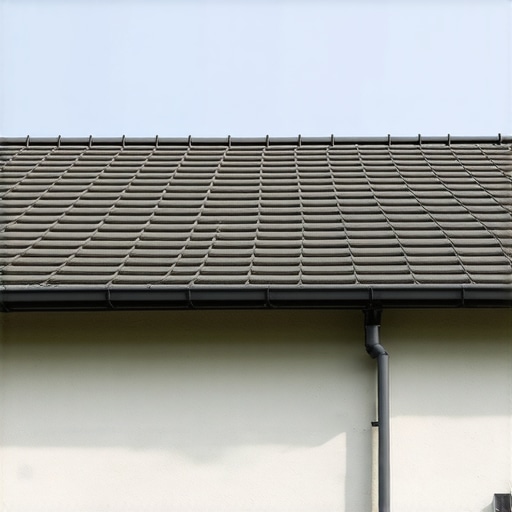
The Slow Death of a Ceiling
The first sign isn’t a waterfall; it’s a faint, tea-colored ring on the drywall above your dining table. By the time that stain appears, the structural damage is likely six months old. As a forensic investigator who has spent three decades crawling through 140-degree attics and peeling back layers of shingles like an onion, I can tell you that 2026 is going to be a record year for flashing failures. Why? Because we are currently living through a ‘perfect storm’ of material degradation and corner-cutting by roofing companies that are more interested in speed than physics.
My old foreman used to say, ‘Water is patient. It doesn’t need a front door; it just needs a microscopic invitation, and it will wait years for you to make a single mistake.’ He was right. Most local roofers understand the basics of laying a square of shingles, but very few understand the fluid dynamics of a chimney cricket or the metallurgy required to prevent galvanic corrosion.
“Flashing shall be installed at wall and roof intersections, wherever there is a change in roof slope or direction and around roof openings.” – International Residential Code (IRC) R903.2
The Physics of Failure: Why ‘Good Enough’ Isn’t
When we talk about flashing failure, we aren’t just talking about a hole in a piece of metal. We are talking about the failure of a system. In Northern climates, where the freeze-thaw cycle turns a tiny drop of water into a hydraulic jack, the margin for error is zero. The first major reason for the impending 2026 crisis is Thermal Fatigue and Fastener Back-out.
Every morning, the sun hits your roof and the temperature of the metal flashing can jump 80 degrees in an hour. The metal expands. At night, it contracts. If your roofing companies used the wrong fasteners—or worse, ‘shiners’ (nails that missed the rafter and are just hanging in the air)—this constant ‘sawing’ motion eventually shears the sealant or pulls the nail head right through the metal. I’ve seen 26-gauge galvanized steel look like Swiss cheese because a contractor used copper nails. That’s basic chemistry, yet it happens every single day.
The Capillary Trap: How Water Defies Gravity
The second reason for failure is the complete misunderstanding of Capillary Action. Water doesn’t just run downhill. Through surface tension, it can actually pull itself upward into a gap as small as a human hair. If your local roofers didn’t install a proper kickout flashing at the end of a roof-to-wall intersection, that water is being sucked behind your siding and directly into the OSB sheathing. I recently did a tear-off where the plywood had the consistency of wet oatmeal because the previous installer relied on caulk instead of a mechanical metal-to-metal overlap. Caulk is a maintenance item; it is not a permanent waterproofing solution. If you see a roofer reaching for a tube of ‘goop’ to fix a valley transition, you are looking at a future leak.
“A roof is only as good as its flashing; the shingles are merely the aesthetic skin covering the true defense.” – Old Roofer’s Adage
The 2026 Warranty Trap
The third and perhaps most frustrating reason is Material Mismatch. As we approach 2026, many of the ‘quick-fix’ synthetic underlayments installed during the post-2020 building boom are beginning to reach their actual lifespan limits under high-heat conditions. When the underlayment fails near a flashing point, the water has a direct path to the fascia board. This is where the ‘Lifetime Warranty’ sales pitch falls apart. Most warranties cover the shingle, not the labor to fix a $10 piece of metal that was installed upside down. When you hire roofing companies, you aren’t paying for the shingles; you’re paying for the technical skill required to weave metal and ice-and-water shield into a subterranean drainage system.
The Forensic Fix
If you suspect a failure, don’t just ask for a repair. Ask for a surgical extraction. A proper repair involves removing at least two feet of shingles around the suspect area, inspecting the deck for rot, and reinstalling step flashing that is properly integrated with the house wrap. It’s the difference between a band-aid and actual surgery. Don’t wait for the tea-colored stain to turn into a collapsed ceiling. The smell of moldy insulation is the smell of a debt coming due. Check your valleys, inspect your crickets, and for heaven’s sake, make sure there isn’t a single ‘shiner’ visible in your attic space.