
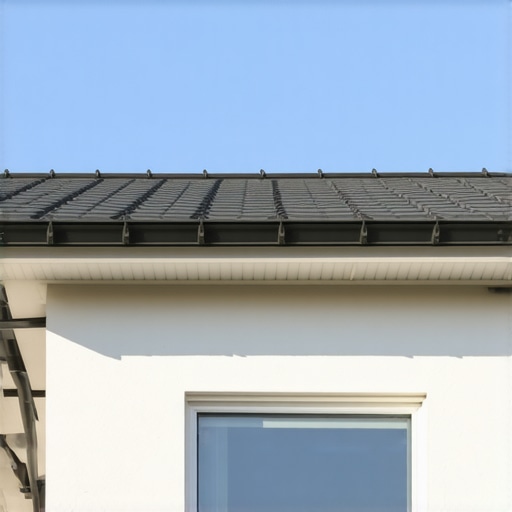
The Architect’s Dream and the Roofer’s Nightmare
You’ve seen the renderings. Sleek, minimalist homes where the roofline ends in a crisp, sharp edge without those aluminum troughs hanging off the side like an afterthought. Roofing companies are increasingly being asked about these integrated, or ‘box’ gutters, for 2026 builds. But before you get seduced by the aesthetics, you need to understand the trade-offs. My old foreman used to say, ‘Water is patient. It will wait for you to make a mistake.’ And when you tuck the gutter inside the roofline, you aren’t just managing water; you’re inviting it to live inside your walls if the physics aren’t respected.
1. Monolithic Aesthetic Without the ‘Drip’ Failure
The primary draw for local roofers installing these systems is the visual profile. In traditional setups, the gutter is a separate entity fastened to the fascia. Over time, those fasteners loosen. You’ve heard it—that rhythmic thump-clunk during a midnight thunderstorm when a bracket gives way. Integrated systems eliminate the ‘add-on’ look. They are built into the actual rafter tails or the top of the wall plate. This isn’t just about looks; it’s about structural integration. When we talk about roofing in 2026, we are talking about managed flow. By making the gutter part of the roof’s ‘body,’ you remove the external leverage that heavy snow or ice exerts on a standard hung gutter. In the Northeast, where I’ve spent my life, a standard gutter can be ripped clean off by an ice slide, taking the fascia board with it. An integrated system, if designed correctly, handles that weight because it’s supported by the building’s skeleton, not just a few 1-inch screws.
“A roof is only as good as its flashing, and a gutter is only as good as its overflow.” – Old Roofer’s Adage
2. Advanced Thermal Management and Capillary Breaks
Here is where the mechanism zooming matters. Most people think water just falls into a hole. It doesn’t. Water has surface tension; it wants to cling to surfaces. In a cheap install, water will ‘creep’ backward under the shingles via capillary action, moving uphill against gravity. In the 2026 integrated designs, roofing companies are using deep-profile EPDM or TPO liners that extend far up the roof deck—well past the potential ‘pooling’ line. We call this the ‘surgical’ approach to water. We aren’t just catching it; we are creating a pressurized exit path. By using a ‘cricket’—a small diverted peaked structure—behind the chimney or at the high point of the gutter, we ensure that water doesn’t just sit. Stagnant water is the enemy. It’s the smell of wet dog and rotting OSB that hits you when you peel back a 20-year-old square of shingles. These new integrated systems utilize a thermal break between the metal liner and the wood framing, preventing the condensation that usually turns plywood into ‘oatmeal’ over a decade of humid summers.
3. The ‘Safety Valve’ Engineering: Scuppers and Overflows
The biggest fear with an internal gutter is a clog. If a standard gutter clogs, it spills over onto your flower beds. If an integrated gutter clogs, it spills into your dining room. This is where the forensics of modern roofing come in. The 2026 standards require secondary overflow scuppers. Think of it like the little hole in your bathroom sink that prevents it from overflowing. We cut these scuppers through the outer parapet or fascia. If the main downspout gets jammed with leaves or those ‘helicopter’ seeds, the water level rises until it hits the scupper and shoots out the side of the house. It’s a visual alarm. If you see water pouring out of a hole it shouldn’t be, you know you’ve got a clog. No more guessing. No more waiting until the drywall starts to sag and bubble. Roofing companies that know their salt will tell you that the difference between a successful integrated system and a catastrophic failure is exactly 2 inches of vertical clearance between the primary drain and the overflow scupper.
“The roof shall be designed to provide drainage to the roof drains and shall be sloped to provide for such drainage to the drains or to the edges of the roof.” – International Residential Code (IRC) R903.4
The Reality Check: It’s Not for Everyone
Don’t let a ‘trunk slammer’ tell you this is a simple weekend job. These systems require precise metal work and high-level waterproofing. We’re talking about ‘starter strips’ that have to be perfectly aligned and ‘drip edges’ that are custom-bent on a brake to ensure the water breaks its tension and falls. If your contractor doesn’t mention the words ‘hydrostatic pressure’ or doesn’t know what a ‘shiner’ (a missed nail) does to a liner, walk away. You’re paying for the peace of mind that your modern home won’t become a slow-motion aquarium. These gutters are a long-term investment in architectural integrity, but only if the person behind the hammer understands that water is a patient, persistent intruder.