
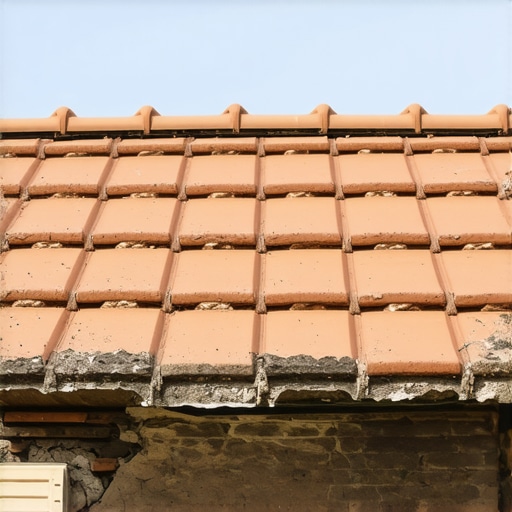
The Structural Autopsy: When Your Roof Deck Becomes a Buffet
I was standing on a hip roof in Miami last August, the kind of humidity that makes your shirt stick to your ribs before you even get the ladder off the truck. The homeowner thought he had a simple leak near the chimney. He called a few local roofers who just wanted to slap some mastic on the flashing and call it a day. But when I stepped onto that third square of shingles near the cricket, the deck didn’t just give a little—it felt like I was walking on a stack of damp crackers. I didn’t even need to pull my hammer to know we weren’t looking at simple water intrusion. Walking on that roof felt like walking on a sponge; I knew exactly what I’d find underneath. Underneath those architectural shingles, the plywood hadn’t just rotted; it had been surgically hollowed out. Termites. Most roofing companies treat a roof like a hat, but a forensic inspector knows it’s the skeleton of the house. In the Southeast, moisture isn’t just an enemy because of mold; it’s the dinner bell for Formosan subterranean termites. If you ignore the signs, you’re not just looking at a leak; you’re looking at a structural collapse that starts from the inside out.
“The roof shall be leaf-tight and shall be supported by a structure capable of supporting all design loads.” – International Residential Code (IRC) Section R901.1
Sign 1: The Acoustic ‘Hollow’ and Deck Deflection
When most roofing professionals walk a deck, they are looking for ‘bounce’—that springy feeling that suggests a shiner (a missed nail) or a loose sheet of plywood. But termite damage has a specific tactile signature. It’s a deadening of the vibration. When the cellulose fibers within a 4×8 sheet of CDX plywood are consumed by termites, the structural ‘ribs’ of the wood are gone, leaving only the glue and a thin veneer. You might notice local roofers identifying decking rot, but termite damage is more insidious because it can happen in bone-dry sections of the attic if there’s a moisture source nearby. We call it ‘Mechanism Zooming’—you have to look at the capillary action of how termites bring moisture up from the ground through mud tubes. If your ridge line looks like a swayback horse, or if you see individual squares of shingles dipping between the rafters, the structural integrity is compromised. This is why many roofing companies must address sagging rafters immediately before the dead load of the shingles causes a punch-through failure.
Sign 2: Frass and Shelter Tubes in the Eaves and Fascia
Termites are light-sensitive, translucent little wrecking crews. They won’t just walk across your shingles in the sun. Instead, they build ‘shelter tubes’—mud tunnels made of saliva, soil, and fecal matter—to travel from the soil to your roof’s starter strip. During a thorough inspection, I’m not just looking at the top of the roof; I’m looking at the fascia and the soffit. If I see thin, brown, pencil-like lines running up the interior of the gable end or behind the gutters, we have a problem. Then there’s the ‘frass.’ Drywood termites, unlike their subterranean cousins, kick their waste out of small ‘kick-out holes.’ This looks like piles of sawdust or coffee grounds gathered in the attic insulation or along the eave. If you see this, the termites are already deep in the valley joints. Ignoring this leads to loose roof fascia boards that can no longer support the weight of your gutter system, especially during a tropical downpour.
“A roof is only as good as its flashing, but the flashing is only as good as the wood it’s nailed to.” – Old Roofer’s Adage
Sign 3: Mud in the ‘Checks’ and Bubbling Interior Paint
Here is the forensic truth: termites are masters of humidity control. In the 140°F heat of a Texas or Florida attic, they would desiccate and die if they didn’t bring mud with them to seal the cracks. If I pull back a piece of drip edge and find it packed with dried mud, that’s not ‘dirt’—that’s a termite highway. This often mimics the look of hidden decking plywood decay, but the texture is grittier. Furthermore, look at your ceiling. If you see what looks like water blisters in the paint, don’t just assume it’s a leak from a failed ridge vent. Termites often move just behind the drywall, and the moisture they carry can cause the paint to bubble. If you poke that bubble and mud falls out instead of water, you’ve skipped the ‘repair’ stage and moved straight into ‘structural restoration.’ This is why reputable roofing companies will always insist on a full deck inspection rather than just a ‘layer over’ or a ‘recover.’ Adding more weight to a termite-damaged deck is like building a house on a foundation of sponges.
The Fix: Surgery vs. Band-Aids
When you find termite damage during an inspection, the solution isn’t caulk. It’s ‘The Surgery.’ You have to strip the roof down to the rafters. Any rafter that has more than 20% of its cross-section consumed needs to be ‘sistered’ with new pressure-treated lumber. Then, the entire deck must be replaced with high-quality sheathing, preferably with a secondary water resistance layer to prevent the high humidity that attracts these pests in the first place. Some homeowners ask about modern roofing companies suggesting TPO or metal for longevity; while those materials are great, they won’t save you if the wooden skeleton underneath is being eaten. You need a contractor who understands the physics of moisture and the biology of the pests that thrive in it. Don’t let a ‘trunk slammer’ tell you it’s fine. If the deck is compromised, the roof is a liability, not an asset. Always demand a written report on the condition of the substrate before any new shingles are nailed down.