
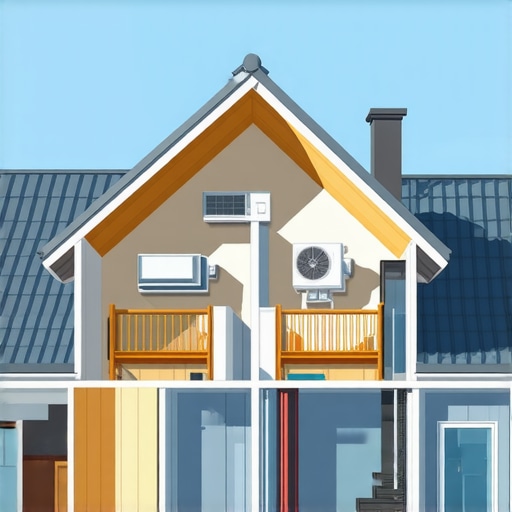
The Attic Oven: Why Your Roof is Cooking from the Inside Out
My old foreman, Salty Mike, used to stand on a 140-degree roof in the middle of a Texas July, wipe the salt from his eyes with a grease-stained sleeve, and bark, ‘Water is patient, kid, but heat is aggressive. It’ll cook these shingles until they’re as brittle as a soda cracker while you’re sitting downstairs wondering why the AC won’t turn off.’ He wasn’t just complaining about the sweat; he was talking about the thermal dynamics of a residential structure. Most homeowners think the sun is the only enemy, but as a forensic roofer who has spent 25 years inspecting ‘dead’ roofs, I can tell you the real killer is the stagnant, pressurized heat trapped in your attic. When your attic hits 150 degrees, your asphalt shingles are essentially being baked on a griddle from both sides. This leads to premature granule loss, curling, and that nightmare scenario every local roofer sees: [shingle buckling](https://modernroofingguide.com/local-roofers-how-to-avoid-shingle-buckling-in-2026).
“Ventilation shall be provided at a rate of not less than 1 square foot of net free ventilating area for each 150 square feet of vented space.” – International Residential Code (IRC) R806.1
If you don’t respect the physics of airflow, you’re just throwing money into the wind. Here’s the breakdown of how to stop the oven effect before it ruins your investment.
1. The Intake-Exhaust Balance: The Physics of Convection
Most roofing companies will slap a ridge vent on a house and call it a day. That’s bush-league work. For a cooling system to actually function, you need a balanced ratio of intake and exhaust. Imagine trying to blow through a straw with your finger over the other end. That’s your roof without soffit vents. You need cool air entering at the eaves (the intake) and hot air escaping at the highest point (the exhaust). When this balance is off, the hot air just sits there, radiating heat back down through your ceiling joists. This is where ‘Mechanism Zooming’ comes in: as the air heats up, it expands. This expansion creates positive pressure. If there’s nowhere for that air to go, it pushes against your roof deck. Over time, that constant thermal expansion and contraction loosens the fasteners. You end up with a ‘shiner’—a nail that missed the rafter—which then becomes a conduit for condensation, eventually leading to [hidden decking plywood decay](https://modernroofingguide.com/roof-inspection-3-signs-of-hidden-decking-plywood-decay-fast-early-fast-early-fast-early-fast-early-fast-early). To fix this, you must ensure your soffit vents aren’t clogged with 20 years of blown-in insulation. We use baffles to keep those channels open, ensuring the attic can breathe.
[image-placeholder]
2. Radiant Barriers: Stopping the Infrared Invasion
In the Southwest, UV radiation isn’t just a tan-killer; it’s a structural threat. Even with great ventilation, the sun’s infrared rays penetrate your shingles and heat up the actual wood of your roof deck. That wood then acts like a giant radiator, beaming heat down into your attic floor. A radiant barrier—typically a thin layer of highly reflective aluminum—can stop up to 97% of that radiant heat transfer. You can buy foil-faced OSB for new installs, but for a retrofit, we often see homeowners getting sold ‘magic’ reflective paints. Be careful. If a ‘trunk slammer’ sprays that stuff over your rafters without addressing the core airflow, you’re just trapping heat in the wood fibers. The real pro move is a perforated foil drape that allows moisture to escape while reflecting the heat. Using these [ways to lower attic temps](https://modernroofingguide.com/eco-friendly-roofing-3-ways-to-lower-attic-temps) is the difference between an AC unit that lasts 20 years and one that burns out in seven. When the attic is cooler, the ‘thermal bridge’ between the roof and your living space is broken.
3. Material Selection: Beyond the Basic Asphalt
If you’re replacing the whole ‘square’ (that’s 100 square feet in trade talk), you need to look at ‘Cool Roof’ technology. Modern asphalt shingles are now engineered with solar-reflective granules that look like standard colors but reflect a much higher percentage of the sun’s rays. However, if you really want to drop the temperature, you go with metal or concrete tile. Metal roofs with a ‘thermal break’ (an air gap between the metal and the deck) are king in high-heat zones. They don’t store heat like asphalt does. Asphalt has high thermal mass; it stays hot long after the sun goes down, continuing to cook your attic at 10 PM. Metal cools down the moment the clouds roll in. Don’t let a salesman tell you a standard 30-year shingle will perform the same. You need to ask: [is a 30-year warranty actually worth it](https://modernroofingguide.com/is-a-30-year-warranty-actually-worth-it-in-2026)? Often, those warranties are voided if the manufacturer finds out your attic wasn’t vented to their specific, rigid standards. They look for ‘cooking’ signatures on the underside of the shingle to get out of paying claims.
“A roof is not a lid; it is a thermal valve that must be managed with precision.” – Forensic Architecture Axiom
The Contractor Trap: Why ‘Cheap’ is Expensive
I’ve walked onto too many jobs where the homeowner went with the lowest bid, only to find their ridge vent was never actually cut through the plywood. The ‘roofers’ just nailed the plastic vent over solid wood. It looked fine from the street, but the attic was a literal pressure cooker. When you’re vetting local roofers, look for guys who talk about ‘Net Free Area’ and ‘Soffit Baffles,’ not just shingle colors. If they don’t go into your attic with a flashlight to check for [signs of poor ridge vent sealing](https://modernroofingguide.com/residential-roofing-3-signs-of-poor-ridge-vent-sealing-fast-early-fast-early-fast-early-fast-early-fast-early-fast-early-fast-early-fast-early-fast-early-fast-early), they aren’t roofing—they’re just decorating. You need to watch for [red flags in a quote](https://modernroofingguide.com/local-roofers-5-red-flags-in-a-2026-quote). If they aren’t accounting for the heat, they’re setting you up for a total system failure within a decade. Water might be the thing that causes the visible spot on your ceiling, but heat is what weakened the defense and let the water in. Don’t wait until your shingles are ‘potato-chipping’ at the edges to act. A cool attic is a dry attic, and a dry attic is a roof that actually goes the distance. Check your ventilation today, or start saving for a total tear-off tomorrow. The choice is yours, but the physics of heat won’t wait for your budget to catch up.