
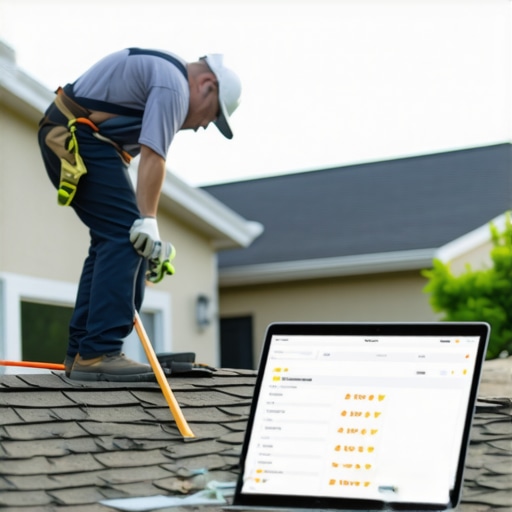
The Paradox of the Polite Contractor
You’re staring at a screen filled with glowing five-star reviews for a local roofer. Each comment mentions how polite the crew was, how they cleaned up the nails in the driveway, and how the estimator wore a clean polo shirt. But as a forensic roofer who has spent twenty-five years peeling back failed systems in the sweltering heat of the Southwest, I can tell you this: a polite smile doesn’t stop the physics of thermal shock from tearing your roof apart. My first lead, a chain-smoking veteran named Dutch, used to stand on a finished roof and say, ‘A review is a snapshot of a wedding; the roof is the marriage. Anyone can look good on day one, but it’s the tenth year that tells you if they were lying to your face.’ He was right. In the desert, where the sun doesn’t just shine—it attacks—most roofing failures are invisible for the first thirty-six months. By the time the damage manifests, that five-star review you read is ancient history, and the ‘polite’ contractor is often nowhere to be found.
The Desert Physics: UV Radiation and Mechanism Zooming
To understand why online reviews are a shallow metric, you have to understand the specific enemy we face in regions like Arizona, Nevada, and Texas: UV radiation and the brutal cycle of thermal expansion. Most roofing companies sell you on the brand of the shingle, but they rarely talk about the molecular breakdown of the bitumen. In our climate, the sun acts as a solvent. It leaches the oils out of the asphalt shingles, making them brittle. When a local roofer installs a roof without accounting for the intense thermal load, they are essentially setting a countdown clock. During the peak of July, your roof surface can reach 160°F. By midnight, it might drop to 70°F. That 90-degree swing causes the roof deck, the underlayment, and the shingles to expand and contract at different rates. If the installer didn’t leave proper gaps in the OSB decking or used cheap, non-synthetic underlayment, the shingles will eventually ‘buckle’ or ‘fish-mouth.’ This isn’t a failure of the material; it’s a failure to respect the laws of physics. If you want to know what actually matters, you should focus on roof shingle texture and how it handles granule loss over time, rather than how many smiley faces are in a Google review.
“Proper attic ventilation is not merely a recommendation but a requirement for the performance of the roof system.” — National Roofing Contractors Association (NRCA)
The “Shiner” and the Hidden Leak
A major reason reviews are misleading is that most homeowners can’t see the ‘shiners.’ In trade talk, a shiner is a nail that was driven through the shingle but missed the rafter or the structural meat of the deck, leaving the sharp point exposed in the attic. When the attic heats up, moisture in the air condenses on that cold metal nail point. It drips, slowly, onto your insulation. Over five years, that single shiner can rot out a square foot of plywood. You won’t see it from the ground, and you certainly won’t notice it the day the roofer finishes and asks for a review. This is why you need to know 4 reasons for flashing failure, as flashing is the first line of defense where most ‘polite’ crews cut corners. They use cheap caulk instead of custom-bent lead or copper, knowing it will last just long enough for their tail-light warranty to expire.
The “Lifetime Warranty” Mirage
Roofing companies love to throw around the phrase ‘Lifetime Warranty.’ In the Southwest, this is often a marketing gimmick. If you read the fine print, those warranties are often pro-rated or contingent on a level of maintenance that is nearly impossible for a homeowner to document. Furthermore, many warranties are voided if the attic ventilation doesn’t meet strict IRC (International Residential Code) standards. I’ve seen hundreds of claims denied because the local roofer didn’t calculate the Net Free Venting Area (NFVA) correctly. They just slapped on a few more turtle vents and called it a day. If your attic is 140°F, your shingles are being baked from both sides. No warranty in the world will save a shingle that is being toasted by a poorly ventilated attic. When you are looking at how to read a detailed estimate, look for the ventilation calculations, not just the shingle brand. If the estimate doesn’t mention intake and exhaust balance, you’re looking at a roof that will fail ten years early.
The Concrete Tile Trap
In our region, many homeowners opt for concrete tile, thinking it’s a ‘forever roof.’ This is where reviews really fail you. People give five stars because the tile looks beautiful. But a tile roof is actually a ‘water-shedding’ system, not a ‘waterproof’ system. The real roof is the underlayment hidden beneath the tile. In the desert, cheap organic felt paper underlayment will dry out and crack like a salt flat in less than a decade. The tiles might look perfect, but the ‘dried-out felt’ underneath is riddled with holes. A quality local roofer will insist on high-temp self-adhering modified bitumen underlayment, but because that adds $3,000 to the bid, the ‘cheap’ guy with the great reviews gets the job by cutting that specific corner. You need to ensure you are choosing a company that understands the best time of year to replace your roof in 2026 to ensure the materials seal properly under the right ambient temperatures.
“A roof is only as good as its flashing.” — Old Roofer’s Adage
Identifying the “Crickets” and the Valleys
Another technical detail that eludes the average reviewer is the ‘cricket.’ If you have a chimney wider than 30 inches, the building code requires a chimney cricket—a small peaked structure behind the chimney to divert water. I can’t tell you how many ‘highly rated’ roofing companies I’ve caught skipping the cricket and just piling up a mountain of mastic (roof cement). It looks fine for a year. Then the house settles, the mastic cracks, and suddenly you have a waterfall in your fireplace. The same goes for the valley. A valley is where two roof slopes meet, and it carries the highest volume of water. If the roofer didn’t use a ‘bleeder’ strip or failed to properly lace the shingles, that valley will become a debris trap and eventually a leak point. These are the things a forensic investigator looks for, and they are things a standard online review will never mention.
How to Vet Beyond the Screen
So, if reviews are only half the story, how do you find the other half? First, you must verify a 2026 license status and check for any history of structural complaints. Don’t just look at the star rating; look at the company’s response to the one-star reviews. Do they take technical responsibility, or do they blame the manufacturer? Ask for a ‘Fastener Pattern’ document. Ask what they do to prevent ‘thermal bridging’ in the attic. If the estimator looks at you like you have two heads when you mention these terms, they are a salesman, not a roofer. You want the guy who talks about the smell of rotting plywood and the specific gauge of the drip edge, not the guy who shows you a glossy brochure and tells you how many stars he has on Yelp. The cost of waiting for a leak to reveal a bad hire is always triple the cost of doing it right the first time. In the trade, we say that water is patient. It will wait years for a single missed nail to start its work. Don’t be the homeowner who discovers that too late.