
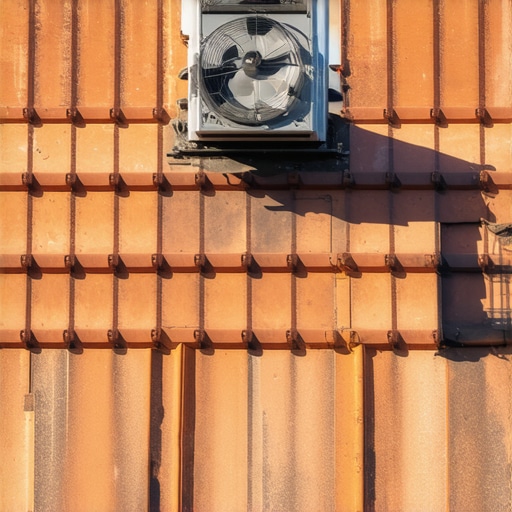
The Attic Toaster: Why Your Roof is Cooking From the Inside Out
Most homeowners look at their roof and see a shield. I look at it and see a pressure cooker. After twenty-five years of pulling up rotted decking and smelling the sour, vinegary stench of wet insulation, I can tell you that the biggest threat to your home isn’t the rain hitting the shingles—it is the air trapped beneath them. If you are hiring local roofers today, they are likely talking to you about the 2026 generation of smart attic fans. This isn’t a sales pitch; it is a survival strategy for your property. By 2026, the combination of rising peak summer temperatures and the evolution of high-density roofing materials means that passive ventilation—the old ‘let the hot air rise’ method—is officially failing.
Walking on a roof in mid-August usually feels like walking on a skillet, but one forensic scene stays with me. I was called out to a five-year-old home. From the curb, the shingles looked pristine. But walking on that roof felt like walking on a sponge. I knew exactly what I would find underneath. When we pulled the first square of shingles, the plywood didn’t just crack; it crumbled like a dry biscuit. The homeowner had plenty of intake, but zero active exhaust. The attic had reached 165 degrees every day for five summers. The moisture from the house had nowhere to go, so it literally steamed the roof deck until the wood lost its structural integrity. That is a thirty-thousand-dollar mistake that a three-hundred-dollar fan could have prevented.
The Physics of Failure: Why Passive Vents Are Quitting
In the trade, we talk about the ‘stack effect.’ Warm air rises and escapes through ridge vents while pulling cool air in through the soffits. It works on paper. In reality, modern homes are built so tight that the natural pressure isn’t enough to move the volume of air required to cool a 140-degree attic. This is where active ventilation comes in. When we talk about 2026 attic fans, we are talking about brushless DC motors and multi-sensor arrays that don’t just turn on when it’s ‘hot.’ They track the delta between indoor and outdoor humidity. If the humidity in your attic spikes while it is raining—even if it is cool outside—the fan kicks on to prevent condensation. This prevents ‘shiners’—those missed nails that stay cold and collect frost in the winter, eventually dripping and rotting out your ceiling.
“To provide adequate ventilation, the total net free ventilating area shall be not less than 1 to 150 of the area of the space ventilated.” – International Residential Code (IRC) R806.1
The problem is that 1:150 is a minimum, not a goal. Most roofing companies see a few roof vents and call it a day. But if your roof has a complex pitch or multiple valleys, you have ‘dead zones’ where air just sits and rots. A 2026-grade power fan creates a vortex that pulls air even from the corners of the attic, ensuring that no pocket of moisture is left to feed mold growth.
The Material Truth: Asphalt, Heat, and the Warranty Trap
Let’s talk about the shingles themselves. Whether you are using architectural laminate or heavy-duty designer shingles, they all rely on bitumen. Bitumen is essentially a complex oil. When an attic isn’t vented, that oil cooks out. You’ll see it as ‘granule loss’ in your gutters. Those little rocks are there to protect the asphalt from UV rays. Once the heat from the attic bakes the shingle from below, the asphalt becomes brittle, the granules fall off, and your ‘lifetime’ roof is dead in twelve years. Most roofing companies won’t tell you this, but if a manufacturer’s rep comes out to inspect a warranty claim and sees that your ventilation doesn’t meet their specific CFM (Cubic Feet per Minute) requirements, they will deny your claim faster than a heartbeat. You aren’t just buying a fan; you are buying the validity of your roof warranty.
“A roof is only as good as its flashing and its ability to breathe.” – Old Roofer’s Adage
The 2026 Tech: Why This Isn’t Your Grandpa’s Attic Fan
The old fans from ten years ago were loud, clunky, and ate electricity. They sounded like a jet engine taking off in your hallway. The 2026 models are a different breed. We are seeing solar-powered units with battery backups that keep the air moving long after the sun goes down—which is actually when the most condensation occurs. They use ‘Smart Pitch’ technology to adjust their RPMs based on the static pressure within the attic. If a soffit vent is blocked by insulation, the fan knows. It sends an alert to your phone. It tells you, ‘Hey, I’m working too hard, check your intakes.’ This level of diagnostic capability is why local roofers are moving away from passive systems. We are tired of getting the ‘my roof is leaking’ call when it isn’t a leak at all—it’s just an attic that can’t breathe.
The Cost of the ‘Trunk Slammer’ Mistake
You’ll find plenty of local roofers who will offer to ‘slap a fan in’ for a couple of hundred bucks. Watch out for the ‘trunk slammers.’ If they don’t calculate the intake-to-exhaust ratio, they can actually cause more harm than good. If a fan is too powerful for the intake vents, it will start pulling conditioned air from inside your house through light fixtures and attic hatches. You’ll be paying to cool the neighborhood while your AC struggles to keep up. A forensic roofing veteran knows how to balance the system. We look at the total square footage, the pitch, and the insulation levels before we even suggest a specific fan model.
How to Prepare for a Ventilation Upgrade
- Audit the Intake: Ensure your soffit vents aren’t painted shut or buried under blown-in insulation.
- Check the Decking: Look for dark spots or ‘delamination’ on the underside of your plywood.
- Size the Fan: Don’t just buy the biggest one; ensure it matches your attic’s cubic footage.
- Install a Cricket: If you are placing a fan near a chimney or valley, ensure a cricket is present to divert water around the unit.
Reading this post really highlights how critical proper attic ventilation is, especially with the new tech coming in by 2026. I’ve seen firsthand how poorly ventilated attics can lead to severe moisture issues and even damage the roof structure over time. The idea of active, sensor-driven fans sounds promising because they address the variability in conditions that passive vents simply can’t handle. In my experience, many homeowners overlook the importance of balancing intake and exhaust—I’ve often seen situations where just installing a fan without inspecting the soffits and other vents actually worsens the problem by pulling conditioned air out of the house.
I’m curious, though, about the maintenance and longevity of these smart fans. Has anyone had experience with these newer models long-term? Also, how often should homeowners expect to service these units, especially in climates with high humidity or frequent rain? It seems like investing in this technology could truly extend the life of the roof and improve overall home health, but knowing the practical aspects of ownership would help make better decisions.