
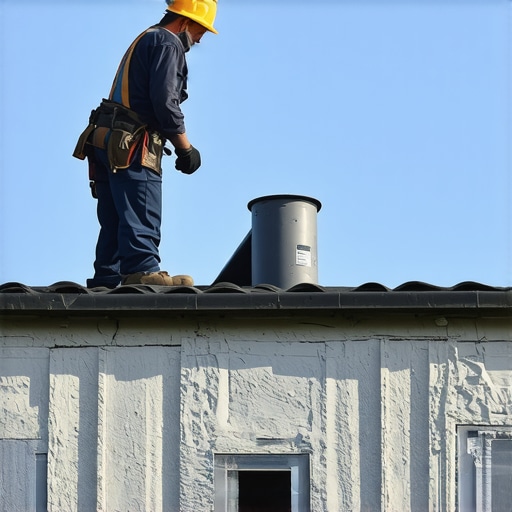
The Midnight Drip: A Forensic Post-Mortem of a 4-Year-Old Roof
The call came in at 2:00 AM. Not during a rainstorm, but during a deep freeze in early February. The homeowner was frantic because water was trickling out of a recessed light fixture in their kitchen, splashing onto a granite countertop. When I arrived at the scene, I didn’t see a leak; I saw a crime scene. Walking on that roof felt like walking on a sponge. My boots sank into the shingles, and I could feel the structural integrity of the deck failing beneath my feet. I knew exactly what I’d find underneath because water doesn’t just fall from the sky; it migrates, condenses, and destroys from within. This wasn’t a failure of the shingles. This was a total collapse of the home’s respiratory system.
Most local roofers can nail a square of shingles in their sleep, but they couldn’t explain the physics of a dew point if their license depended on it. We are entering an era where roofing companies are installing high-performance materials on houses that are literally suffocating. By 2026, building codes are pushing for tighter envelopes and higher R-values, but if your ventilation isn’t calibrated for those changes, you aren’t buying a roof—you’re buying a very expensive mold farm.
The Physics of Failure: Why Your Attic is a Science Experiment
To understand why your roofing is failing, we have to look at Mechanism Zooming. It starts with the ‘Attic Bypass.’ Warm, moist air from your shower, your dishwasher, and your own lungs escapes into the attic through unsealed top plates and light fixtures. In a poorly ventilated space, this air hits the underside of the cold roof deck. This is where the physics of condensation takes over. The water vapor reaches its dew point and transforms back into liquid water, or worse, frost. I’ve seen attics where the rafters were covered in a half-inch of white rime ice. When the sun hits the roof the next day, that ice melts instantly. It looks like a massive leak, but the water is coming from inside the house.
“To prevent the accumulation of moisture, attic ventilation shall be provided in accordance with Section R806.1… The net free ventilating area shall not be less than 1 to 150 of the area of the space ventilated.” – International Residential Code (IRC)
The problem is that many local roofers treat that 1:150 rule as a suggestion rather than a bare minimum. When you increase insulation to meet 2026 energy standards, you often block the intake at the eaves. Without a cricket to divert water or a clear path for air to enter the soffits, the ridge vent at the top is useless. It’s like trying to breathe through a straw while someone is pinching your nose. The result is a stagnant, humid environment that rots the plywood from the inside out.
The Anatomy of a ‘Shiner’ and Capillary Action
Let’s talk about the ‘Shiner.’ This is trade slang for a nail that missed the rafter and is sticking out into the attic space. In a failing ventilation system, that cold steel nail becomes a magnet for moisture. It acts as a thermal bridge. Every single shiner in your attic becomes a tiny, dripping faucet. Over months, those drips saturate the OSB or plywood. This leads to the smell I know too well: the sour, earthy stench of stachybotrys and decaying wood fibers.
Then there is capillary action. Most roofing companies ignore the way water moves sideways. If your local roofers didn’t install the starter strip with the correct overhang, water will suck backward under the shingle through surface tension. Once it hits the unprotected edge of the deck, the wood drinks it up. By the time you see a brown stain on your ceiling, the structural plywood has likely lost 50% of its load-bearing capacity. You’re not just looking at a repair; you’re looking at a full-scale forensic tear-off.
The 2026 Ventilation Crisis: The ‘Band-Aid’ vs. The Surgery
As we move toward 2026, the industry is seeing a surge in ‘trunk slammers’ who offer a ‘Lifetime Warranty’ that isn’t worth the paper it’s printed on. They slap on a new layer of shingles over a compromised deck and walk away with your check. A true professional doesn’t just look at the shingles; they look at the intake-to-exhaust ratio. If you have 500 square inches of exhaust at the ridge but only 100 square inches of intake at the soffits, your roof is under negative pressure. It will literally try to suck air from your conditioned living space, pulling your expensive heated air into the attic and creating a cycle of condensation.
“A roof is only as good as its flashing and its ability to breathe.” – NRCA Manual of Waterproofing
The ‘Surgery’ involves more than just shingles. It requires baffles to keep insulation away from the eaves, ensuring that air can flow from the valley to the peak. It might involve installing a smart vapor retarder or mechanical ventilation if the house geometry is too complex for passive airflow. Don’t let a contractor tell you that ‘more is better’ when it comes to vents. Mixing different types of exhaust—like a power fan and a ridge vent—can actually cause a short-circuit where the fan pulls air in through the ridge vent, bringing rain and snow with it.
Protecting Your Investment from the Slow Burn
If you want to know if your local roofers know their stuff, ask them about the Permeability Rating of the underlayment they plan to use. If they look at you like you have three heads, show them the door. In 2026, we should be using synthetic underlayments that allow the deck to dry out if moisture does get in, rather than the old-school felt that traps water like a plastic bag. Look for roofing companies that use stainless nails if you’re near the coast to prevent galvanic corrosion, and ensure they are checking for ‘Thermal Bridging’ in your attic. A roof is a shield, but it’s also a lung. If it can’t breathe, it will eventually die, and it will take your home’s value down with it. Stop looking for the cheapest price and start looking for the smartest physics. Your 2026 ventilation system is the only thing standing between a dry home and a forensic nightmare.