
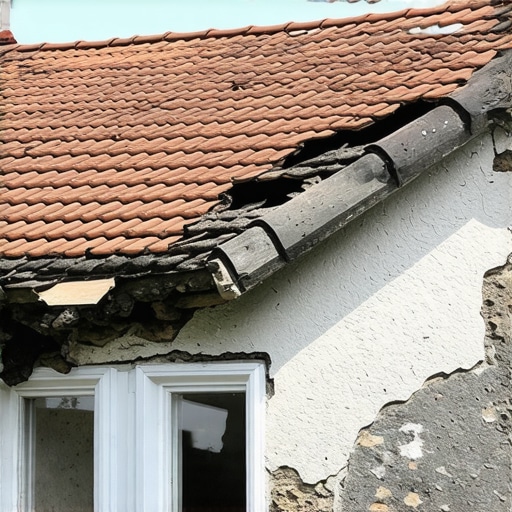
The Sponge Walk: A Forensic Look at Structural Decay
Walking on that roof felt like walking on a sponge. I knew exactly what I’d find underneath before the first shingle was even pried loose. It was a crisp morning in late autumn, and as my boots sank into the soft spots near the valley, the unmistakable scent of fermenting OSB hit me—a sour, earthy stench that tells a veteran inspector the house is effectively eating itself from the inside out. This wasn’t just a leak; it was a systemic failure of the building envelope, a common sight for local roofers who understand the brutal physics of our northern winters. When you ignore the signs of moisture intrusion, you aren’t just looking at a few missing shingles; you are looking at the potential collapse of your structural integrity by 2026 if the current decay rate holds steady.
“The primary purpose of a roof system is to provide weather protection, and its design must account for the management of moisture within the assembly.” – International Building Code (IBC)
The Capillary Crawl: How Water Defies Gravity
Most homeowners think water only moves down. They are wrong. In the world of forensic roofing, we deal with capillary action—the process where water is wicked upward into tight spaces between overlapping materials. When roofing companies fail to install a proper starter strip or mess up the offset pattern of the shingles, they create tiny channels. During a heavy rain or a slow snow melt, water tension pulls moisture three, four, maybe five inches upward, right past the top of the shingle and onto the bare wood. By the time you see a brown spot on your ceiling, that water has been sitting against your plywood for months, feeding the fungi that turn solid timber into something resembling wet oatmeal. This is the silent killer that local roofers often miss if they are just looking for ‘storm damage’ to cash an insurance check.
Thermal Bridging and the ‘Shiner’ Problem
Let’s talk about the ‘shiner.’ In the trade, a shiner is a nail that missed the rafter and is hanging out in the attic space, exposed. In our cold climate, these nails act as thermal bridges. During a deep freeze, the heat escaping from your poorly insulated attic hits that cold steel nail, and moisture from your home’s air condenses into frost. I’ve been in attics where it looked like it was snowing inside because there were so many shiners covered in rime frost. When the sun comes out, that frost melts, dripping directly onto the roof deck. Over a few seasons, this creates localized rot around every single misplaced fastener. High-quality roofing companies train their crews to ‘feel’ the rafter with the nail gun, but the ‘trunk slammers’ just fire away, leaving you with a thousand tiny leaks that never actually rained from the sky.
The Attic Bypass: Why Your Heating Bill is Rotting Your Roof
If you want to spot 2026 structural rot early, stop looking at the shingles and start looking at your attic bypasses. An attic bypass is any hidden opening that allows warm, moist air from your living space to leak into the attic. Think about light fixtures, plumbing stacks, or that poorly sealed attic hatch. In the winter, this warm air carries gallons of water vapor. When it hits the underside of the cold roof deck, it turns to liquid water. This is why we see rot starting at the peak of the roof—the highest point where the warm air collects. Local roofers who don’t understand building science will tell you that you need more vents. But if you add more vents without sealing the bypasses, you just pull more warm air out of the house faster, accelerating the rot. It’s a vicious cycle that requires a surgical approach to insulation and air sealing, not just a new layer of asphalt.
“A roof is only as good as its flashing.” – Old Roofer’s Adage
The Anatomy of a Failing Valley
The valley is the most vulnerable part of any structure because it’s where two roof planes direct all their water. It’s a high-velocity canal. I often see roofing companies using ‘closed-cut’ valleys because they are faster and cheaper to install. But in regions with heavy snow loads, these valleys become traps. Ice builds up in the channel, creating a dam that forces water sideways under the shingles. A forensic inspection usually reveals that the metal valley flashing was either too narrow or, worse, fastened with nails driven right through the center of the water channel. A proper ‘cricket’ behind a chimney or a correctly diverted valley can be the difference between a 30-year roof and a 5-year disaster. If your contractor didn’t mention ice and water shield membranes extending at least 24 inches past the interior wall line, they’ve already set a countdown for your structural failure.
Warranties and the Marketing Mirage
Don’t get lured in by the ‘Lifetime Warranty’ stickers. Those warranties almost always cover ‘manufacturing defects’ of the shingle itself, not the installation or the wood underneath. If the plywood rots because the ventilation was choked or the flashing was botched, the manufacturer will walk away every single time. You need to vet local roofers based on their understanding of hydrostatic pressure and vapor barriers, not their sales pitch. Look for the guy who brings a moisture meter and an infrared camera to the estimate, not just a ladder and a contract. The goal is to identify the ‘Mechanism of Failure’ before you spend twenty thousand dollars on a new roof that will suffer the same fate as the old one.
The Hard Truth: Surgery vs. Band-Aids
When we find structural rot, you have two choices. You can go for the ‘Band-Aid’—slapping some caulk on a leak and hoping for the best—or you can perform the ‘Surgery.’ Surgery means a full tear-off down to the rafters, replacing the compromised OSB with high-grade CDX plywood, and re-engineering the ventilation system to ensure the wood can breathe. Anything less is just hiding the rot. As we approach 2026, the roofs installed during the post-2020 labor shortage are beginning to show their true colors. If you see sagging in the ridgeline or if the eaves look like they are dipping, the time for a simple repair has passed. You are now in the territory of structural stabilization. Spotting it now means you might save the rafters; waiting until 2026 means you might be replacing the entire top floor of your home.