
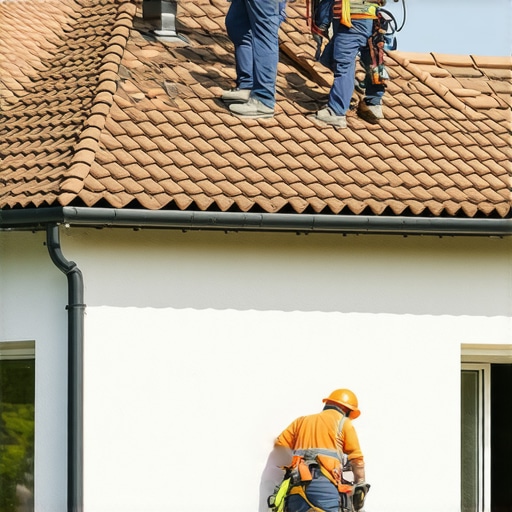
The Stone Reality of Slate Restoration
Walking onto a 100-year-old slate roof in the middle of a November freeze feels less like a typical job and more like a high-stakes chess match against gravity and chemistry. By 2026, the industry is flooded with roofing companies pushing quick-fix synthetic alternatives, but for those of us who have spent decades with a slate ripper in our hands, we know that true slate doesn’t just sit on a house; it lives there. When you see a slate roof failing, it’s rarely the stone’s fault. It’s the human element. My old foreman used to say, ‘Water is patient. It will wait for you to make a mistake, then it will rot your house from the inside out while you’re sleeping.’ He was right. Water doesn’t just fall; it climbs, it seeps, and it exploits every ‘shiner’ or missed nail in the deck. This guide is for the homeowner who is tired of the ‘trunk slammer’ sales pitches and wants to understand the forensic reality of keeping a stone roof over their head for another century.
The Physics of Failure: Why Slate Roofs Actually Leak
In our northern climate, where the freeze-thaw cycle is a brutal annual ritual, the primary enemy of slate isn’t the rain—it’s capillary action. Imagine two pieces of slate overlapping. If the head-lap—the distance the third course of slate overlaps the first—is insufficient, water doesn’t just run off. It gets sucked upward between the slates by surface tension. Once that water is trapped, the 10°F night air hits it. Water expands as it freezes, exerting thousands of pounds of pressure, slowly prying the slates apart or cracking the stone. This isn’t just a leak; it’s a mechanical demolition of your roof’s integrity. Most local roofers today don’t even know what a head-lap is; they just slap slates down and hope the underlayment does the work. But underlayment is a secondary defense, not a primary one.
“A roof is only as good as its flashing.” – Old Roofer’s Adage
The forensic scene of a failed restoration usually starts at the valleys and crickets. A ‘cricket’ is that small peaked structure we build behind a chimney to divert water. If that’s flashed with cheap galvanized steel instead of 16-ounce copper, you’re on a countdown. Within fifteen years, the salt and moisture in the air will eat through that steel, creating pinholes. You won’t see it from the ground. You’ll see it when your dining room ceiling starts to look like a topographic map of the Everglades. We don’t use ‘Band-Aids’ like caulk in these areas. Caulk is a five-year solution for a hundred-year roof. True restoration requires ‘surgery’: pulling the slates, replacing the metal with cold-rolled copper, and bibbing the repairs with new lead-coated copper shims.
The Material Truth: 2026 Material Realities
In 2026, the market for roofing materials is more confusing than ever. You’ll hear sales reps talk about ‘Lifetime Warranties’ on asphalt shingles. Let me tell you the cynical truth: a ‘Lifetime Warranty’ is a marketing gimmick designed to outlast your residency in the home, not the home itself. Asphalt is basically a paper mat soaked in oil and covered in rocks. As soon as it hits the roof, the UV radiation starts cooking the oils out. In the North, the heat-sink effect of a dark roof can reach 160°F, literally baking the shingles until they’re as brittle as a cracker. Slate, conversely, is metamorphic rock. It’s been under pressure for millions of years; it doesn’t care about the sun. The problem we face in 2026 is the scarcity of ‘S-1’ grade slate. If a contractor offers you a ‘deal’ on slate, they’re likely using ‘S-3’ grade stone from a questionable quarry that will start to delaminate and turn to soft clay within twenty years. You want Vermont or Buckingham slate—the hard stuff that rings like a bell when you tap it with a hammer.
The Fastener Fiasco: Copper vs. Everything Else
One of the most common forensic failures I investigate is the use of stainless steel or, heaven forbid, electro-galvanized nails in slate. This is the ultimate ‘trade’ sin. Slate is heavy. Each square (that’s 100 square feet in roofer-speak) can weigh between 800 and 1,500 pounds. When you nail those stones down with anything other than solid copper nails, you’re creating a galvanic reaction. The acidity in the wood deck and the moisture in the air will eventually corrode those nails. I’ve seen 80-year-old slate roofs where the stone is perfectly fine, but the nails have turned to dust. The slates just start sliding off like a deck of cards. We call them ‘sliders.’ When we perform a restoration, we use 1.5-inch large-head copper nails. They don’t rust, they don’t react, and they stay put. If your roofing companies aren’t showing you a bag of copper nails, show them the door.
“The technical requirements for slate roofing are dictated by the physical properties of the stone and the laws of hydrodynamics.” – NRCA Manual excerpt
Ice Dams and the Northern Winter Defense
In cities like Boston, Chicago, or Buffalo, ice dams are the silent killers of slate roofs. When heat leaks from your attic because of poor insulation (thermal bridging), it melts the snow on the roof. That water runs down to the cold eaves and freezes, creating a dam. The backed-up water then finds its way under the slates. In a forensic teardown, I often find the plywood decking turned to ‘oatmeal’ because of this. The solution isn’t just more ‘Ice & Water Shield’—though that helps. The solution is ventilation. You need a cold roof deck. We achieve this by ensuring the ‘intake’ at the soffits and the ‘exhaust’ at the ridge are perfectly balanced. If your roofer isn’t talking to you about R-values and attic bypasses, they aren’t a roofer; they’re a shingle-applicator.
The Anatomy of a Proper Restoration
Restoring a slate roof in 2026 isn’t just about replacing broken stones. It’s a multi-step forensic process: 1. The Sounding: We walk the roof and tap every slate. A ‘dead’ thud means the stone is cracked internally and needs to go. 2. The Rip-Out: We use a slate ripper to reach under the stone and cut the copper nails without disturbing the surrounding slates. 3. The Flashing Reset: We pull up the old, brittle lead or copper and install new 16oz copper in the valleys and around chimneys. 4. The S-Hook Repair: For individual replacements, we use copper S-hooks to secure the new stone, ensuring it’s tucked perfectly under the existing course to maintain the head-lap. This is the difference between a roof that lasts another 50 years and one that leaks next spring.
How to Spot a Professional in 2026
Don’t fall for the ‘Free Roof’ insurance scams or the guys who say they can do slate because they’ve done a few ‘slateline’ asphalt jobs. Ask them for their ‘ripper.’ If they don’t know what that tool is, they have no business on your roof. Look for a contractor who talks about ‘squares,’ ‘crickets,’ and ‘head-lap’ instead of ‘curb appeal’ and ‘financing options.’ A real slate roofer is a craftsman, part mason and part carpenter, with a healthy dose of respect for the physics of water. Remember, a cheap roof is the most expensive thing you’ll ever buy. Pay for the expertise now, or pay for the interior damage later. Your home deserves the protection of stone, installed by someone who understands that water never sleeps.