
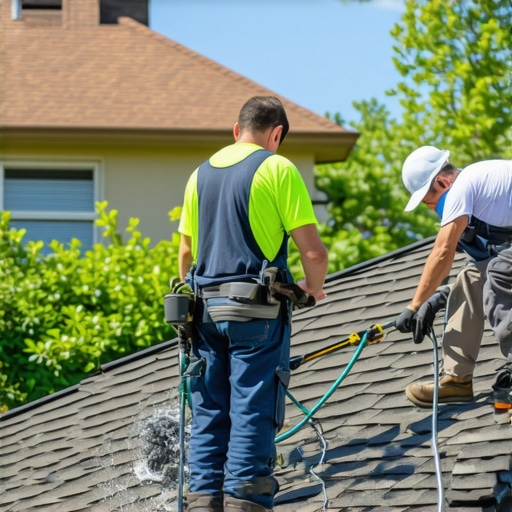
The Biology of a Failing Roof
Walking on that roof in the humid belly of the Gulf Coast felt like walking on a wet wool rug. I knew exactly what I’d find underneath before I even pulled my flat bar. The north-facing slope was a dark, bruised green, slick enough to send a rookie sliding into the gutters. Most homeowners think those black streaks are just dirt or soot. They aren’t. It’s Gloeocapsa magma—a hardy, photosynthetic bacteria that doesn’t just sit on your roof; it eats it. It feeds on the limestone filler in modern asphalt shingles, turning your expensive roof into a buffet line for microorganisms. If you don’t stop the cycle, you aren’t just looking at an ugly house; you’re looking at premature granule loss and a roof deck that stays damp enough to rot the rafters. Local roofers see this every day in the Southeast, where the humidity clings to your skin like a wet blanket, but the ‘fixes’ most roofing companies offer are often just temporary masks.
1. The Physics of Metallic Ion Transfer (Copper and Zinc)
The most effective way to stop algae is to weaponize the rain. When water hits a strip of zinc or copper installed at the ridge, it creates a metallic solution that washes down the slope. These ions are toxic to algae. As a forensic roofer, I’ve seen 30-year-old roofs that look brand new just because they had copper flashing around a chimney. But here is the catch: you can’t just slap a thin piece of metal up there and call it a day. The ‘shadow’ of protection only extends about 10 to 15 feet. On a long rafter run, you need secondary strips mid-slope. If your contractor doesn’t understand the chemistry of ion transfer, they are just selling you a shiny ornament. When rain hits these strips, it creates a microbial ‘kill zone’ that prevents the bacteria from ever taking root in the granules.
“A roof system must be designed to shed water and resist the local environmental hazards, including biological growth in high-humidity regions.” – NRCA Manual excerpt
2. Soft Washing vs. The Death of the Shingle
If a guy pulls up to your house with a pressure washer and starts climbing a ladder, fire him before he hooks up the hose. I’ve seen more roofs destroyed by ‘cleaning’ than by the algae itself. High-pressure water strips the ceramic granules right off the asphalt mat. Once those granules are gone, the UV rays from the sun bake the asphalt, causing it to crack and curl within months. You need a low-pressure ‘soft wash’ using a specific ratio of sodium hypochlorite and surfactants. This doesn’t just rinse the surface; it kills the root system of the algae. However, even this is a temporary fix. Without a post-wash treatment or metallic strips, the algae will return in 18 to 24 months because the spores are still floating in the humid air of your neighborhood.
If you have already noticed damage during a cleaning attempt, you might be looking at why you should never pressure wash your shingles. The damage is often invisible from the ground until the first heavy storm causes a leak.
3. Combatting Thermal Bridging and Attic Humidity
Algae loves a warm, damp surface. If your attic isn’t venting properly, the roof deck stays warm long after the sun goes down. This creates a dew point on the shingles that provides the perfect petri dish for Gloeocapsa magma. Local roofers often focus only on the shingles, but the real culprit is often the lack of intake at the soffit. When I do a forensic inspection, I’m looking for ‘hot spots’ where the insulation is stuffed into the eaves, blocking the airflow. If your attic is hitting 140°F, your shingles are being cooked from both sides, and the moisture trapped in the shingles’ shaded areas will never dry out. Improving your ventilation is a massive part of lowering roof heat absorption, which in turn makes the environment less hospitable for biological growth.
4. The ‘Lifetime Warranty’ Trap and AR Shingles
Don’t be fooled by ‘Algae Resistant’ (AR) shingle labels. Most of these shingles are manufactured with a small percentage of copper-containing granules mixed in. While they work, they have a lifespan. The copper eventually leaches out, and the protection vanishes. I’ve seen ’30-year AR shingles’ start streaking in year seven. When roofing companies pitch you on these, ask about the ‘percentage of coverage’ and whether the manufacturer warrants against the staining or just the material failure. There is a huge difference. Usually, the fine print says they only guarantee the shingles won’t grow algae for 10 years, even if the shingle itself is rated for 50. It’s a marketing shell game. You are better off investing in physical copper strips than relying solely on the granules embedded in the asphalt.
5. Strategic Landscape Management
I once investigated a claim in a heavily wooded lot where the roof was literally turning into a forest. If you have oak or pine limbs hanging over the valley or cricket of your roof, you are creating a microclimate of permanent shade. This prevents the sun from naturally ‘bleaching’ and drying the shingles. Furthermore, the organic debris (leaves, needles) traps moisture against the granules. This isn’t just about algae; it’s about preventing the rot that leads to fixes for loose or rotted fascia. You need a minimum of 10 feet of clearance between your roofline and any overhanging branches to allow for proper UV exposure and airflow. Sunlight is the best natural disinfectant we have in the trade.
“The building envelope shall be designed and constructed to prevent the accumulation of water within the wall or roof assembly.” – International Residential Code (IRC) R703
The Cost of Cutting Corners
When you hire local roofers, look for the ‘shiners’—those missed nails that go through the deck but miss the rafter. In a humid climate, those nails will sweat, dripping water into your insulation and fueling the mold cycle from the inside out. A contractor who rushes the job and ignores the starter strip or the drip edge is the same contractor who will tell you that algae is ‘just cosmetic.’ It’s not. It’s the first sign that your roof system is failing to shed moisture effectively. If you see streaks, check your flashings and your valleys. Water is patient, and if the algae is holding moisture against your shingles, that water will eventually find a way into your plywood deck. If you’re suspicious of the work being done, keep an eye out for these signs your roofing company is cutting corners. Protecting your home from algae is a multi-front war involving chemistry, physics, and proper trade-craft.