
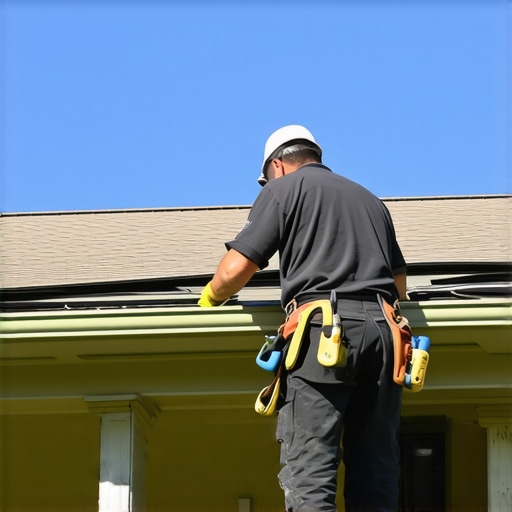
The Forensic Autopsy of a Failing Roof
Walking on that roof in Savannah last July felt like walking on a giant, waterlogged sponge. Every step I took had that sickening give, a subtle squelch that told me the OSB (oriented strand board) underneath had long ago given up the ghost. The homeowner, a nice guy who’d been sold a ‘lifetime’ roof only eight years prior, thought he just had a few ‘shingle pests’—those black streaks and the occasional bug. He was wrong. What he had was a system-wide failure caused by the very things most local roofers ignore because they’re too busy chasing the next insurance check. I’ve spent 25 years in this trade, and I’m tired of seeing people get fleeced by ‘trunk slammers’ who don’t understand the basic physics of a building envelope. By 2026, the climate shifts in the Southeast have made these issues even more aggressive. If you aren’t looking at your roof as a living, breathing forensic scene, you’re going to be writing a five-figure check sooner than you think.
“A roof is only as good as its flashing, and the installer’s understanding of water’s stubbornness.” – Old Roofer’s Adage
1. The Microbial Pest: Gloeocapsa Magma and Limestone Hunger
Those black streaks on your shingles aren’t dirt, and they aren’t ‘pests’ in the traditional sense, but they are parasitic. It’s an algae called Gloeocapsa Magma. In our 140°F attic environments, this stuff thrives. It’s specifically looking for the calcium carbonate—the limestone filler—that manufacturers use to give shingles weight. By 2026, we’re seeing more aggressive strains that hold moisture against the granule surface longer. When moisture stays, it creates a micro-climate that allows the granules to loosen. Once the granules are gone, the asphalt is exposed to raw UV radiation, which causes thermal shock. To stop this, you need more than a hardware store spray. You need shingles integrated with copper or zinc granules that create a sacrificial ionic layer every time it rains. This isn’t a luxury anymore; it’s a survival requirement for your roof deck.
2. The ‘Shiner’ and the Invisible Leak
When I pull up a square of shingles and see a ‘shiner’—that’s a nail that missed the rafter and is just hanging out in the attic space—I see a thermal bridge. In the humid Southeast, that cold nail head acts as a condenser. Moisture from the house hits that cold metal and drips onto the insulation. Over time, this creates a ‘pest’ of a different sort: mold and wood-destroying fungi. Local roofers who are rushing through a job shoot these shiners constantly. They don’t care because you won’t see the leak for three years. But water is patient. It uses capillary action to move sideways under the shingle lap, finding that missed nail hole and traveling down the shank. By the time you see a brown spot on your ceiling, the valley is already half-rotten.
3. The Physics of the Attic Heat Sink
A roof isn’t just the shingles; it’s the air underneath. Most local roofing companies will slap on a ridge vent and call it a day, but if the intake at the soffits is blocked by insulation, that ridge vent is useless. It creates a vacuum that actually pulls conditioned air out of your house. In 2026, with energy costs where they are, this is a financial pest. A poorly vented roof allows heat to bake the shingles from both sides. This leads to ‘blistering,’ where the internal oils of the asphalt boil and pop. I’ve seen roofs in Houston that looked like they had chickenpox because the attic was a literal oven. You need a balanced system: 50% intake, 50% exhaust. Anything less is professional negligence.
“The total net free ventilating area shall be not less than 1/150 of the area of the space ventilated.” – IRC Building Code R806.2
4. The Drip Edge and the Pest Highway
If your roofer skipped the drip edge, they gave an open invitation to every carpenter ant and termite in the county. The drip edge is a piece of L-shaped metal that directs water away from the fascia and into the gutter. Without it, water curls back under the shingle (thanks to surface tension) and wets the edge of the plywood. This ‘wicking’ effect turns your structural decking into soft, sugary wood that pests love. When I do a forensic tear-off, I often find that the first six inches of the deck are completely gone, even if the rest of the roof looks ‘okay.’ A proper installation requires a starter course of shingles and a heavy-gauge drip edge to break that surface tension and keep the ‘sponge’ dry.
5. The ‘Trunk Slammer’ Warranty Trap
The biggest pest you’ll face in 2026 is the contractor who disappears after the first big storm. They’ll offer you a ‘Lifetime Warranty,’ but if they aren’t a certified master installer for the manufacturer, that warranty is only as good as the paper it’s printed on. Most of these warranties only cover material defects, not ‘labor’ or ‘consequential damage’ from a shiner or a poorly flashed cricket behind your chimney. You need to vet local roofers by their forensic knowledge, not their price point. Ask them about hydrostatic pressure and how they plan to handle the flashing at a wall-to-roof transition. If they look at you like you’re speaking Greek, show them the door. You’re paying for a dry house, not a cheap price tag.