
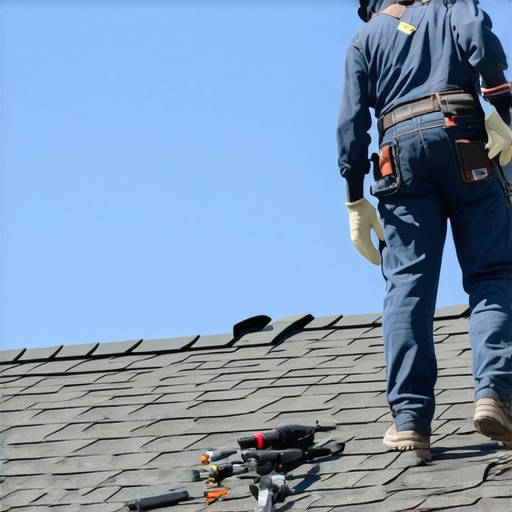
The Hidden Rot: Why Your Roof is Growing a Garden
The first thing that hits you isn’t the sight of the black streaks; it’s the smell. It’s a heavy, musty, earthy scent that suggests the structural integrity of your home is being slowly digested by a biological invader. As a veteran who has spent over a quarter-century on the roof deck, I can tell you that most homeowners ignore the warning signs until they are looking at a five-figure replacement bill. We aren’t just talking about a bit of green moss here. We are talking about the colonization of your shelter by moisture-wicking organisms that turn expensive plywood into something resembling wet cardboard. Most local roofers will tell you it’s just ‘weathering,’ but those of us who do the forensic teardowns know better.
The Forensic Scene: Walking the Sponge
Last season, I was called out to a property where the homeowner complained of a persistent ‘damp’ feeling in the upstairs hallway. Walking on that roof felt like walking on a sponge. I knew exactly what I’d find underneath before I even pulled my hammer. Every step had a subtle, sickening ‘give,’ a softness that tells a forensic roofer the decking has lost its shear strength and the internal fibers of the wood have separated. When we finally peeled back the three-tab shingles, the plywood didn’t just have mold; it was literally disintegrating into a black, pulpy mess. The roofing companies who installed it a decade prior had neglected a simple 1-inch air gap at the ridge and used cheap, organic felt. They effectively turned the attic into a slow-cooker for fungus. This isn’t just a failure of materials; it’s a failure of physics and a lack of respect for the climate.
The Physics of Failure: Mechanism Zooming into the Shingle
To understand how to stop roof mold in 2026, you have to understand the microscopic war happening on your roof. Mold spores are opportunistic; they need moisture, warmth, and a food source. Your asphalt shingles, surprisingly, are a buffet. Modern shingles use limestone as a filler to add weight and reduce costs. Gloeocapsa magma, that black-streak algae we see everywhere, feeds specifically on that limestone filler. Once the algae takes hold, it creates a hospitable, shaded environment for more aggressive mold and moss. They hold water against the shingle surface through capillary action—the same way a paper towel sucks up a spill. This water is pulled sideways and upward under the shingle laps, bypassing the primary drainage path. From there, it hits the nails. If you have a ‘shiner’—that’s a nail that missed the rafter and hangs exposed in the attic—it acts as a thermal bridge. Moisture condenses on that cold nail during the night, drips onto the fiberglass insulation, and starts the cycle of rot from the inside out. This isn’t a guess; it’s the inevitable result of poor installation geometry.
“Proper attic ventilation is not an option; it is a fundamental requirement for the longevity of the entire roof assembly.” – NRCA Roofing Manual
5 Critical Strategies to Kill the Mold Cycle
1. The Balanced Ventilation Equation
Most local roofers will slap on a ridge vent and walk away. That’s a recipe for structural rot. Ventilation is a system of intake and exhaust that must be perfectly balanced. If you don’t have enough soffit intake, that ridge vent will actually start pulling air from the living space, drawing all your bathroom and kitchen humidity into the attic. In 2026, we are looking at ‘Smart Ventilation’ protocols that ensure a constant 1/150 ratio. Without this balance, your attic becomes a pressurized terrarium. We check for ‘Attic Bypasses’—those hidden gaps around plumbing stacks and light fixtures—that allow moisture to migrate upward. If those aren’t sealed, your new roof is doomed before the first rain.
2. Metallurgy as a Biological Shield
We’re seeing a return to old-school metallurgy to solve modern biological problems. By installing a copper or zinc strip at the ridge, you create a permanent chemical defense. Every time it rains, metallic ions are released and washed down the roof. These ions are toxic to mold, algae, and moss. It’s a passive defense system that keeps the shingle surface toxic to invaders. Any roofing companies that don’t offer metallic strips in high-humidity zones are doing you a disservice. It’s the difference between a 10-year roof and a 30-year roof.
3. The ‘Cricket’ Strategy for Water Diversion
Water must never be allowed to loiter. A ‘cricket’ is a small peaked structure built behind a chimney or any wide obstruction to divert water to the valleys. When water pools behind a chimney, it creates a micro-climate of standing moisture and debris. This is the primary breeding ground for mold. Proper flashing and cricket installation are what separate the veterans from the ‘trunk slammers’ who just use a tube of caulk and hope for the best. Caulk dries out; a well-framed cricket is forever.
4. Synthetic Underlayment Over Organic Felt
The days of #15 or #30 organic felt are over. Felt is essentially paper soaked in asphalt, and mold loves to eat paper. In 2026, we use high-performance synthetic underlayments. These materials are non-organic, meaning they provide zero nutrients for mold spores. They also act as a secondary water resistance layer. Even if a shingle is damaged, the synthetic layer keeps the deck bone dry, preventing the ‘oatmeal’ effect I see on so many forensic jobs.
5. Anti-Algae Shingle Technology and Granule Density
Manufacturing has evolved, but you have to know what to ask for. Major brands now embed copper-containing granules directly into the shingle. This isn’t a surface coating; it’s part of the shingle’s DNA. When interviewing local roofers, demand to see the ‘Algae Resistance’ rating. If they can’t provide a 25-year streak-free warranty, they are selling you yesterday’s technology. You want a high-density granule coverage that protects the asphalt from UV degradation, which is the precursor to moisture intrusion.
“Roofing systems shall be designed and installed in accordance with this code and the manufacturer’s installation instructions to ensure moisture control.” – International Residential Code (IRC), Chapter 9
The Cost of the ‘Wait and See’ Approach
Ignoring mold isn’t just an aesthetic issue or a matter of ‘curb appeal.’ When mold consumes the lignin in your plywood decking, the wood becomes brittle and ‘punky.’ In a high-wind event or a storm, those shingles won’t have anything to grip onto. The nails will pull right through the softened wood, and your roof will peel off like a banana skin. The cost of a few preventative maintenance steps now—checking your valleys, clearing debris from your gutters, and ensuring your ridge vent isn’t clogged—is pennies compared to the cost of a full structural deck replacement. Don’t let a cheap contractor turn your home into a case study for forensic failure. Demand a roof that breathes, sheds, and survives the humidity of the coming decade.