
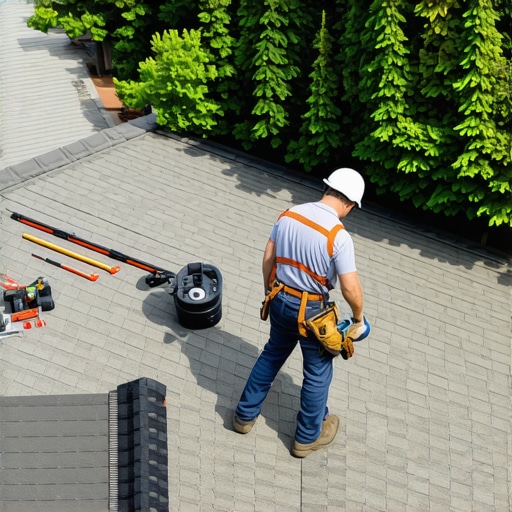
The Forensic Reality of the 140-Degree Deck
After twenty-five years of pulling up rotted OSB and tracing the jagged path of a mystery leak, you start to see things most homeowners miss. Walking on that roof felt like walking on a sponge. I knew exactly what I’d find underneath. It wasn’t just a bad shingle job; it was a systemic failure of ventilation that turned the attic into a slow-cooker, liquefying the resins in the plywood until the structural integrity was about as reliable as a wet cardboard box. But the real tragedy wasn’t the roof—it was what lay ten feet below. The homeowner had spent five years and thirty thousand dollars on a tropical garden that looked like a slice of the Eden Project. When the local roofers arrived, they treated that garden like a staging ground for a demolition derby. I’ve seen enough crushed hydrangeas and oil-slicked hostas to last a lifetime. If you’re planning your 2026 landscaping, you need to understand that a roofing crew is essentially a controlled landslide. A single square of asphalt shingles weighs roughly 230 pounds. When a crew tears off forty squares, you’re looking at over four tons of debris falling from the sky. Without a forensic plan, your soil becomes a graveyard for galvanized nails and petroleum-based granules.
“The primary purpose of a roof is to shed water, but the primary failure of a roofer is ignoring where that water—and debris—ends up.” – Adapted from NRCA Guidelines
1. The Physics of Soil Compaction: The Silent Killer
Most local roofers focus on the shingles, but the forensic veteran focuses on the ground. When workers set up ladders or drop heavy bundles, they aren’t just standing on your grass; they are initiating a process called soil compaction. In high-humidity zones like ours, where the soil stays moist, the weight of a worker—plus a 70-pound bundle of shingles—crushes the micropores in the earth. This eliminates the oxygen required for root respiration. You won’t see the damage in 2025. You’ll see it in 2026 when your prize oaks start showing canopy dieback because their root systems were suffocated a year prior. Mechanism zooming tells us that even a one-inch compression of the topsoil can reduce water infiltration by sixty percent. Insist that your roofing companies use specialized debris equipment like the ‘Equipter’ or plywood runways to distribute the load. If they don’t understand the pounds-per-square-inch math of your lawn, they shouldn’t be on your property.
2. Asphalt Granule Toxicity and pH Shifting
Every asphalt shingle is coated in ceramic-fired granules. During a tear-off, millions of these tiny rocks are shed. They aren’t just dirt; they are impregnated with oils to resist UV radiation. When these granules wash into your flower beds, they don’t just sit there. They alter the mechanical structure of the soil. In our tropical climate, wind-driven rain moves these granules deep into the mulch. Over time, the leaching of petroleum byproducts can subtly shift the soil’s pH, stressing acid-loving plants. A forensic analysis of failed gardens often reveals a ‘granule crust’ two inches below the surface. To protect your 2026 landscape, your roofing contractor must use a ‘Catch-All’ system—a series of high-tensile nets suspended from the eave to the perimeter fence. This catches the granules before they ever touch the dirt.
3. The Gutter Physics and Erosion Control
A roof is a giant water collector. When we install a new system, we often change the flow dynamics. If your local roofers don’t install a proper cricket—a small peaked structure used to divert water around a chimney or wide transition—you end up with a concentrated stream of water hitting your garden. This is hydrostatic pressure at its most destructive. I’ve seen a single storm carve a six-inch trench through a curated Japanese maple bed because the roofer forgot to calculate the velocity of the valley runoff.
“A roof is only as good as its flashing.” – Old Roofer’s Adage
You must ensure the drip edge is positioned to lead water directly into the gutter, and that the downspouts are temporarily extended twenty feet away from your foundation and landscaping during the construction phase.
4. Heat Radiation and the 2026 Canopy
We live in a zone where UV radiation is the enemy. When we strip a roof, the thermal mass of the house changes instantly. If your roofers leave the deck exposed for three days, the radiant heat reflecting off the underlayment can literally cook the underside of nearby tree limbs. I’ve performed autopsies on scorched magnolias where the side facing the house died back completely. This isn’t from fire; it’s from the thermal expansion of air trapped between the roof and the foliage. A professional crew will use white or reflective synthetic underlayment to mitigate this heat bounce, protecting the delicate vascular system of your 2026 canopy.
5. The Hunt for the ‘Shiner’ and Hidden Hardware
The job isn’t done when the last shingle is nailed. A ‘shiner’—a nail that missed the rafter and hangs through the plywood—is a leak waiting to happen, but a nail in your garden is a lawsuit waiting to happen. Local roofers often use a magnetic rake, but a forensic-level cleanup requires a multi-pass approach. Nails have a way of hiding in the ‘v’ of a plant’s branch or sinking into the soft mud of a rain garden. If those nails stay there, they corrode, releasing zinc and iron into the root zone. While some iron is good, a concentrated pocket of oxidizing galvanized steel is not. Demand a three-stage sweep: once after the tear-off, once after the installation, and a final forensic sweep with a high-powered magnetic bar before the final check is cut. This ensures your 2026 landscaping remains a sanctuary, not a hazard zone.