
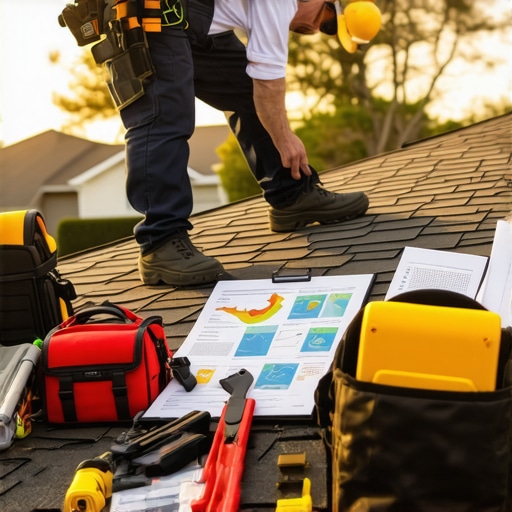
The Calm Before the Pressure Gradient: A Forensic Look at Your Roof
Every time I walk onto a roof after a coastal blow, I see the same thing: thousands of dollars of damage that could have been avoided by a couple of bucks worth of extra attention. You see, the average local roofers are usually just in a race to see how many squares they can slap down before the sun sets. But as someone who has spent twenty-five years tearing off failed systems, I can tell you that the storm doesn’t care about the speed of your contractor. It only cares about the physics of failure. My old foreman used to say, ‘Water is patient. It will wait for you to make a mistake.’ And in the Southeast, those mistakes aren’t just leaks; they are catastrophic structural compromises. When the 2026 hurricane season hits, the difference between a dry living room and a total loss will come down to what happened under your shingles years prior.
1. The Secondary Water Resistance (SWR) Reality Check
Most homeowners think the shingles are the roof. They aren’t. The shingles are the armor, but the underlayment is the skin. If you’re still using 15lb or 30lb felt, you’re basically betting your house on a wet piece of paper. In a high-wind event, shingles can blow off—that’s a fact of life. But if your underlayment stays, your house stays dry. When preparing for 2026, you need to talk to roofing companies about a self-adhering modified bitumen underlayment, often called ‘peel-and-stick.’ This creates a ‘Secondary Water Resistance’ layer. Imagine a giant, rubberized sticker covering your entire plywood deck. Even if every single shingle is stripped away by 130mph winds, this SWR layer prevents the wind-driven rain from entering the joints in the plywood. It’s the difference between needing a few shingles replaced and needing an entirely new interior ceiling because the rain found its way through the cracks.
“Where the roof covering is removed, the secondary water barrier shall be maintained to prevent water infiltration.” – International Residential Code (IRC)
2. The Physics of Uplift and the Edge Metal Failure
The edge of your roof is where the battle is won or lost. Wind doesn’t just push down on a roof; it creates a vacuum—a negative pressure—that tries to suck the roof off the house. This is ‘uplift.’ If your drip edge isn’t properly fastened, the wind gets underneath it, peels it back like a sardine can lid, and then it has a direct line to your fascia and the underside of your decking. In coastal areas, we deal with salt air, which leads to galvanic corrosion of standard fasteners. When preparing for the 2026 season, ensure your local roofers are using stainless steel nails for the edge metal. If they use standard electro-galvanized nails, the salt air will eat the heads off in five years, and the first tropical storm that comes through will rip that metal right off. You need a heavy-gauge drip edge, fastened every 4 inches on center, not the lazy 12-inch spacing I see most ‘trunk slammers’ doing.
3. The ‘Shiner’ and the High-Nailing Epidemic
If you want to see a forensic roofer get angry, show me a ‘shiner.’ That’s a nail that missed the rafter or was driven into the gap between plywood sheets. But even worse is the high-nailing epidemic. Every shingle has a very specific ‘nail line.’ If the installer hits that line, the nail goes through two layers of the shingle, providing double the holding power. If they nail just two inches too high—which is common when crews are rushing—the nail only catches one layer. In a hurricane, those high-nailed shingles will fly off like frisbees. You need to verify that your contractor is using a 6-nail pattern instead of the standard 4-nail pattern. In the high-velocity hurricane zones, that extra pair of nails per shingle increases the wind resistance rating significantly. I’ve seen roofs where the shingles stayed on during a Category 3 simply because the installer took the extra three seconds to hit the nail line properly.
4. Managing the Cricket and the Valley Heat
Water doesn’t just fall off a roof; it flows like a river. And just like a river, it pools at obstructions. If you have a chimney wider than 30 inches, you need a ‘cricket.’ This is a small peak built behind the chimney to divert water to the sides. Without it, you get a ‘dead valley’ where debris collects, holds moisture, and eventually rots the deck. During a hurricane, these areas are bombarded with gallons of water per minute. If the flashing in the valley isn’t woven correctly or if the metal valley isn’t wide enough, the hydrostatic pressure of the flowing water will force it sideways under the shingles. This is capillary action at its worst. When prepping for 2026, have a forensic inspection of your valleys. If I see a lot of mastic or ‘goop’ smeared around a valley, I know a hack was there. Real roofing is done with metal and gravity, not a caulk gun.
“A roof is only as good as its flashing; the material itself is secondary to the junctions.” – Old Roofer’s Adage
5. The ‘Lifetime’ Warranty Mirage and Material Selection
Don’t get sucked into the ‘Lifetime Warranty’ marketing. Most of those warranties are prorated and only cover manufacturing defects, not ‘acts of God’ like a hurricane. When you’re looking at roofing companies, ask about the wind speed rating of the specific shingle. You want a Class H rating (150 mph) for the coastal Southeast. Also, consider the age of your roof. Asphalt shingles lose their oils over time due to UV radiation. In places like Florida or Texas, an 8-year-old shingle is brittle. When the wind hits, a brittle shingle won’t flex; it will simply snap at the nail line. If your roof is approaching the ten-year mark, prepping for 2026 might actually mean a full replacement. It’s cheaper to replace a roof on your own terms than to do it as an emergency when every roofer in the state is booked for six months and your living room is a swimming pool. [image-placeholder-1] Always look for local roofers who understand the specific micro-climate of your neighborhood. Someone from two states away won’t know about the specific wind-tunnel effects of your local geography.
The Final Forensic Verdict
Preparing for a hurricane season isn’t about buying a tarp and some plywood for the windows. It’s about the integrity of the thousand little fasteners holding your house together. It’s about ensuring there are no shiners, that the starter strip was installed with the correct offset, and that your drip edge won’t fail when the pressure drops. Don’t wait for the clouds to turn gray. Get up there, or hire someone who actually knows how to look for the ‘physics of failure’ before the failure becomes your reality.