
The Forensic Scene: Why the 2026 Shifts Matter
Walking on a roof in a coastal subdivision shouldn’t feel like walking on a sponge, yet there I was, six months after a standard tropical storm, watching my boot sink three inches into what used to be a structural deck. From the curb, the shingles looked pristine. But the owner was seeing black streaks on her bedroom ceiling. I knew exactly what I’d find underneath: a catastrophic failure of the secondary water resistance layer. The local roofers who installed it used cheap felt that had essentially turned into a wet paper towel. This is the reality of residential roofing today, and it is why the design trends for 2026 aren’t just about aesthetics; they are about surviving a climate that is increasingly hostile to traditional building methods.
1. The Death of the ‘Standard’ Asphalt Shingle and the Rise of Reinforced Synthetics
In the trade, we talk a lot about ‘uplift.’ Most roofing companies sell you on the color, but they don’t tell you about the physics of a 110-mph gust hitting a 4:12 pitch. By 2026, the trend is shifting toward synthetic composites—materials that mimic slate or cedar but are engineered with polymer blends that don’t shatter when hit by 2-inch hail. The physics here is simple: traditional asphalt relies on a fiberglass mat that becomes brittle as the oils evaporate under relentless UV radiation. Once it’s brittle, the seal strip fails. When the seal strip fails, you get ‘shiners’—nails that were driven too high or low—allowing water to track down the shank of the nail through capillary action. Synthetic materials in 2026 are designed with integrated locking mechanisms that don’t just sit on the roof; they anchor into each other, creating a monolithic shield. This prevents the wind from getting a ‘fingernail’ under the edge of the course.
“A roof is only as good as its flashing.” – Old Roofer’s Adage
2. Integrated Solar: Moving Beyond ‘Bolt-On’ Disasters
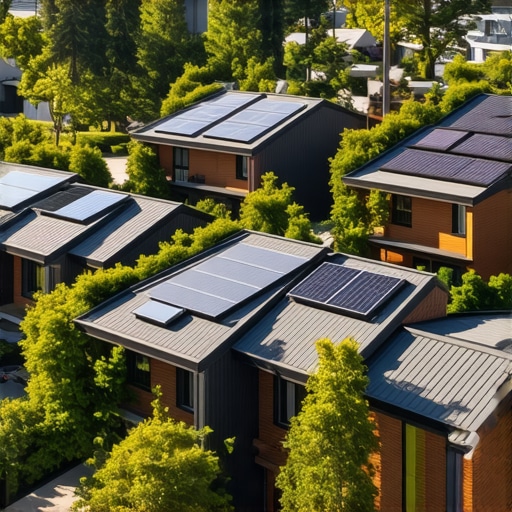
I’ve spent the last decade yelling at solar installers. Why? Because they take a perfectly waterproof roof and punch 40 holes in it to bolt down racking systems. Each one of those penetrations is a future leak. The 2026 design trend is ‘Building-Integrated Photovoltaics’ (BIPV). We are seeing roofing companies move toward solar shingles that are the actual water-shedding surface. No more lag bolts into the rafters that miss the mark. These systems are being designed with proper ‘crickets’ and water diverters around the electrical junctions. If you’re looking at local roofers, you need to ask if they are roofers or electricians; in 2026, they must be both. The thermal expansion of a bolt-on rack compared to the asphalt beneath it is a recipe for disaster. The rack moves at a different rate than the shingles, eventually widening the hole around the fastener until the sealant fails. Integrated systems eliminate this differential movement.
3. The ‘Cool Roof’ Evolution and Thermal Shock Management
In regions where the sun beats down for 300 days a year, we aren’t just worried about rain; we are worried about the roof cooking itself to death. A standard dark shingle can hit 160°F by noon. When a sudden afternoon thunderstorm hits, that temperature drops to 80°F in three minutes. That is ‘thermal shock.’ It causes the granules to slough off, leaving the asphalt exposed to the sun. The 2026 trend is high-albedo, ultra-reflective granules that aren’t just white—they use infrared-reflective pigments to keep the surface temperature within 10 degrees of the ambient air. Local roofers are now being forced to understand the ‘R-value’ of the entire assembly, not just the shingles. We are seeing a massive shift toward using 1-inch polyisocyanurate insulation boards directly on the deck before the underlayment. This stops ‘thermal bridging’ where the heat travels through the rafters and bakes your attic, which in turn bakes the roof from the inside out.
4. Self-Healing Underlayments and Secondary Water Resistance
The building code is finally catching up to what we’ve known for years: the shingles are just the first line of defense, and they are porous. In 2026, the trend is ‘Total Deck Encapsulation.’ We aren’t using stapled-down felt anymore. We are using ‘peel-and-stick’ membranes that are ‘self-healing.’ This means when a roofer drives a nail through the underlayment, the modified bitumen in the membrane squeezes around the nail like a gasket. This prevents water from tracking sideways. If a shingle blows off in a storm, the house stays dry. I once inspected a home that lost 40% of its shingles in a blow-off, but because they had a high-quality secondary water resistance layer, the interior didn’t have a single drop of moisture. That is the difference between a roof that meets code and a roof that actually works.
“The roof covering shall be installed in accordance with the manufacturer’s instructions and shall be designed to resist the wind loads as specified in this code.” – International Residential Code (IRC) R905.1
5. Advanced Ventilation Physics: The Attic Bypass
The most common cause of premature roof failure isn’t the weather; it’s the attic. If your local roofers don’t talk about intake and exhaust, fire them. The 2026 trend is the ‘Balanced System’ utilizing smart ridge vents and soffit intakes that create a continuous laminar flow of air. Without this, the heat builds up, the plywood delaminates, and the nails start to ‘back out.’ I’ve seen ‘squares’ of roofing where every single nail head was pushed up by the pressure of the wood expanding due to trapped moisture. This creates a ‘bump’ in the shingle that the wind catches, eventually snapping the tab. The design of 2026 focuses on ‘Attic Bypasses’—sealing the gaps around light fixtures and plumbing stacks so that the warm, moist air from your shower doesn’t end up in the attic in the first place. When you control the moisture, you control the lifespan of the roof.
The ‘Lifetime’ Warranty Trap
Don’t get suckered by a ‘Lifetime Warranty’ on a 2026 roof. Those warranties usually cover ‘manufacturing defects,’ but 99% of roofs fail because of ‘installation defects.’ A local roofer who doesn’t use stainless nails in a salt-air environment is setting you up for failure, and no manufacturer will cover that. You need to look for ‘No-Dollar-Limit’ (NDL) warranties that cover the workmanship. If the guy in the truck tells you it’s a 50-year roof, ask him if he’ll be around in 50 years to fix the flashing. He won’t. The real trend in 2026 is forensic-level installation: triple-checking the valleys, ensuring the ‘starter course’ is properly offset, and making sure the drip edge isn’t just thin aluminum that will curl in three years. Roofers are moving from being ‘laborers’ to ‘technicians,’ and your house depends on that transition.
Reading through this post, I couldn’t agree more about the importance of embracing innovative materials like synthetic composites and integrating solar directly into roof systems. I recently had a client switch from traditional asphalt to a reinforced synthetic shingle, and the difference in wind resistance and impact durability was remarkable. It’s clear that in facing increasingly severe weather patterns, such upgrades are not just about longevity but safety. The discussion around thermal management resonates with me too—especially the use of infrared-reflective pigments to keep roof temperatures in check. I wonder, though, how widespread the knowledge of these advanced roofing techniques is among local contractors? Do they fully understand and implement these new standards, or is there still a learning curve? Also, with the push towards such sophisticated systems, what are some common pitfalls homeowners should watch out for during installation to ensure their roof truly benefits from these trends?