
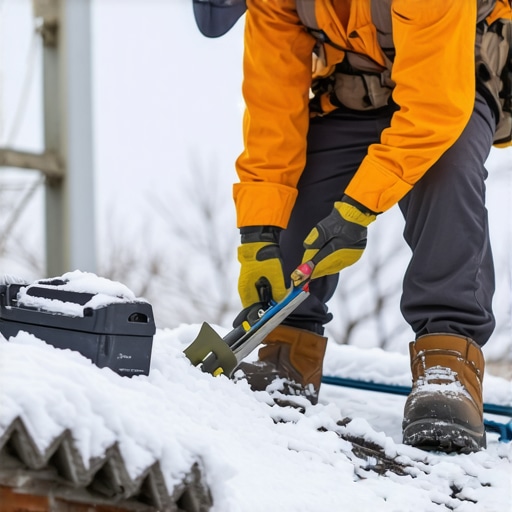
The Anatomy of a Midnight Drip: Why Your Roof Fails When the Mercury Drops
It usually starts with a sound—not a rhythmic drip, but a wet, heavy thud against the ceiling drywall while the wind howls at 2:00 AM. By the time you see the yellow ring forming over your dining room table, the battle is already lost. I’ve spent over two decades climbing ladders in freezing slush, and I can tell you that winter doesn’t create roof leaks; it simply exposes the incompetence of the last crew that touched your shingles. Walking on a roof in the dead of winter for a forensic inspection often feels like walking on a giant, frozen sponge. I remember one specific job in a bitter January where the homeowner thought they just had a ‘little ice.’ When I stepped onto the north-facing slope, the deck flexed three inches. I knew exactly what I’d find: years of warm air leakage had turned the plywood into a structural slurry of black mold and wood pulp. The roof wasn’t just leaking; it was breathing, and it was exhaling the house’s structural integrity.
1. Hunting the Attic Bypass: The Silent Roof Killer
Before you even look at a shingle, you have to look at your insulation. Most homeowners blame the shingles for ice dams, but the shingles are just the victim. The real culprit is the attic bypass—holes for pipes, wires, and light fixtures that let 70°F air scream into your 20°F attic. When that heat hits the underside of the roof deck, it creates a microclimate. This is where Mechanism Zooming becomes vital: the snow melts from the bottom up, creating a layer of liquid water trapped under a blanket of snow. That water runs down to the cold eaves, freezes into a dam, and then uses hydrostatic pressure to move sideways and up under your shingles. In 2026, local roofers should be using thermal imaging to find these hot spots before the first flake falls. If your roofer isn’t talking about R-value and air sealing, they aren’t a roofer; they’re a shingle-installer, and there’s a massive difference.
“A roof is only as good as its flashing.” – Old Roofer’s Adage
2. The ‘Shiner’ Audit: Why Your Nails are Crying
A ‘shiner’ is a nail that missed the rafter and is sticking out of the plywood in your attic. In the winter, these nails become lightning rods for frost. As warm, moist air from your bathroom or kitchen migrates into the attic, it hits that freezing cold steel and condenses. It builds up a thick coat of white frost over weeks of cold. Then, the first sunny 40-degree day hits. All that frost melts at once, making it look like you have a dozen tiny leaks. You don’t need a new roof; you need a pair of side-cutters and some proper ventilation. I’ve seen ‘pros’ try to sell a full $20,000 replacement for a handful of shiners. This is why you hire local roofers with a forensic eye, not a sales script. We look for the rust streaks on the nail heads—the tell-tale signature of a condensation failure.
3. The Physics of the Kick-out Flashing
If you have a roofline that meets a vertical wall, you need a kick-out flashing. Without it, water follows the channel of the wall and dives straight behind the siding and into your header. In winter, this becomes a nightmare. Water gets into those cracks, freezes, expands, and rips your siding away from the house. I’ve seen ‘trunk slammers’ just gob some caulk in that gap. Caulk is a temporary band-aid that fails after one season of thermal expansion. You need a mechanical diverter. Water is patient; it will wait for the caulk to crack, and then it will rot your wall studs until they have the consistency of wet cardboard.
4. Granule Migration and Gutter Hygiene
Go look at your gutters. If they are filled with what looks like heavy sand, your shingles are reaching the end of their life. Those granules are the only thing protecting the asphalt from UV radiation. Once they’re gone, the shingles become brittle. In the winter, brittle shingles can’t handle the ‘thermal shock’ of swinging from a 10°F night to a 50°F sunny afternoon. They crack, the tabs snap off in high winds, and suddenly you have an exposed ‘square’ of underlayment. Cleaning your gutters isn’t just about water flow; it’s a diagnostic tool. If you see ‘balding’ shingles, you’re on borrowed time.
“Roofing is the art of shedding water, not holding it. Gravity is your best friend or your worst enemy.” – IRC Building Code Commentary
5. The Ice and Water Shield Delusion
Don’t let a contractor tell you that Ice and Water shield is a magic bullet. It’s a secondary water resistance layer, usually a sticky bitumen membrane. It’s designed to seal around nail penetrations. However, if it wasn’t installed correctly—if it doesn’t wrap over the drip edge and seal to the fascia—water will just find a way behind it. I’ve seen many ‘reputable’ roofing companies stop the membrane two inches short of the eave. When the ice dam forms, the water just rolls right under the membrane and into your soffits. You need a forensic application, not just a material upgrade. You want to see that membrane lapped properly, ensuring that gravity is always working for you, not against you.
The Surgery: Don’t Settle for a Band-Aid
When you call local roofers in 2026, don’t ask for a quote; ask for an investigation. Anyone can throw a ladder up and point at a missing tab. You want the guy who goes into the crawlspace, checks the moisture content of your rafters, and explains the capillary action happening at your valleys. If the wood is soft, you don’t need a patch; you need surgery. Replacing a few shingles over rotten plywood is like putting a new tire on a car with a snapped axle. It might look better for a week, but the first heavy snow load will bring the whole house of cards down. Choose a contractor who respects the physics of the roof deck, or you’ll be paying for the same job twice.
Reading through this detailed breakdown of winter roof maintenance really highlights the importance of a forensic approach rather than just surface-level repairs. I remember last year dealing with similar issues, and what struck me most was the significance of proper attic insulation and sealing. The point about attic bypasses being the real culprit for ice dams resonates with my experience; I found that sealing every hole in my attic drastically reduced ice formation. It’s interesting to note how much winter exposes underlying vulnerabilities, and thermal imaging seems to be an invaluable tool for homeowners aiming to preempt costly damage. When it comes to kick-out flashing, I’ve seen some DIY fixes fail within a season, leading to significant water ingress. Do you think that adopting annual thermal scans and gutter inspections is enough to stay ahead of these issues, or should homeowners consider more frequent professional inspections to truly prevent leaks? I’d love to hear thoughts from others who’ve taken proactive steps and what results they’ve seen.