
The Morning the Ceiling Bowed
Walking on that flat roof felt like navigating a waterbed in steel-toed boots. I knew exactly what I’d find underneath before the first shovel even hit the gravel. The owner of the warehouse insisted the roof was ‘fine’ because the membrane was only five years old. But as I stepped near the southeast corner, the substrate didn’t just give; it sighed. That squishy, rhythmic thwack-slop sound is the death knell of a commercial building. When we finally peeled back the TPO, the plywood looked like wet tobacco—black, shredded, and smelling of ancient dampness. It wasn’t a material failure; it was a physics failure. Water is a patient predator. It doesn’t need a hole the size of a fist; it just needs a local roofer who forgets that gravity is a law, not a suggestion.
The 48-Hour Ponding Death Clock
In the trade, we talk about ponding water like a ticking bomb. If you’ve got standing water on your roof 48 hours after the clouds clear, you don’t have a roof; you have a high-altitude swamp. Most local roofers will tell you a little water is normal. They’re lying to avoid a callback. When water sits, it creates static head pressure. On a microscopic level, that weight forces H2O molecules through the tiniest imperfections in your heat-welded seams. Once that moisture hits the adhesive, it begins the process of delamination. You won’t see it today, but in two years, that membrane will be ‘floating’ over the insulation like a loose skin. The physics of 2026 drainage demands more than just a patch; it requires understanding how a 1/4-inch slope can save you fifty thousand dollars in structural repairs.
“The building shall be designed and constructed to provide drainage to offset the effects of ponding water.” – International Residential Code (IRC) Section R903.4
Tip 1: The Tapered Insulation Gambit
If your roof is dead flat, it’s doomed. In the old days, guys used to rely on the structural joists to provide pitch, but buildings settle. The modern fix—and what any reputable roofing company should be pitching you—is a tapered insulation system. Think of it as a custom-carved foam puzzle. We use rigid polyisocyanurate boards, cut at a specific gradient (usually 1/8″ or 1/4″ per foot), to create artificial valleys. The mechanism here is simple: we are fighting deflection. When water sits in the center of a bay, the weight causes the roof to bow slightly. That bow catches more water, which causes more bowing. It’s a feedback loop that ends with a structural engineer writing an expensive report. By installing tapered ISO, we force the water toward the perimeter before the ‘bowl effect’ can even begin.
Tip 2: Scupper Sizing and the Overflow Rule
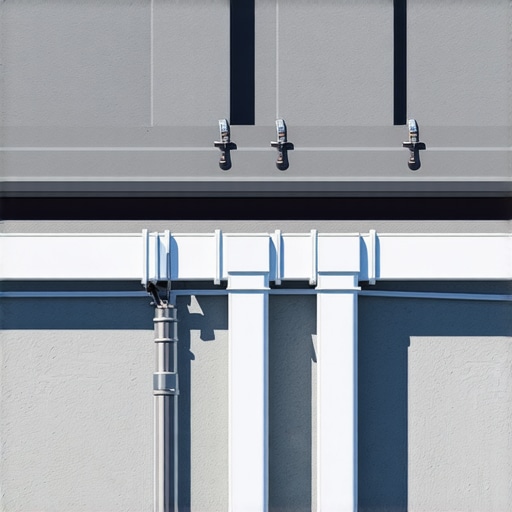
I’ve lost count of how many roofing jobs I’ve inspected where the primary drains were perfectly clear, but the building was still taking on water. The culprit? Undersized scuppers. A scupper is just a hole in the parapet wall, but it’s your last line of defense. In 2026, with the increasing frequency of ‘microburst’ rain events, standard 4-inch scuppers aren’t cutting it. You need to look at the catchment area. If you’re pushing 5,000 square feet of water into one six-inch hole, you’re asking for a hydraulic jump. The water backs up, rises above the flashing height, and pours behind the masonry. Always insist on an overflow scupper positioned two inches above the primary. If you see water coming out of the top hole, your main drain is clogged, and your roof is screaming for help.
Tip 3: The ‘Cricket’ is Not Optional
In roofing, a cricket isn’t a bug; it’s a structural ridge designed to divert water around obstacles like HVAC curbs or chimneys. If your local roofers are just slapping membrane up against a 4×4 AC unit without a cricket, they are building a dam. Water hits that curb, stops, and starts looking for a way in. Capillary action will actually pull that water upward under the counter-flashing if it has nowhere else to go. A properly built cricket creates a ‘V’ shape that splits the flow, keeping the water moving toward the drains. It’s the difference between a roof that lasts 30 years and one that fails at the first freeze-thaw cycle.
“NRCA recommends that a minimum roof slope of one-quarter inch per foot be provided for new construction.” – National Roofing Contractors Association
Tip 4: Sumped Drains and the Vortex Effect
Ever notice how a bathtub drains faster once a vortex forms? The same principle applies to commercial roofing. A ‘sumped’ drain is one where the drain body is recessed into the deck. Most hacks just bolt the drain ring flush with the roof level. This creates a lip. That lip catches silt, leaves, and bird nests, creating a natural dam that holds back two inches of water across the entire square. By sumping the drain, you create a localized ‘low spot’ that accelerates the water’s velocity. It prevents the accumulation of debris and ensures that the very last drop of water leaves the membrane. If your contractor isn’t using a router to sink those drain flanges, they’re cutting corners.
Tip 5: The Perils of the ‘Shiner’ in Flat Transitions
When transitioning from a flat roof to a pitched section, local roofers often get sloppy with their fasteners. A shiner is a nail that missed the wood, or a screw that’s backed out over time due to thermal expansion. On a flat roof, a backed-out fastener is like a slow-motion spear. As the building breathes, that screw head rubs against the underside of the membrane. Eventually, it pops through. Now you have a hole at the lowest point of your drainage path. Professional roofing companies use heavy-duty plates and recessed fasteners specifically to prevent this ‘pumping’ action. We don’t just look at the top surface; we look at the substrate’s ability to hold a grip through a hundred-degree temperature swing. If the fastener won’t stay down, the water will eventually get in.
The Cost of the ‘Cheap’ Fix
You can hire a guy with a truck and a bucket of mastic to ‘fix’ your drainage issues for five hundred bucks. He’ll smear some goop around the drain and tell you you’re good for a decade. But mastic dries out, cracks, and pulls away from the metal. True forensic roofing isn’t about sealant; it’s about geometry. If the water isn’t moving, the roof is dying. When you look for local roofers, don’t ask them how they’ll stop the leak. Ask them how they’ll move the water. If they can’t explain the physics of the slope, they aren’t roofers—they’re just guys with a ladder. Waiting until the ceiling tiles are brown and the ‘oatmeal’ rot sets in will triple your replacement costs. Fix the drainage now, or start saving for a whole new deck later.