
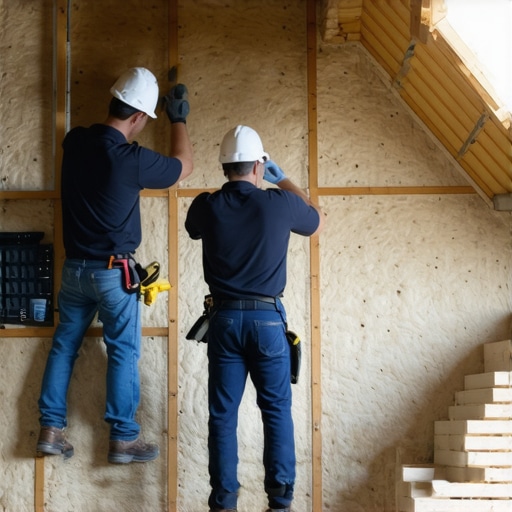
The Invisible Enemy Beneath Your Feet
I’ve spent twenty-five years crawling through crawlspaces and balancing on ridges, and if there is one thing I have learned, it is that most homeowners think their roof fails because of what happens on it. In reality, a significant portion of failures happen because of what is happening under it. When you hire local roofers, you are usually looking at the color of the granules or the thickness of the drip edge. But if your 2026 attic insulation strategy is flawed, you are essentially baking your shingles from the inside out. My old mentor, a man who could spot a leak from the curb just by looking at the shadow lines, used to say, ‘Water is patient. It will wait for you to make a mistake, and if it can’t get in as rain, it will get in as steam.’ He was talking about vapor drive—the physics of heat and moisture migrating through your ceiling and rotting your deck before you even realize there’s a problem.
“The attic space shall be ventilated with an unobstructed opening of not less than 1 square foot for each 150 square feet of ventilated area.” – International Residential Code (IRC), Section R806.1
1. The R-Value Trap and the ‘Air Bypass’ Disaster
By 2026, building codes in our northern climate are pushing for higher R-values than ever. Everyone is obsessed with hitting R-60, but here is the truth roofing companies won’t tell you: R-value is meaningless if you don’t address air sealing. Imagine wearing a heavy wool sweater on a windy day; it keeps you warm until the wind blows right through the knit. In your attic, those ‘winds’ are air bypasses—hidden gaps around chimney chases, plumbing stacks, and recessed lights. When warm, moist air from your shower or kitchen escapes into the cold attic, it hits the underside of your roof deck. In a 10°F winter, that moisture flashes into frost. I’ve seen attics where the rafters looked like they were sugar-coated. When the sun hits the roof, that frost melts, drips onto your insulation, and you call local roofers complaining about a ‘leak’ when you actually have a physics problem. [image_placeholder] This moisture infiltration degrades the plywood, leading to ‘spongy’ spots that make a 50-year shingle fail in ten.
2. The Baffle Blunder: Why Your Intake is Choked
If you look at the eaves of your house, you probably see soffit vents. These are the lungs of your roofing system. For the stack effect to work—where cool air enters at the bottom and pushes hot, moist air out the ridge—the path must be clear. Most roofing companies see an attic full of blown-in fiberglass and think ‘job well done.’ But I’ve performed countless forensic inspections where the insulation was packed tight against the roof deck, completely choking off the intake. Without baffles—those plastic or foam channels that keep the insulation away from the wood—your roof can’t breathe. Without airflow, the temperature of your roof deck can soar to 160°F in the summer. This ‘cooks’ the asphalt oils out of your shingles, leading to premature granule loss and curling. If your contractor isn’t talking about baffles, they aren’t a roofer; they’re just a shingle applicator.
3. The ‘Shiner’ and the Condensation Point
Let’s talk about the ‘shiner.’ That’s trade talk for a nail that missed the rafter and is sticking out into the attic space. In a poorly insulated and ventilated attic, these shiners act as lightning rods for frost. Because the nail is cold—conducted directly from the exterior temperature—moisture in the attic air condenses on it instantly. I once investigated a ‘mystery leak’ in a luxury home where the owner was convinced the roofing was defective. I climbed into the attic and saw hundreds of tiny icicles hanging from the shiners. It wasn’t the shingles failing; it was the attic environment. To prevent this in 2026, you must ensure your roofing project includes a comprehensive check of the thermal envelope. If you’re seeing rusted nail heads in your attic, your insulation is failing to keep the conditioned air where it belongs.
4. Vapor Barriers and the ‘Oatmeal’ Effect
In our region, the placement of the vapor barrier is the difference between a roof that lasts 40 years and one that needs a tear-off in seven. Many local roofers still get this wrong. The barrier must be on the ‘warm-in-winter’ side of the assembly. If it’s misplaced, moisture gets trapped against the roof deck. I’ve walked on roofs that felt like walking on a sponge—the plywood had the consistency of wet oatmeal because the moisture had no way to escape. When we talk about 2026 attic insulation, we are talking about managed permeability. You want the system to be tight enough to save on energy but ‘loose’ enough to dry out if moisture does get in. This balance is why you need a forensic-minded pro, not a storm chaser.
“A roof is not a lid; it is a complex system of heat transfer and moisture management.” – National Roofing Contractors Association (NRCA) Guidelines
5. The Stack Effect: Why Ridge Vents Aren’t Magic
The biggest marketing lie in roofing is that a ridge vent solves everything. It doesn’t. A ridge vent is an exhaust port. For it to work, you need intake. Physics dictates that hot air rises (the stack effect), but it requires a vacuum to pull the air through. If your local roofers install a ridge vent but your soffits are painted shut or blocked by R-60 batts, the ridge vent will actually start pulling air from your living space through any crack it can find. This wastes your money and creates localized ‘hot spots’ on the roof that cause uneven snow melt and the dreaded ice dam. An ice dam isn’t just a gutter problem; it’s an insulation and ventilation failure. When the snow melts over the warm attic and freezes over the cold eave, it backs up under the shingles, past the flashings, and into your drywall. If you want to avoid a $20,000 repair in 2027, fix your attic balance today.
{“@context”:”https://schema.org”,”@type”:”HowTo”,”name”:”How to Optimize 2026 Attic Insulation for Roof Longevity”,”step”:[{“@type”:”HowToStep”,”text”:”Perform an air-sealing audit to close bypasses around chimney chases and plumbing stacks.”},{“@type”:”HowToStep”,”text”:”Install high-quality baffles at every rafter bay to ensure unobstructed intake airflow from soffits.”},{“@type”:”HowToStep”,”text”:”Calculate the required R-value for your specific climate zone and install blown-in insulation to that depth.”},{“@type”:”HowToStep”,”text”:”Verify that the intake (soffit) and exhaust (ridge/gable) ventilation are balanced to facilitate the stack effect.”}],”totalTime”:”P1D”}
This article really highlights the importance of understanding the hidden complexities beneath our roofs, especially as we move toward stricter building codes in 2026. I’ve always been cautious about insulation and ventilation but now realize that air sealing and proper vapor barrier placement are just as critical. I once worked with a contractor who overlooked the importance of baffles, and we ended up with trapped moisture and early shingle deterioration. It’s fascinating how small details like nails or insulation layers can have such a big impact on roof longevity.
Has anyone here had to deal with moisture issues caused by overlooked ventilation? I’d be interested to hear how you approached resolving those problems and whether new technologies or inspection methods made a difference in your experience. It seems that a comprehensive, forensic approach really pays off when maintaining or upgrading roofing systems, especially with the upcoming standards we’re facing in 2026.