
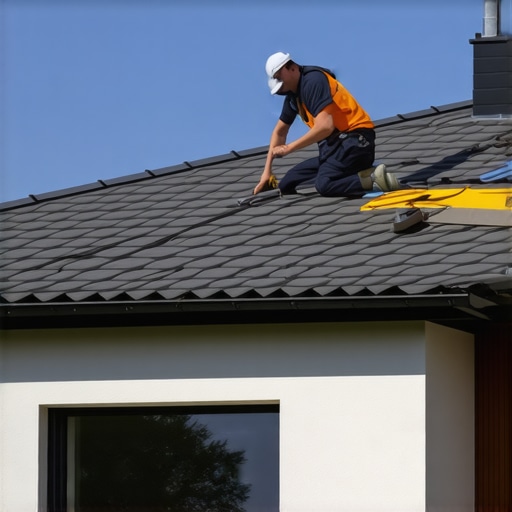
The Morning After the Storm
Walking on that roof felt like stepping across a massive sheet of bubble wrap. Every footfall was greeted by a sickening crunch, the kind of sound that tells a forensic roofer exactly what he is going to find before the first shingle is even pried up. It was a mid-summer afternoon, the air still smelling of ozone and wet pavement, and the homeowner was standing in the driveway looking up with hope. I didn’t have the heart to tell him yet that his ’30-year’ architectural shingles had just been pulverized into expensive black sand by a twenty-minute hail cell. This is the reality many face, and it is the reason the industry is bracing for the 2026 Impact Rating overhauls. Local roofers are currently caught between old-school installation habits and a new era of material science that demands more than just ‘getting it done.’
1. The Kinetic Reality of Impact Ratings
When we talk about the 2026 Impact Rating, we aren’t just talking about a sticker on a bundle of shingles. We are talking about the physics of failure. Most people think hail just ‘hits’ a roof. In reality, it is a transfer of kinetic energy. When a 2-inch hailstone traveling at 70 miles per hour strikes an asphalt shingle, the energy has to go somewhere. On a standard shingle, that energy travels straight through the granules, into the asphalt, and snaps the fiberglass mat underneath. Once that mat is fractured, the shingle is dead. It might look fine from the ground, but the waterproofing integrity is gone. The new 2026 standards are tightening the screws on UL 2218 testing. We are moving away from the ‘survivability’ metric and toward ‘performance retention.’ Local roofers who haven’t updated their catalog are going to be installing obsolete technology by the time the next season rolls around. It is the difference between a brittle piece of plastic and a rubberized shield.
“A roof system’s ability to withstand impact is not merely a product of the surface material, but the integrated performance of the substrate and the attachment method.” – National Roofing Contractors Association (NRCA) Guidelines
2. SBS Modified Bitumen vs. Standard Asphalt
The secret sauce in the 2026 ratings is SBS (Styrene-Butadiene-Styrene). If your local roofers aren’t talking about ‘rubberized asphalt,’ they are living in 1995. Standard shingles are basically a cracker: stiff, brittle, and easy to snap. SBS shingles are more like a gummy bear. When a hailstone hits an SBS-modified shingle, the material compresses and then rebounds. It absorbs the energy rather than resisting it until it breaks. This ‘thermal shock’ resistance is also what prevents the shingle from cracking during those brutal nights when the temperature drops 40 degrees in three hours. I’ve seen squares of standard shingles literally unseal themselves because they couldn’t handle the rapid contraction. The 2026 impact ratings are going to make this rubberized technology the baseline, not the upgrade. If you’re looking at roofing companies today, ask them specifically about the SBS content in their preferred line. If they look at you like you have three heads, find another crew.
3. The ‘Shiner’ and the Structural Failure Point
You can have the best Class 4 impact-rated shingle in the world, but if the guy on the gun is a ‘trunk slammer,’ it won’t matter. In my 25 years, the most common cause of premature failure isn’t the storm—it’s the ‘shiner.’ That’s a nail that missed the rafter or, worse, missed the nail line entirely. When a nail is driven too high, it doesn’t catch the top of the shingle below it. Now, when the wind kicks up or hail starts hammering the surface, the shingle has no structural anchor. It starts flapping. Once a shingle starts flapping, the seal strip breaks. Once the seal breaks, water gets driven up under the shingle by hydrostatic pressure. This is capillary action at its worst; the water literally ‘climbs’ up the roof deck until it finds a way into your attic. The 2026 ratings are forcing roofing companies to adopt more rigorous fastening patterns to ensure the impact resistance isn’t compromised by poor mechanical attachment. A shingle is only as impact-resistant as the nail holding it down.
4. The Insurance Trap and the ‘Lifetime’ Myth
Don’t get me started on ‘Lifetime Warranties.’ It is one of the biggest marketing shells in the business. Most of those warranties cover ‘manufacturer defects,’ not the sky falling on your house. The 2026 Impact Rating changes are actually a response to the insurance industry getting tired of replacing the same roofs every five years. Many carriers are now moving toward a ‘Schedule of Depreciation’ for roofs that don’t meet these higher impact standards. If you don’t have a 2026-compliant roof, your insurer might only pay out a fraction of the replacement cost after a storm. Local roofers who understand the insurance side of the business are pushing for these higher-rated materials because they know it protects the homeowner’s equity. You want a roof that makes the insurance adjuster’s job boring. When they see a Class 4 rating backed by the new standards, they know the likelihood of a total loss is slim, and that can sometimes lead to premium discounts that pay for the material upgrade within a few years.
“The primary purpose of a roof is to shed water and protect the structure, but its secondary role is as a sacrificial barrier against environmental energy.” – Principles of Forensic Roofing
5. Ventilation and the ‘Oatmeal’ Plywood Scenario
I once saw a roof where the plywood had turned to something resembling soggy oatmeal. It wasn’t because of a leak from above. It was because the attic was a 140°F sweatbox. The heat from the attic cooks the shingles from the inside out, making them brittle and stripping away their impact resistance. The 2026 standards aren’t just about the shingles; they are about the whole system. Proper ventilation keeps the roof deck cool, which allows the shingles to remain flexible. If a shingle gets ‘baked’ because of poor ventilation, its impact rating drops to effectively zero. It becomes like glass. When you’re interviewing local roofers, they should be looking at your soffits and your ridge vents as much as they are looking at the shingles. If they aren’t talking about air-flow, they aren’t installing a 2026-ready roof. They are just putting a bandage over a festering wound. You need a cricket behind the chimney to divert water, and you need enough airflow to ensure your roof doesn’t turn into a kiln. That is how you survive the next decade of weather trends.