
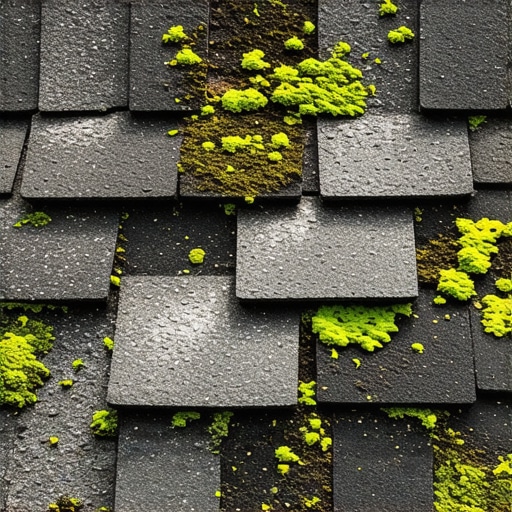
The Forensic Investigation: Why Your Roof Feels Like a Sponge
Walking on that roof felt like walking on a mattress left out in a rainstorm. I knew exactly what I’d find underneath before I even pulled my pry bar out of my belt. As a forensic roofer with two and a half decades in the field, I’ve seen it all, but the moss epidemic we are seeing heading into 2026 is something different entirely. Most local roofers will tell you moss is just a cosmetic issue—a bit of ‘character’ for your home. They are lying to you, or worse, they don’t know any better. Moss isn’t just greenery; it’s a biological parasite that is actively digesting your home’s primary defense system. By the time you see a green tuft from the driveway, the war is already half-lost.
“The primary purpose of a roof is to shed water quickly and efficiently. Any obstruction to this flow, biological or otherwise, constitutes a failure of the system.” — National Roofing Contractors Association (NRCA)
The Physics of Failure: How Moss Kills Asphalt
To understand why moss is a death sentence, you have to look at the mechanism of capillary action. When a moss colony establishes itself at the butt-joint of a shingle, it doesn’t just sit there. It acts as a multi-layered biological dam. When rain hits the roof, it’s supposed to run down the valleys and off the eaves. But moss creates a reservoir. Through capillary action, the moss pulls water upward, underneath the shingle overlap. Once water moves vertically against gravity, it hits the shiners—those nails that the ‘trunk slammer’ contractor missed the rafter with—and begins a slow, corrosive drip into your insulation. This isn’t a leak you’ll see on your ceiling today; it’s a slow-motion rot that turns your decking into something resembling wet cardboard before you even notice a stain.
Sign 1: The Butt-Edge Lift
The first sign of 2026 moss accumulation isn’t a carpet of green; it’s a subtle shadow at the edge of your shingles. As moss grows, its root-like structures, called rhizoids, wedge themselves under the shingle tab. This creates ‘shingle lift.’ Once a shingle is lifted even a fraction of an inch, it loses its wind rating. A standard three-tab or architectural shingle relies on a seal strip to stay down. Moss breaks that seal. Now, instead of a solid surface, you have a series of sails waiting for the next windstorm to rip them off. If you see the edges of your shingles looking thick or ‘puffy,’ you aren’t looking at high-definition shingles; you’re looking at a roof that is being pried apart from the inside out.
Sign 2: The Granule Graveyard in Your Gutters
Shingles are covered in ceramic-coated granules for one reason: UV protection. Modern roofing companies often use shingles that contain limestone as a filler. Moss loves limestone. It literally eats the shingle. As the moss grows, it dislodges the granules. When you clean your gutters and find a two-inch layer of ‘sand,’ that’s the lifeblood of your roof. Without those granules, the asphalt is exposed to the sun, leading to thermal shock and rapid cracking. By 2026, the increased humidity in the North has accelerated this process, turning what used to be a 20-year shingle into a 12-year liability.
Sign 3: The Interstitial Condensation Trap
This is where we get into the forensic nitty-gritty. Moss holds moisture. On a 90-degree day, that moss stays damp. This creates a temperature differential between the top of the shingle and the underside. In the North, where local roofers often neglect proper attic bypass sealing, warm air from your house hits that cool, moss-covered spot on the roof deck. The result? Condensation on the bottom of the plywood. I’ve torn off roofs where the top looked okay, but the R-Value of the insulation was zero because it was soaking wet from condensation that never had a chance to dry. This is why a cricket or a simple repair won’t save you once the moss has taken hold over a large square of your roof.
“God is in the details.” — Mies van der Rohe
Sign 4: The Soft Walk and Deck Deflection
If you’re brave enough to get on a ladder, pay attention to the feel of the deck. A healthy roof should feel like concrete under your boots. If it feels springy or ‘spongy,’ the moss has already facilitated enough water intrusion to compromise the structural integrity of the sheathing. This is common in valleys where water concentration is highest. When the plywood delaminates, it loses its ability to hold a nail. You can hire the best roofing crew in the world, but if they’re nailing into rot, your new shingles will be gone in the first gale. Forensic investigation often reveals that ‘soft’ roofs are a direct result of moss-trapped moisture preventing the wood from ever reaching its ‘dry-bulb’ equilibrium.
Sign 5: The Rusty Nail Syndrome
The final sign is found in the attic, not on the roof. Take a flashlight and look at the tips of the nails poking through the deck. If they are orange and rusted, you have a moisture problem. Moss on the exterior acts as an insulator that keeps the roof deck in a constant state of dampness. This moisture migrates through the nail holes. Rusted nails lose their ‘grip’ on the asphalt, leading to what we call ‘nail pops.’ A nail pop is a hole in your roof waiting to happen. It’s a cascading failure: moss leads to moisture, moisture leads to rust, rust leads to nail failure, and nail failure leads to a catastrophic leak during the next heavy snowmelt.
The Verdict: Why Prevention is a Myth After 2025
Many homeowners think they can just spray some bleach and move on. That’s like putting a Band-Aid on a gunshot wound. By 2026, the atmospheric moisture levels in northern climates have made moss more aggressive. Scraping it off just tears the remaining granules away. If you see these five signs, you don’t need a cleaning; you need a forensic replacement. You need a contractor who understands Ice & Water Shield application and the necessity of high-ventilation ridge vents to keep that deck dry. Don’t let a ‘trunk slammer’ tell you a quick wash will fix it. They’ll be gone by the time the rot reaches your rafters, and I’ll be the one you call to tell you the bad news: your ‘saved’ roof just cost you a whole lot more in structural repairs.