
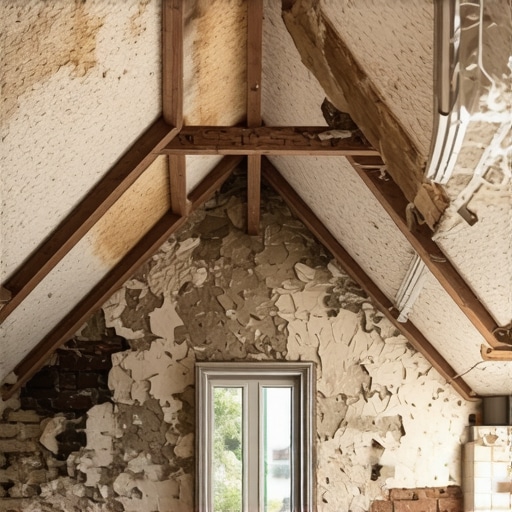
The Anatomy of a Slow-Motion Disaster
You’re sitting in your living room, the coffee is hot, and the 2026 winter rain is drumming against the shingles. You think you’re dry. But upstairs, in that dark, cramped space above your head, a forensic disaster is unfolding. Most homeowners think a roof leak is a sudden event—a bucket-under-the-drip scenario. In my 25 years as a roofing investigator, I’ve learned that’s a lie. The most dangerous leaks don’t drip; they breathe. They are the result of physics, poor workmanship by local roofers looking to shave costs, and the relentless patience of water. My old foreman, a man who could smell a shiner from the driveway, used to tell me, ‘Water doesn’t hunt for a way in; it waits for you to leave the door cracked.’ If your attic hasn’t been inspected since the building boom of the early 2020s, you are likely living under a ticking time bomb.
1. The ‘Shiner’ Ghost: Rusted Nail Heads
When I crawl into an attic, the first thing I do is turn off my flashlight and look for daylight. Then, I turn it back on and look for ‘shiners.’ A shiner is a nail that missed the rafter during installation. When roofing companies use high-pressure nail guns and move too fast, they miss the wood. That steel nail sits exposed in your attic. In cold climates like ours, that nail becomes a heat sink. Warm, moist air from your bathroom or kitchen drifts upward (the ‘Attic Bypass’ effect) and hits that cold nail. It condenses instantly, turning into a bead of water that drips, day after day, into your insulation. Over a decade, that tiny drip creates a localized rot zone that no one sees until the plywood is soft as wet cardboard. This isn’t just a leak; it’s a failure of thermal dynamics.
“The roof shall be covered with approved roof coverings in accordance with the manufacturer’s installation instructions.” – International Residential Code (IRC) R903.1
2. The Sponge Effect: Matted Insulation and Vapor Drive
Go into your attic and look at your fiberglass batts. They should be fluffy, like cotton candy. if they look matted, grey, or have ‘craters’ in them, you have a hidden leak. This is often caused by capillary action. Water travels horizontally along the underside of the roof deck, following the grain of the wood, until it finds a break—like a staple or a seam—and then it drops. Once that insulation gets wet, its R-value plummets to near zero. It becomes a sponge that holds moisture against your ceiling joists. This creates a micro-climate that promotes wood-destroying fungi. You aren’t just paying for a roof repair; you’re paying for the heat loss caused by the wet insulation that local roofers failed to identify during their ‘quick’ inspections.
3. The Microbial Bloom: Black Staining on the Ridge
If you see black streaks on the underside of your roof deck, especially near the peak or the valley, don’t assume it’s just ‘old house smell.’ That is a sign that your ventilation system is failing. In 2026, we are seeing the catastrophic results of roofs that were ‘sealed’ too tight without proper intake. When a roofing crew installs a ridge vent but fails to cut back the soffit baffles, the attic can’t breathe. The air stagnates. The humidity rises, and the underside of your plywood starts to ‘sweat.’ This moisture feeds mold that eats the lignin in the wood. I’ve seen decks that looked solid from the outside but felt like walking on a trampoline because the internal structure had been turned into mulch by a decade of poor airflow.
4. The ‘Thermal Bridge’ Frost
On the coldest morning of the year, take a peek in your attic. If you see frost on the nail tips or the wood, you have a massive air leak from the living space. This is the ‘Forensic Autopsy’ of a bad install. This frost melts as soon as the sun hits the shingles, creating a ‘phantom leak’ that disappears by noon but leaves the wood damp. Most roofing companies will tell you that you need new shingles, but the reality is you need better air sealing at the top plates and light fixtures. This is where the physics of water meets the mechanics of air pressure. Without a proper ice and water shield and a sealed attic floor, you are just inviting the environment inside.
“A roof is only as good as its flashing and its ability to breathe.” – National Roofing Contractors Association (NRCA) Guidelines
5. The Rusty Cricket and Chimney Decay
The area behind your chimney is a prime spot for ‘stealth’ leaks. Most installers skip building a cricket—a small peaked structure designed to divert water away from the chimney back. Instead, they rely on a mountain of caulk. By 2026, that caulk has dried out, cracked, and pulled away. Water now creeps behind the flashing through hydrostatic pressure. It doesn’t pour in; it seeps. It follows the chimney bricks down through the floorboards, rotting the headers. If you see a watermark on the ceiling three feet away from the chimney, the source is almost always the lack of a properly soldered or stepped flashing at the masonry line.
The Forensic Conclusion: Fix the Cause, Not the Symptom
Don’t let a ‘trunk slammer’ slap a patch on a mystery stain. You need a forensic approach. If your roof deck is failing from the inside out, a new layer of shingles is just a expensive bandage on a gangrenous wound. Demanding a full digital moisture scan and a ventilation audit is the only way to ensure your home survives the next decade. Water is patient, but your bank account shouldn’t have to be.