
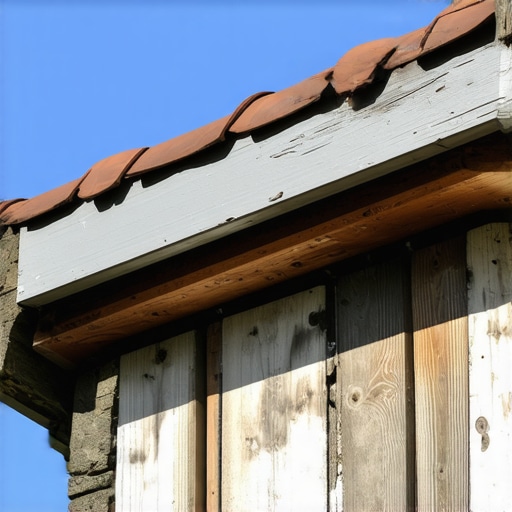
The Anatomy of a Hidden Failure
Walking up to a job site in New Orleans after a week of tropical downpours, the first thing I noticed wasn’t the shingles. It was the way the gutters looked like they were trying to detach themselves from the house—a literal ‘smile’ of sagging aluminum against the roofline. I knew exactly what I’d find before I even set my ladder. When I finally climbed up and pulled back a section of the gutter, the wood underneath wasn’t wood anymore. It felt like walking on a sponge, or worse, like poking a finger through a wet cardboard box. That fascia board had been rotting for three years, hidden behind a ‘professional’ metal wrap that acted as a tomb for moisture. This is the reality most roofing companies won’t tell you: your roof might be fine, but the bones holding it up are turning to mulch.
“Fascia and rake boards shall be finished to resist water penetration, and where exposed to the weather, shall be of naturally durable wood, decay-resistant wood, or protected by a corrosion-resistant moisture barrier.” – International Residential Code (IRC)
1. The Shadow Board ‘Shiner’ and Rust Streaks
When local roofers talk about a ‘shiner,’ we’re usually talking about a nail that missed the rafter and is sticking out in the attic. But on your fascia, a shiner is a nail that has started to back out because the wood around it has lost its grip. In 2026, we’re seeing more of this than ever due to the heavy, erratic rain cycles in the Southeast. If you see rust streaks bleeding down the face of your fascia or coming from the gutter spikes, that’s your first red flag. It means the galvanized coating on the fastener has failed because it’s been sitting in a hyper-humid environment behind the gutter. Water is patient; it finds the nail hole and moves via capillary action—sideways and upward—into the grain. Once that metal oxidizes, the wood fibers expand and soften, losing their ability to hold the weight of a gutter full of water.
2. The ‘Wicked’ Drip Edge Failure
Most roofing companies treat the drip edge as an afterthought, a piece of cheap tin they slap on to meet code. But the physics of water are unforgiving. Without a properly kicked-out drip edge, water doesn’t just fall into the gutter; it clings to the underside of the shingle through surface tension. It then ‘wicks’ backward, landing directly on top of the fascia board. If you see a dark stain on the very bottom of your fascia, or if the paint is bubbling at the lower edge, you’re looking at a systemic failure of the water-shedding system. The water is effectively being invited to rot your house from the outside in. In our humid climate, this moisture never dries out; it just sits there, feeding fungal spores that eat the cellulose in the wood.
3. The ‘Oatmeal’ Texture and Peeling Paint
I’ve seen plenty of homeowners try to paint over their problems. They see a little peeling, scrape it, and throw on a fresh coat of latex. But if the paint is flaking off in large chunks, it’s because the wood underneath is saturated. The wood is trying to ‘breathe’ out the moisture, and it’s pushing the paint film right off the surface. If you take a screwdriver and press it against the board and it sinks in with zero resistance, that board is ‘oatmeal.’ At this point, the structural integrity of your roof’s perimeter is gone. You aren’t just looking at a cosmetic fix; you’re looking at a situation where a heavy storm could rip your entire gutter system off the house, taking the sub-fascia and rafter tails with it.
“A roof is only as good as its flashing, and the fascia is the frontline of that defense.” – Old Roofer’s Adage
4. Pest Infiltration and the ‘Soffit Gap’
When fascia rots, it softens the entry point for every critter in the neighborhood. Squirrels, rats, and carpenter bees are forensic experts in their own right—they can smell rotting wood from a mile away. If you notice small holes or see birds constantly hanging around your eaves, check the fascia. Once they chew through the soft wood, they’re in your attic, compressing your insulation and ruining your R-value. In the Southeast, we also deal with Formosan termites that thrive in the damp environment created by a leaking fascia-to-roof transition. If your fascia feels soft, your attic is likely already an apartment complex for pests.
5. The Gutter ‘Smile’ (Sagging Gutters)
If your gutters have a visible dip between the hangers, or if they appear to be leaning forward, the fascia has failed to hold the fastener. A standard gutter, when full of water during a tropical downpour, can weigh hundreds of pounds. If the fascia board is compromised by rot, it simply cannot support that load. Local roofers often see gutters that were ‘re-secured’ by a handyman using longer screws, but that’s just a band-aid. If the wood is punky, no screw on earth will hold it. You have to perform ‘surgery’—tear off the gutters, remove the rotted wood, and install new, pressure-treated or composite fascia with proper flashing.
The Reality of the ‘Quick Fix’
Don’t let a contractor talk you into just ‘capping’ the rot with aluminum or vinyl. That’s like putting a clean shirt over a gangrenous wound. It looks better for a month, but underneath, the rot continues to spread into the rafter tails. If the rafter tails rot, you’re no longer talking about a simple fascia replacement; you’re talking about a structural repair that requires pulling back the shingles and the roof deck. Catch it early, use stainless nails to prevent galvanic corrosion in our salt air, and ensure your drip edge actually directs water into the center of the gutter. Anything less is just waiting for the next storm to do the demolition for you.