
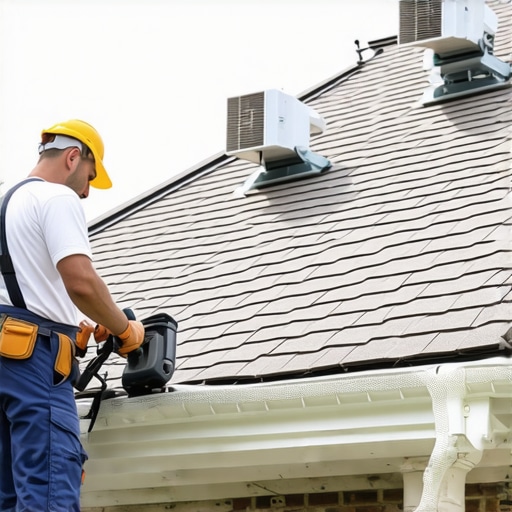
The Forensic Investigation: Why Your Roof is Failing from the Inside Out
Walking on that roof felt like walking on a sponge. I knew exactly what I would find underneath before I even pulled my pry bar from my belt. The homeowner was complaining about a small water stain in the master bathroom, blaming the ‘local roofers’ who had done a ‘repair’ six months prior. But as I peeled back the architectural shingles—which were already starting to curl despite being less than five years old—the stench of ammonia and rot hit me. It wasn’t a leak from the sky. It was a leak from the shower. The previous installer had vented the bathroom exhaust fan directly into the attic insulation, essentially creating a tropical rainforest in a space that should have been bone-dry. The plywood was so saturated you could stick a screwdriver through it like it was wet cardboard. This is the reality of forensic roofing; most of the time, we aren’t fighting the rain, we are fighting physics and poor craftsmanship.
“A roof is only as good as its flashing and its ability to breathe.” – Old Roofer’s Adage
As we approach the 2026 building cycle, the industry is shifting. The 2026 standards for exhaust fans and attic ventilation are becoming more stringent because our homes are becoming tighter. When you seal a house to save on energy, you trap moisture. If that moisture isn’t evacuated perfectly, your roof deck becomes a petri dish. Here are the five reasons you need to have your exhaust fans audited by roofing companies that actually understand building science, not just how to swing a hammer.
1. The Physics of the ‘Attic Bypass’ and Condensation
In our cold northern climate, the enemy isn’t just the snow; it is the warm air escaping your living space. We call this an attic bypass. When your exhaust fan ducting isn’t perfectly sealed, warm, moist air from your 15-minute shower hits the freezing underside of your roof deck. This is where the dew point becomes a physical threat. The water vapor undergoes a phase change, turning into liquid water or frost. This isn’t a ‘leak’ in the traditional sense, but the result is the same: rotten sheathing and molded rafters. Mechanism zooming reveals that this moisture often travels via capillary action along the shafts of ‘shiners’—those missed nails that didn’t hit the rafter. The nail acts as a cold conductor, attracting frost which then melts and drips onto your ceiling. If your ductwork is corrugated plastic rather than rigid metal, you’re just begging for condensation to pool in the ridges and eventually collapse the pipe.
2. The 2026 IECC Backdraft Damper Standards
Most local roofers ignore the mechanical integrity of the vent cap itself. By 2026, the focus on ‘Energy Recovery’ and ‘Tight Envelopes’ means your backdraft damper must be airtight. I’ve seen countless vents where the flap is stuck open by a bird’s nest or a build-up of lint. When that flap doesn’t close, you are essentially leaving a window open in your attic. Cold air rushes down the duct, chilling the bathroom ceiling and causing localized mold growth on your drywall. Conversely, a flap that is stuck shut forces all that humid air back into your attic space. When we perform a forensic tear-off, we often find that the ‘cricket’ or the water diverter behind a large vent stack was never installed, allowing water to pool and eventually breach the primary barrier.
“The building envelope shall be designed and constructed with a continuous air barrier.” – International Residential Code (IRC) Section R402.4
3. Mechanical Fatigue of ‘Trunk Slammer’ Flashing
The term ‘roofing’ implies a system, but too many roofing companies treat an exhaust fan as an afterthought. They throw a cheap plastic ‘gooseneck’ vent over a hole, slap some mastic around it, and call it a day. In the trade, we call these guys ‘trunk slammers.’ In a climate with extreme thermal cycling—where the roof temperature swings from 20°F at night to 60°F during a sunny winter day—that cheap plastic becomes brittle. It cracks. The sealant, often a low-grade caulk rather than a high-solids polyether, pulls away from the shingles. Once that bond is broken, hydrostatic pressure pushes melting snow upward under the flange. A professional install requires a lead or heavy-gauge steel jack, integrated into the shingle courses with a proper ice and water shield underlayment that is self-healing around the fasteners.
4. The R-Value of Duct Insulation
By 2026, you’re going to hear a lot more about R-8 duct insulation. If your exhaust fan duct runs through an unconditioned attic space, it MUST be insulated. Without it, the air inside the duct cools down before it reaches the exterior vent, causing moisture to rain back down the pipe and into the fan motor. This ruins the fan, but more importantly, it creates a constant moisture source right at the penetration point. When we find a ‘soft spot’ on a roof near a vent, it’s almost always because the ducting was bare metal or thin plastic. The wood around the hole stays perpetually damp, inviting wood-destroying fungi that eat the lignin in the plywood until the roof is structurally compromised. A ‘square’ of roofing is 100 square feet, and I’ve seen entire squares of plywood needing replacement just because of one uninsulated 4-inch pipe.
5. Galvanic Corrosion and Salt Air Degradation
For those near the coast or in high-humidity zones, the salt air is a silent killer of vent hardware. Standard galvanized nails and cheap aluminum vents will undergo galvanic corrosion when they come into contact with the wrong materials or salt-laden moisture. We see ‘shiners’ that have rusted out completely, leaving a literal hole through the roof deck where water can pour in. Upgrading to stainless steel fasteners and copper or high-grade Kynar-coated steel vents is no longer a luxury; it’s a requirement for longevity. If your contractor isn’t talking about material compatibility, they aren’t a forensic roofer—they’re just a salesperson.
The Solution: The Surgery vs. The Band-Aid
You can call a local roofer to throw some more goop on a leaking vent, but that’s a Band-Aid. The ‘surgery’ involves cutting back the shingles, replacing the compromised sheathing, installing a high-temp ice and water shield, and using a vent rated for the 2026 standards with a rigid, insulated duct. Don’t wait until the ceiling starts to sag. If you haven’t had your attic ventilation and exhaust paths checked in the last three years, you are likely sitting on a ticking time bomb of rot and mold. Water is patient. It will wait for you to make a mistake, and it will find the smallest path to destruction. Check your vents now, or prepare to pay for a full deck replacement later.