
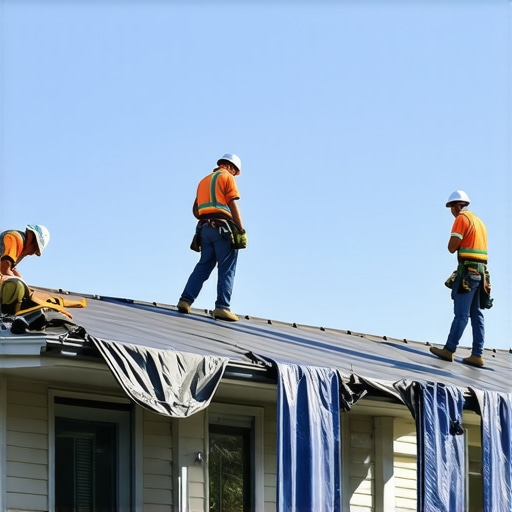
The Sound of a 3:00 AM Disaster
It starts with a rhythm you can’t ignore. Not the steady beat of rain on the shingles, but the heavy, wet thud-drip of water hitting your drywall ceiling. By the time you’re positioning a plastic bucket on your hardwood floor, the damage isn’t just starting—it’s been festering for years. As a forensic roofer who has spent three decades crawling through cramped, 130-degree attics and peeling back layers of failed history, I can tell you that a blue tarp is a flag of surrender. It means the system failed because someone ignored the physics of water. Most local roofers see a leak and think ‘caulk.’ I see a leak and think ‘pathology.’ Walking on a roof in the height of a humid summer shouldn’t feel like walking on a trampoline, but that’s exactly what I found last week. Walking on that roof felt like walking on a wet sponge; I knew exactly what I’d find underneath before I even lifted a single shingle. The OSB decking had the consistency of wet cardboard, and the only thing holding the structure together was habit and a few rusted nails.
The Physics of the ‘Shiner’: Why Fasteners Fail
One of the most common reasons roofing companies get frantic calls for emergency tarping is the ‘shiner.’ In trade speak, a shiner is a nail that missed the rafter or was driven into the cold void of the attic. During a freeze-thaw cycle, these exposed metal shanks become magnets for frost. When the attic warms up, that frost melts, dripping onto the insulation and rotting the wood from the inside out. It’s a slow-motion car crash. You won’t see it until 2026, when the wood finally loses its structural integrity and the shingle loses its grip. This isn’t just a ‘bad nail’; it’s a failure of thermal bridging. Every time a roofer rushes a 100-square job to beat the sunset, they leave behind dozens of these ticking time bombs.
“A roof system’s performance is highly dependent on the quality of the installation of its various components.” – National Roofing Contractors Association (NRCA)
1. Capillary Action and the Dead Valley
The first reason your home might end up under a tarp involves the ‘valley’—the intersection where two roof planes meet. Most local roofers just slap some flashing down and call it a day. But water is a sneaky bast*rd. Through capillary action, water can actually travel upward and sideways, defying gravity. If a roofer didn’t install a proper ‘cricket’ (a small peaked structure) behind a wide chimney or if the valley isn’t cleared of debris, water backs up. That organic sludge of pine needles and grit acts like a dam. By 2026, the constant moisture will have eaten through the underlayment, regardless of its ‘lifetime’ rating. Once the water hits the sub-roofing, the clock is ticking.
2. The Attic Oven: Cooking Shingles from Below
If your attic isn’t breathing, your roof is dying. I’ve stepped into attics where the heat was so intense it felt like it would singe my eyebrows. This isn’t just uncomfortable; it’s a death sentence for asphalt. When heat is trapped, it bakes the shingles from the underside, causing them to lose their granules. Those granules are the only thing protecting the bitumen from UV radiation. Once the sun starts hitting the raw asphalt, the shingles curl like burnt bacon. You’ll see the ‘fish-mouthing’ from the curb. When the next big wind hits in 2026, those brittle shingles will snap off like crackers, leaving your decking exposed to the elements and forcing a call to local roofers for a tarp.
3. Hydrostatic Pressure and Flash Point Failures
Flashings around vents and chimneys are the most common points of failure. Most ‘trunk slammers’ rely on a bead of cheap plastic cement. Over two years of thermal expansion—the constant stretching and shrinking of materials as they heat and cool—that caulk pulls away. Hydrostatic pressure then pushes water into those tiny gaps.
“Flashings shall be installed in a manner that prevents moisture from entering the wall and roof through joints in copings, through moisture-permeable materials and at intersections with parapet walls and other penetrations.” – International Residential Code (IRC), Section R903.2
When I perform an autopsy on a failed roof, I often find that the step flashing wasn’t woven into the shingles; it was just tucked in as an afterthought. You can’t fight fluid dynamics with a tube of goo.
4. Granule Migration and Gutter Clogs
Take a look at your gutters. Are they filled with what looks like coarse black sand? That’s the lifeblood of your roofing system. As shingles age, they shed these granules. This migration accelerates if the roof was installed over an old layer—a ‘nail-over.’ A nail-over is the ultimate shortcut. It traps heat between the two layers and prevents the new shingles from sealing properly. By 2026, the weight of the double layer combined with the lack of seal makes the entire structure prone to ‘blow-offs.’ If you see a house in your neighborhood with a tarp, I’ll bet my best hammer it was a two-layer hack job.
5. The Underlayment Lie
Many roofing companies brag about using synthetic underlayment, but if they aren’t using the right fasteners, it’s useless. I’ve seen wind rip synthetic underlayment right off the deck because the crew used standard staples instead of plastic cap nails. Staples create a tiny hole that water can penetrate; cap nails seal the hole. It’s the difference between a raincoat and a sieve. If your local roofers cut corners on the $50 box of caps, imagine what else they skipped. By 2026, those staple holes will have widened, and your ‘waterproof’ barrier will be anything but.
The Band-Aid vs. The Surgery
When you call for a repair, you’ll get two types of quotes. The ‘Band-Aid’ involves more caulk and maybe a few mismatched shingles. It’s cheap, and it’ll get you through the month. The ‘Surgery’ involves tearing back to the source of the rot, replacing the saturated OSB, and installing a high-temp ice and water shield. It’s expensive, it’s loud, and it’s the only way to avoid the blue tarp. Don’t let a salesman talk you into a ‘lifetime’ warranty that only covers the material; if the labor is flawed, the warranty is a scrap of paper. You need a contractor who understands the forensic reality of your climate zone, whether they’re fighting UV-driven thermal shock or wind-driven rain. If you wait until the bucket is on the floor, you’ve already lost the battle. Inspect the valleys, check the attic ventilation, and for the love of the trade, stop hiring people who don’t know what a cricket is.