
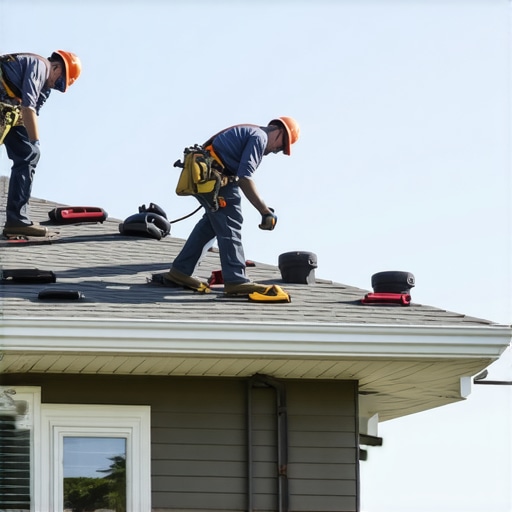
The Myth of the ‘Forever Roof’ and the Reality of 2026
Stop looking for a ‘cheap’ quote. It doesn’t exist in this industry anymore. You either pay the piper now for a thorough inspection, or you pay the remediation crew double when your living room ceiling is sagging under the weight of a hundred gallons of North American rainwater. Most homeowners treat their roof like a toaster—they ignore it until it stops working. But by the time a roof ‘stops working,’ the structural integrity of your home is already being compromised by the slow, patient physics of water. My old foreman used to say, ‘Water is patient. It will wait for years just to find that one shiner you left in the valley.’ He was right. That missed nail, that slightly off-center flashing, that’s not a leak today. It’s a slow-motion catastrophe scheduled for 2026.
“A roof is only as good as its flashing.” – Old Roofer’s Adage
1. The Molecular Fatigue of Post-Pandemic Materials
We need to talk about what’s happening on a microscopic level. The roofing materials manufactured during the supply chain chaos of the early 2020s are entering a specific fatigue window. Asphalt shingles are essentially a fiberglass mat sandwiched between two layers of bitumen, topped with ceramic granules. If those granules lose their bond—which we are seeing more frequently in roofs reaching their 5-year mark—the UV radiation from the sun begins to cook the asphalt. This isn’t just ‘wear and tear’; it’s a chemical breakdown. By 2026, many of these ‘rush-manufactured’ roofs will hit a tipping point where the bitumen becomes brittle. When you walk on a brittle roof, it doesn’t flex; it cracks. Local roofers are already seeing an uptick in premature granule loss in the gutters. If you see what looks like coffee grounds in your downspouts, your roof’s UV shield is gone, and the countdown to a full-scale failure has begun.
[image placeholder]
2. The Capillary Trap: Why Valleys Fail First
Water doesn’t just run downhill. It moves sideways through capillary action. When two roof planes meet, they form a valley. Many roofing companies cut corners by using ‘closed-cut’ valleys rather than metal ‘open’ valleys because it’s faster. The problem is that debris—pine needles, maple seeds, bits of grit—gets trapped in the overlap. This debris acts like a wick. It sucks water up and under the shingles, bypassing the primary drainage layer. By 2026, the organic matter trapped in your valleys will have turned into a damp compost pile, rotting the plywood underneath. You won’t see the leak inside yet because the underlayment is doing its job, but the wood is turning into oatmeal. Once the decking loses its ‘pull-out’ strength, the nails won’t hold, and the next windstorm will peel those shingles off like a banana skin.
3. The Thermal Bridging Crisis in Modern Attics
If you’re in a cold climate, your biggest enemy isn’t the snow; it’s the heat from your own house. We see it every winter: ice dams. But the 2026 maintenance cycle needs to focus on thermal bridging. This is where heat escapes through the wooden studs and rafters themselves, bypassing your R-value rated insulation. When that warm air hits the cold underside of the roof deck, it reaches the dew point and turns into liquid water. It looks like a roof leak, but it’s an insulation and ventilation failure. If your local roofers aren’t checking your intake vents at the soffits, they aren’t doing maintenance. They’re just guessing. A clogged soffit vent in a 140°F attic creates a pressure cooker environment that bakes the shingles from both sides, shortening a 30-year shingle’s life to fifteen years before it even gets a chance to age.
“The building envelope must be viewed as a single, integrated system where air, heat, and moisture are constantly in flux.” – Building Science Principles
4. The ‘Shiner’ and the Hidden Deck Rot
Let’s talk trade for a second. A ‘shiner’ is a nail that missed the rafter and is just sticking out through the plywood in your attic. In the winter, that nail becomes a tiny ice cube. It pulls the cold from the outside and condenses moisture from the house. It drips, freezes, drips, and freezes. Over five years, that one little nail can rot a 12-inch circle of plywood. When we do a forensic tear-off, we can see exactly where the ‘trunk slammers’ worked because the deck is peppered with these rot spots. 2026 maintenance is about getting into that attic and identifying these shiners before they turn your roof deck into a structural liability. Professional roofing involves more than just slapping shingles; it’s about the surgical precision of the fastener placement.
5. The Insurance Blacklist: The 2026 Reality
This is the cynical truth no one wants to hear: Insurance companies are getting smarter. They are using high-resolution satellite imagery and AI to scan roofs for signs of aging, such as algae streaks or lifted shingles. If you haven’t performed documented maintenance by 2026, you might find your policy non-renewed or your deductible tripled. They aren’t looking for ‘leaks’; they are looking for ‘risk.’ A roof that hasn’t been maintained is a liability they no longer want to carry. By hiring reputable roofing companies to perform a certified maintenance check, you are creating a paper trail that proves the roof is in ‘serviceable condition.’ Without that proof, you’re one storm away from an ‘Actual Cash Value’ payout that won’t even cover the cost of the dumpster, let alone the new roof.
The Verdict: Maintenance vs. Replacement
Maintenance is a cricket behind a wide chimney; it’s a properly installed starter strip; it’s ensuring the drip edge actually overhangs the gutter so water doesn’t wick back into the fascia. It’s the small, boring stuff that keeps the big, expensive stuff from happening. If you wait until 2026 to think about your roof, you’ve already lost. The forensic evidence of neglect is written in the granules in your gutters and the stains in your attic. Call a veteran, get a real inspection, and stop pretending that ‘out of sight’ means ‘out of mind.’ Your roof is the only thing between your family and the physics of the atmosphere. Treat it like it matters.