
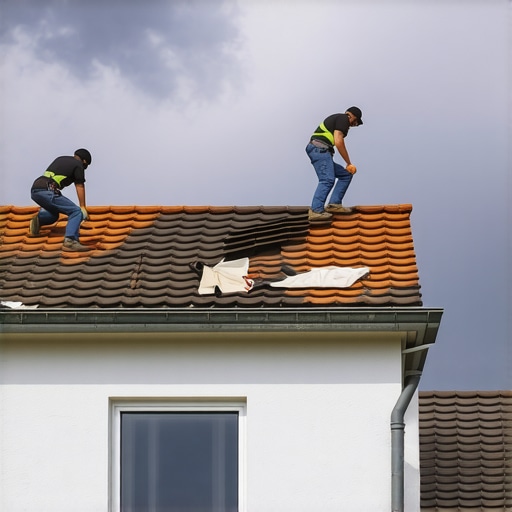
The 2026 Reckoning: Why Your Roof is a Ticking Time Bomb
I stepped onto a roof last October that felt less like a structural component and more like a waterlogged sponge. Every step I took produced a sickening squelch, the kind of sound that tells a forensic roofer exactly what he’s going to find when the tear-off crew arrives. This wasn’t a sudden storm victim; this was a slow-motion suicide of a building envelope. As we look toward 2026, local roofers are bracing for a massive spike in emergency calls. It isn’t just because of weather patterns; it’s the result of decades of ‘trunk slammers’ cutting corners and homeowners ignoring the invisible physics of moisture migration.
‘A roof is only as good as its flashing.’ – Old Roofer’s Adage
1. The ‘Attic Rain’ Phenomenon: Why New Insulation is Killing Old Decks
In the push for higher R-values and better energy efficiency, homeowners have been packing their attics with blown-in cellulose without addressing the attic bypass. When you seal the living space but forget the thermal bridging happening at the top plate, you create a laboratory for disaster. Warm, moist air from your shower or kitchen migrates upward via capillary action through tiny gaps in the drywall. Once that air hits the underside of a 20°F roof deck in mid-January, it flashes into frost. By 2026, many of the homes insulated during the 2021-2022 renovation boom will have experienced enough freeze-thaw cycles to rot the plywood from the inside out. We aren’t seeing leaks from the shingles; we’re seeing structural failure from the attic up. The plywood turns to a substance resembling wet oatmeal, and eventually, the weight of a heavy snow load will send the whole system into the master bedroom.
2. The ‘Shiner’ Epidemic and Mechanical Fastener Failure
A ‘shiner’ is a trade term for a nail that missed the rafter and is sticking through the roof deck into the attic. It seems harmless, but in a cold climate, that nail acts as a heat sink. It gets colder than the surrounding wood, attracting condensation. Over time, that nail rusts, expanding and then shrinking, which wallows out the hole in the shingle and the underlayment. By 2026, the cumulative effect of thousands of these shiners in a single square of roofing will lead to systemic failures. Water doesn’t just fall through these holes; it is pulled through by hydrostatic pressure. You won’t see a drip; you’ll see a brown ring on your ceiling that seemingly appears out of nowhere on a sunny day as the frost on those nails melts. Local roofers are finding that entire slopes need replacement because of poor gun consistency from rushed crews five years ago.
‘Water is patient. It will wait for you to make a mistake.’ – Foreman’s Axiom
3. Ice Dam Defense Systems: The 2026 Breaking Point
Many roofing companies install a 36-inch strip of Ice & Water Shield and call it a day. But as our winters become more erratic, the melt-back zone is moving further up the roof. When snow melts due to heat loss at the eaves and then refreezes at the cold overhang, it creates a dam. This reservoir of water finds its way under the shingles. If your local roofers didn’t install the membrane at least 24 inches past the interior wall line, that water is going into your soffits and fascia. By 2026, we expect to see a surge in fascia rot and gutter detachment. The wood becomes so saturated that the spikes or screws holding your gutters literally pull out, bringing the drip edge and the starter strip with them. It is a catastrophic chain reaction that starts with a single missing row of membrane.
4. The Failure of Integrated Counter-Flashing in Masonry
Chimneys are the number one cause of emergency calls. Most contractors just slap some goop (caulk) on a piece of bent aluminum and call it a day. But masonry is porous. It breathes. By 2026, the cheap sealants used during the post-pandemic labor shortage will have desiccated under UV radiation. Once the caulk cracks, water enters the brick, travels behind the flashing, and hits the roof deck. Because this water is trapped behind the shingles, it can’t evaporate. It sits there, feeding mold and eating the OSB. A proper fix requires a reglet-cut counter-flashing—a literal surgery where we saw into the mortar joint. Most ‘budget’ roofing companies skip this, and the homeowners in 2026 will pay the price with a four-figure emergency repair bill.
5. The Dead Valley and Cricket Neglect
A ‘valley’ is where two roof planes meet, and it carries the highest volume of water. A ‘dead valley’ is where a slope meets a vertical wall without a clear exit path. Without a custom-fabricated metal cricket to divert water, you’re relying on the shingles to act as a dam. They aren’t designed for that. Water will sit, find the smallest lap in the material, and use surface tension to crawl upward and over the flashing. By 2026, the debris accumulation in these dead spots will have created enough of a dam to force water into the building’s structural headers. If you don’t have a local expert who understands the geometry of water flow, your roof is basically a very expensive bucket with a hole in the bottom.