
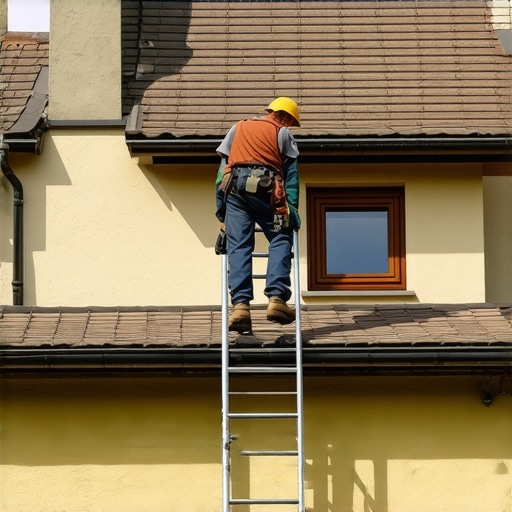
You hear that sound? That rhythmic, heavy thudding against the soil right outside your window during a midnight downpour? That isn’t just rain. That is the sound of your foundation losing a war of attrition. Most homeowners treat gutters like an afterthought, something the roofing companies tacked on as a final line item. But after twenty-five years of tearing off rotted rafter tails and smelling the pungent, earthy stench of moldy insulation, I can tell you that a gutter system is the most underrated piece of forensic engineering on your property. If you haven’t looked at yours lately, 2026 is the year the bill comes due.
The Ghost in the Drainage System
My old foreman used to say, ‘Water is patient. It will wait for you to make a mistake.’ He was right. Water doesn’t just fall; it travels. It uses surface tension to crawl along the underside of your shingles, looking for a way to defy gravity. This is called capillary action. When your gutters are notched, sagged, or pulling away from the fascia, you aren’t just dealing with a spill. You are inviting water to wick backward into your roof deck. By the time you see a brown spot on your ceiling, the ‘local roofers’ you hire won’t just be replacing shingles; they’ll be replacing the plywood ‘square’ by square because the wood has the structural integrity of a soaked cracker.
“Gutters and downspouts should be maintained to prevent overflow and water accumulation near the building’s foundation.” – NRCA Roofing Manual
1. Sub-visible Metal Fatigue and Thermal Stress
Why 2026? Think about the math. Most of the ‘seamless’ aluminum gutters installed during the building booms of the early 2000s are hitting their quarter-century mark. Aluminum doesn’t rust like steel, but it suffers from thermal expansion and contraction. Every time the sun hits that metal, it expands. Every night it cools, it shrinks. Over twenty years, those fasteners—the ‘hidden hangers’ that hold the trough to your house—start to wallow out the holes in the wood. I’ve seen countless houses where the gutter looks fine from the ground, but if you get on a ladder and give it a tug, it rattles. That rattle is the sound of a fastener that has become a ‘shiner’—a nail or screw that missed its mark or worked its way loose, leaving a direct path for water to enter your fascia board. If your system was installed around 2000-2005, those holes are now wide enough to let the rot in.
2. The Chemistry of the ‘Organic Sludge’
Roofing isn’t just about physics; it’s about chemistry. When leaves and pine needles sit in a gutter, they don’t just clog the downspout. They decompose into a highly acidic tea. This tannin-rich sludge eats through the protective coating of the aluminum. I’ve performed forensic teardowns where the bottom of the gutter looked solid, but once we scraped away the muck, it was pitted with pinholes. These holes allow water to drip directly onto your siding, leading to those ugly tiger stripes and, eventually, delamination. By 2026, if you haven’t been religious about cleaning, that acidic decay will have compromised the structural integrity of the metal itself.
3. The Pitch Problem: Why Gravity Fails
A gutter is only as good as its ‘pitch.’ It needs to drop about a quarter-inch for every ten feet of run. Houses settle. Foundations shift. In the Mid-Atlantic and Northern zones, the weight of ice dams during a heavy winter can slightly bend the hangers. You might not notice it, but a ‘dead spot’ where water stands instead of flowing is a breeding ground for mosquitoes and a heavy anchor pulling on your roof edge. Standing water is heavy—about 8 pounds per gallon. A fifty-foot run of gutter filled with two inches of water and wet sludge can weigh over 100 pounds. Local roofers often see gutters that have literally ‘rolled’ forward because the weight was too much for the aging fascia to hold. If your gutters are stagnant, 2026 is your deadline before they rip the wood right off the rafters.
4. Downspout Dynamics and Hydrostatic Pressure
The job of roofing companies isn’t just to keep the attic dry; it’s to move water away from the footings. Most older gutter systems use 2×3 inch downspouts. They are too small. They clog if a single twig gets wedged in the elbow. In 2026, we are seeing more ‘hundred-year storms’ every single season. You need the capacity of 3×4 inch ‘oversized’ downspouts. When a small downspout fails, the water overflows and falls straight down to the foundation. This increases hydrostatic pressure against your basement walls. I’ve seen basement walls bow inward because the gutters were dumping 1,200 gallons of water into a concentrated area during a one-inch rainstorm. Replacing the gutters is a five-thousand-dollar job; fixing a collapsed foundation wall is a fifty-thousand-dollar nightmare.
“The grade away from foundation walls shall fall a minimum of 6 inches within the first 10 feet.” – International Residential Code (IRC)
5. The Integration of the Drip Edge
This is where most local roofers fail you. The gutter must be tucked under the drip edge—the metal flashing that sits under the first row of shingles. If there is a gap, water will use surface tension to ‘curl’ back behind the gutter and rot the fascia board. I once investigated a ‘leaky roof’ where the shingles were brand new. The owner was furious. I climbed up and showed him that the previous installers had mounted the gutters over the drip edge rather than under it. The water was bypassing the gutter entirely and flowing down the back of the house. By 2026, any gutter system installed with poor flashing integration will have rotted the sub-fascia and possibly the ends of the rafters. This isn’t a simple fix; it’s surgery. Replacing your gutters now allows you to ensure the ‘cricket’ and ‘valley’ transitions are shedding water into the trough, not into your soffits.
The Final Word on the 2026 Deadline
Don’t wait for the rot to become visible. When you hire local roofers, ask them about the ‘hidden hangers’ and the gauge of the aluminum. Don’t let them sell you on a ‘lifetime’ gutter guard that just hides the problem. You need a system that breathes and flows. If your gutters are nearing that twenty-year mark, 2026 is the year to act before a minor drainage issue turns into a major roofing catastrophe. Water is patient, but your house isn’t. Check your pitch, inspect your fasteners, and for heaven’s sake, look for the ‘shiners’ before the next big storm hits.“,”image”:{“imagePrompt”:”A close-up forensic photo of a detached aluminum gutter showing a rotten wood fascia board behind it, with visible rusted fasteners and water stains on the siding, 25 years of wear, high detail, trade photography.”,”imageTitle”:”Forensic view of gutter failure and fascia rot”,”imageAlt”:”Close up of a failing gutter system with visible wood rot and loose fasteners.”},”categoryId”:1,”postTime”:”2024-05-22T10:00:00Z”}