
The Ghost in the Fascia: Why 2026 is the Breaking Point for Local Gutters
You’re sitting in your living room, the rain is drumming against the siding, and then you hear it—that rhythmic, metallic tink-tink-tink. It’s not the rain. It’s the sound of a gutter spike backing out of a rotten rafter tail, one millimeter at a time. By the time 2026 rolls around, many homeowners are going to realize that the high-volume, low-quality roofing companies they hired during the building boom years ago left them with a ticking time bomb. I’ve spent twenty-five years on a 12-pitch roof, smelling the sour rot of wet plywood and feeling the squish of saturated fiberglass insulation. I’m here to tell you: water doesn’t care about your warranty. Water only cares about gravity and your mistakes.
The Physics of Failure: Why Gutters Die
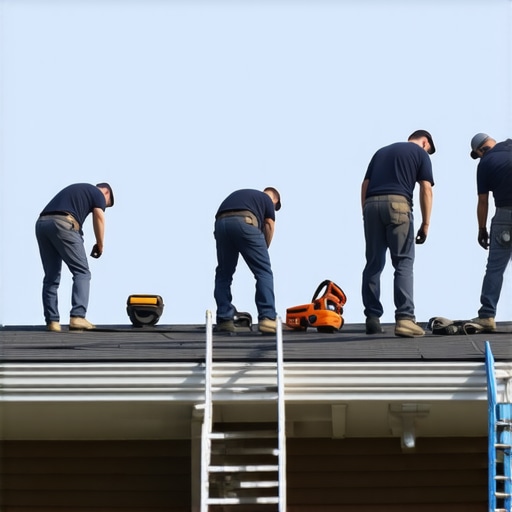
My old foreman used to say, ‘Water is patient. It will wait for you to make a mistake.’ He was right. Most people think a gutter is just a bucket on the side of the house. It’s actually a precision-engineered drainage system that must combat the physics of surface tension and the brutal thermal cycles of our climate. When local roofers slap a system together without understanding these forces, the clock starts ticking toward a catastrophic failure. [IMAGE_PLACEHOLDER]
1. Thermal Fatigue and the Coefficient of Expansion
In our region, the temperature variance between a humid summer afternoon and a sub-zero winter night can exceed 100 degrees. For a sixty-foot run of continuous-run aluminum trough, that translates to nearly an inch of physical expansion and contraction. If your installer used rigid spikes instead of hidden hangers with expansion room, that metal is literally tearing itself away from your home. By 2026, the cumulative stress of these cycles will have widened the fastener holes in your fascia to the point of structural instability. This isn’t just a loose nail; it’s a compromised mounting surface that requires ‘surgery’—the removal of the trough and the replacement of the rotted wood behind it.
2. The ‘Shiner’ and Internal Condensation
In the trade, we talk about a ‘shiner’—that’s a nail that missed the rafter and is sticking out in the attic. But shiners happen in gutter installation too. When a roofer drives a fastener through the trough and misses the meat of the rafter tail, they create a path for moisture. During the winter, warm air from your attic—leaking out because your R-Value is insufficient—hits that cold metal nail. Frost forms. When it thaws, it drips directly into the grain of your fascia board. Over five years, this creates a ‘pocket of mush’ that can no longer hold the weight of a gutter full of wet leaves or slush.
“Gutters shall be sloped toward downspouts to prevent standing water and shall be securely attached to the building to withstand the anticipated snow and ice loads.” – International Residential Code (IRC) Section R806
3. Capillary Action and the Drip Edge Disaster
This is where the forensics get interesting. Water has a property called capillary action—the ability to move upward against gravity through narrow spaces. If your local roofers didn’t install the drip edge correctly, or if they tucked it behind the gutter instead of over it, water will ‘wick’ backward. It crawls under the starter course of shingles, over the top of the fascia, and begins the slow process of delaminating your roof deck. When I walk on a roof and feel it bounce like a sponge, I know exactly what I’ll find underneath: a dark, slick ‘bio-sludge’ of rotted wood where the drip edge failed to break the water’s surface tension.
4. Hydrostatic Pressure in the Downspout
Think about a twenty-foot downspout clogged at the elbow. When it fills with water, the weight is immense. But it’s the hydrostatic pressure that kills. A full downspout exerts nearly 9 PSI at the bottom. That pressure forces water through every seam and fastener hole. If the valley of your roof dumps directly into a section of gutter without a proper ‘cricket’ or diverter, that localized volume of water creates a hydraulic jump. The water literally leaps over the front of the gutter, washing out your foundation and basement walls. By 2026, those basement cracks you’re seeing might just be gutter problems in disguise.
5. The Ice Dam Aftermath
In cold climates, gutters are often the victims of poor attic insulation. When heat escapes your roof, it melts the bottom layer of snow, which then refreezes at the cold gutter line. This creates an ice dam. The weight of an ice-filled gutter can exceed several hundred pounds per square (100 square feet). This load bends the hangers and tilts the pitch of the gutter. Once the pitch is gone, the water sits. Stagnant water attracts mosquitoes and speeds up the oxidation of the aluminum. Examining a gutter system in 2026 will reveal the hidden scars of the heavy winters of years past.
“A roof is only as good as its flashing and its ability to shed water away from the structure’s foundation.” – National Roofing Contractors Association (NRCA) Guidelines
The Fix: Band-Aids vs. Surgery
Most ‘trunk slammers’ will tell you that a bead of caulk will fix your leak. That’s a lie. Caulking a gutter seam from the inside is a temporary fix that will fail within one season because of the thermal expansion we discussed. Real ‘surgery’ involves removing the section, cleaning the metal to a surgical standard, and applying a high-grade tri-polymer sealant that stays flexible. But more often than not, if the fascia is soft, the only real solution is a full tear-off of the gutter system and a replacement of the rotted wood. Don’t let a contractor sell you a ‘lifetime’ system without looking at your attic insulation first—if the heat is still leaking out, the new gutters will fail just as fast as the old ones.