
The Anatomy of an Impending Disaster
The sound isn’t a splash; it’s a rhythmic, dull thud against the drywall of your ceiling, usually around 2:00 AM when the wind is whipping off the coast. By the time that first brown ring appears on your plaster, the battle is already lost. As a forensic roofing inspector for over two decades, I’ve seen thousands of these failures. Most people think a roof fails because it’s old. That’s a lie sold by guys with a ladder and a truck who want to push a quick replacement. In reality, roofs fail because of physics, poor geometry, and the slow, agonizing decay of hidden components that local roofers ignored three years ago.
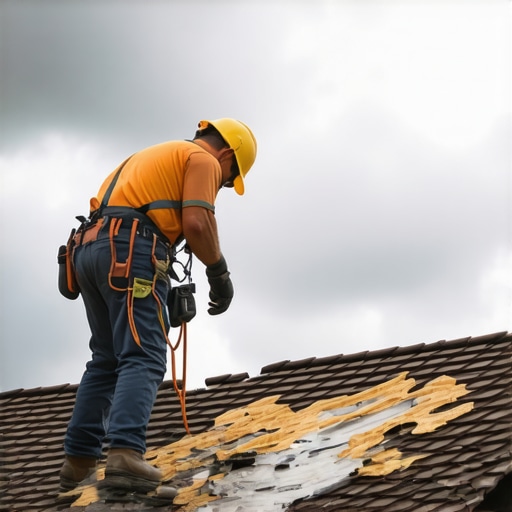
Walking on a client’s roof last summer felt like walking on a giant, waterlogged sponge. Every step resulted in a sickening squelch beneath the granules. I didn’t even need to pull a shingle to know what I’d find: a total structural failure of the decking caused by trapped vapor and a complete lack of secondary water resistance. This is the reality facing many homeowners as we look toward 2026. The shortcuts taken during the post-2020 building boom are coming due, and the bill is going to be expensive.
1. Capillary Action and the ‘Shiner’ Epidemic
One of the primary reasons we are seeing a spike in emergency calls is the humble ‘shiner.’ This is trade talk for a nail that missed the rafter or was driven into the valley where it shouldn’t be. When a roofer is moving too fast, trying to bang out twenty squares in a day, they get sloppy. That exposed nail head becomes a cold-bridge. In the humid heat of the Southeast, moisture condenses on that cold metal inside your attic. But there is a more sinister mechanism at play: capillary action.
Water doesn’t just fall down; it travels sideways. When shingles aren’t offset correctly, surface tension pulls wind-driven rain upward, underneath the lap, and directly into the nail hole. Over time, that tiny leak rots the OSB from the inside out. By 2026, those nails will have rusted through completely, creating a direct highway for water to enter your home during the next tropical depression. If your local roofing companies didn’t use stainless or hot-dipped galvanized nails, the salt air has likely already started the clock on your roof’s demise.
“A roof system’s performance is highly dependent on the quality of its installation and the compatibility of its components.” – National Roofing Contractors Association (NRCA)
2. The Failure of ‘Dead Valleys’ and Poor Geometry
Water is patient. It will wait for you to make a mistake. One of the most common forensic failures I investigate involves the ‘dead valley’—a spot where two roof planes meet and have nowhere to drain. Most local roofers try to solve this with a bucket of plastic roof cement (the ‘Band-Aid’ approach). In the 140°F heat of a summer afternoon, that caulk dries, cracks, and shrinks. By 2026, the thermal expansion and contraction will have pulled those joints apart.
The proper fix is ‘surgery’: installing a custom-fabricated cricket. A cricket is a small peaked structure built behind a chimney or in a dead valley to divert water. Without it, water ponds. Ponding water is the enemy of asphalt. It eats through the granules, destroys the bitumen, and eventually finds its way to the fascia boards. If you see your roofer reaching for a caulk gun instead of a sheet metal brake, you’re looking at a future emergency repair.
3. Galvanic Corrosion and Salt-Air Decay
In coastal environments, the chemistry of your roof is just as important as the shingles. We see a lot of ‘trunk slammers’ using standard aluminum flashing with copper-treated lumber. This triggers galvanic corrosion—a literal electrical reaction that eats the metal away. I’ve seen flashing that looked like Swiss cheese after only five years.
“Flashing shall be installed in such a manner as to prevent moisture from entering the wall and roof through joints in copings, through moisture-permeable materials, and at intersections of roof planes.” – International Residential Code (IRC) R903.2
When that flashing fails at the base of a wall or a dormer, the water doesn’t just leak; it floods. The industry is seeing a massive uptick in these failures because of supply chain substitutions made years ago. In 2026, those chemical reactions will have progressed to the point of total penetration.
4. The Myth of the ‘Lifetime’ Warranty
I hate to be the one to tell you, but that ‘Lifetime Warranty’ printed on your shingle bundle is mostly marketing fluff. Most warranties only cover manufacturer defects, not ‘poor installation’—which accounts for 95% of leaks. Local roofing companies often disappear before the leak even starts. The emergency repairs we see are usually the result of underlayment failure. If your roofer used cheap #15 felt instead of a high-quality synthetic with a self-healing membrane, you are at risk. Synthetic underlayment acts as a secondary water barrier. Without it, a single blown shingle in a windstorm becomes a catastrophic entry point for rain.
5. Wind-Driven Rain and Uplift Ratings
As storm patterns become more erratic, the ‘high-wind’ rating of your roof is the only thing standing between you and an insurance claim. A roof is a series of interconnected layers designed to resist uplift. If the starter strip wasn’t installed correctly, the wind gets under the first course and peels the roof back like a banana skin. This isn’t just a leak; it’s a structural emergency. We are seeing more ‘unzipping’ of roofs because of improper nailing patterns—nails driven too high, missing the double-layer ‘sweet spot’ of the shingle. This reduces the wind resistance by half.
The Forensic Conclusion: Fix the Cause, Not the Symptom
If you have water coming in, don’t just call someone to ‘patch it.’ You need to understand the physics of why it failed. Is it hydrostatic pressure pushing water under a poorly flashed chimney? Is it an attic bypass letting warm air rot the deck from below? An emergency repair in 2026 will cost triple what a proactive inspection costs today. Don’t wait for the sponge-like feeling under your boots. Check your valleys, inspect your crickets, and ensure your local roofers are using materials that can actually withstand the environment they are installed in.